Blog

Imperial Harvest

Recent Posts

Achieving Breakthroughs during the Chong Yang Festival

Posted by Imperial Harvest on 08 October 2021

Estimated reading time:mins

The Chong Yang Festival (重阳节) is celebrated on the ninth day of the ninth lunar month and is also known as the Double Ninth Festival. This year, it falls on the 14th of October. 

Chong Yang is an important occasion that bears witness to many historical events throughout Chinese history. As part of the cultural traditions surrounding Chong Yang, the custom of performing imperial rites was undertaken by Chinese royal families to express their gratitude for the harvest season. 

Read more on the Rites and Rituals of the Chong Yang Festival 

This month, join Imperial Harvest in celebrating the rich festivities that accompany this eagerly-anticipated occasion. Read on to discover how these collections embody the spirit of the Chong Yang Festival.

Imperial Harvest Agarwood
Blog_10.08_Achieving Breakthroughs during the Chong Yang Festival-1-1

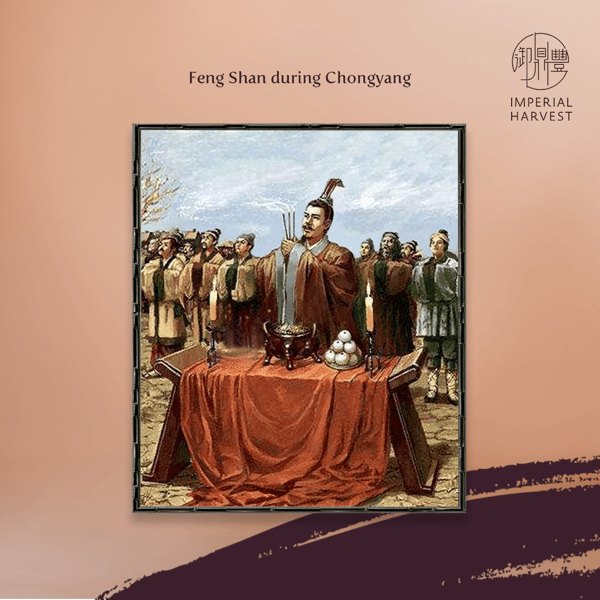
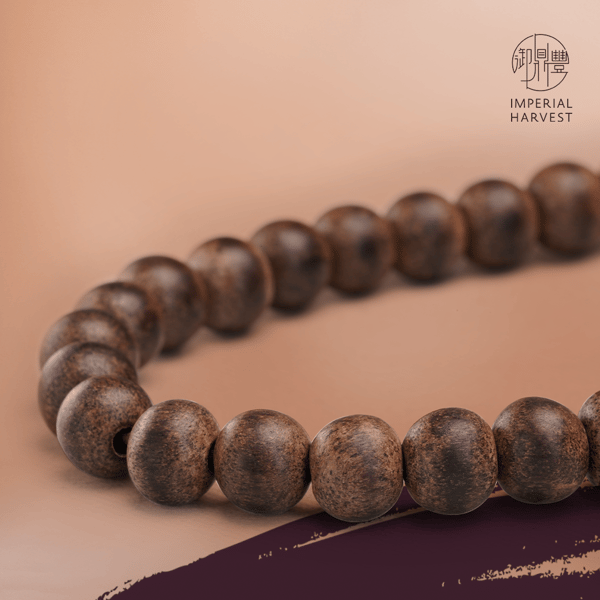
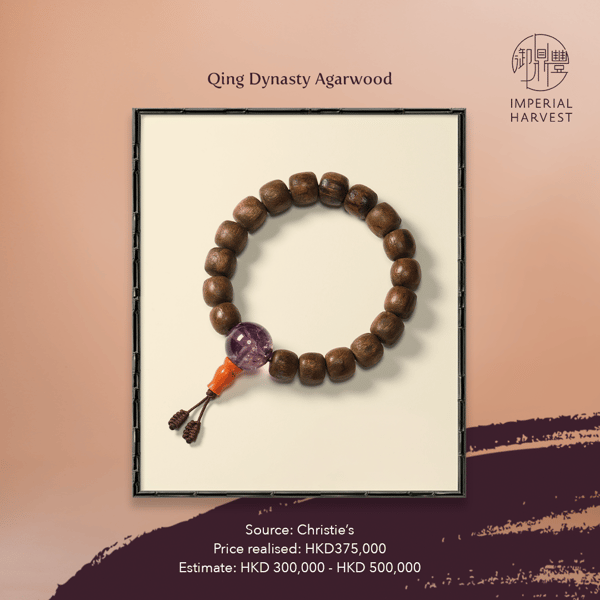
During the Chong Yang Festival, Chinese imperial families would participate in Feng Shan (封禪), a rite to pay homage to heaven and earth for the year’s harvest. Agarwood beads featured prominently in the emperors’ prayers for the upcoming year. In invoking the powers of the gods for continued success in the year ahead, they would methodically and meditatively roll the beads in their palms during their prayers. 

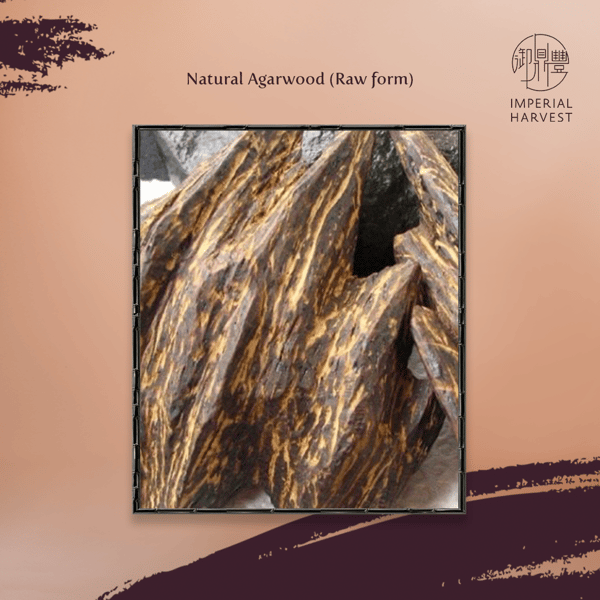
Agarwood is one of the rarest and most sought-after aromatic commodities, with a value that surpasses that of gold. The dark and aromatic resin produced by the Aquilaria tree is a response to an infection of the Phialophora parasitica mould. 

Once harvested, the Agarwood is extracted from the tree in an arduous process that typically takes hours to complete. Agarwood is prized not only for its intense fragrance and appearance but also for its Imperial Feng Shui qualities. 
Blog_10.08_Achieving Breakthroughs during the Chong Yang Festival-2-1

Imperial Harvest sources all-natural Agarwood from the forests deep in the mountains of South Asia, with the wood being free of chemicals, man-made fragrances or fertilisers that may interfere with the formation of Agarwood resins. The natural beauty of the Agarwood is accentuated by our master craftsmen, who craft and polish it by hand to create a treasure truly worthy of the Imperial Harvest name.

The varying lengths in the natural fermentation process give rise to different intensities of colour and fragrance within the wood. Bearing auspicious Imperial Feng Shui properties, Imperial Harvest-grade Agarwood balances the major yang (太阳) which amplifies your direct wealth capacity.

The direct wealth-amplifying properties of the Agarwood collection empowers our blessed clients to achieve astounding growth in their chosen careers. By garnering unwavering support from powerful mentors and authorities within your industry, the Imperial Harvest Agarwood collection generates multifold increases in your revenue streams.

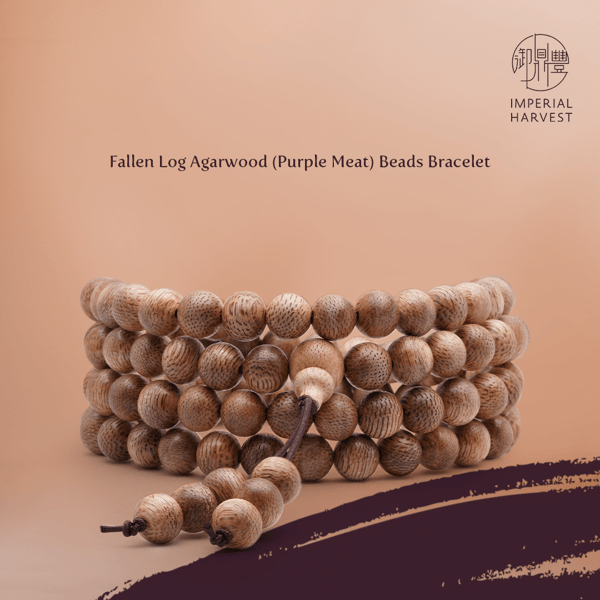
Fallen Log Agarwood (Purple Meat)
Blog_10.08_Achieving Breakthroughs during the Chong Yang Festival-Fallen Log-1

Out of the variations of Agarwood available at Imperial Harvest, the Fallen Log Agarwood (Purple Meat) has a fermentation period of 200 to 250 years. This variation derives its name from the way the Agarwood is formed, with its fermentation process taking place above the ground. The Agarwood resins formed during this fermentation process gives the Fallen Log Agarwood (Purple Meat) its signature purplish hue.

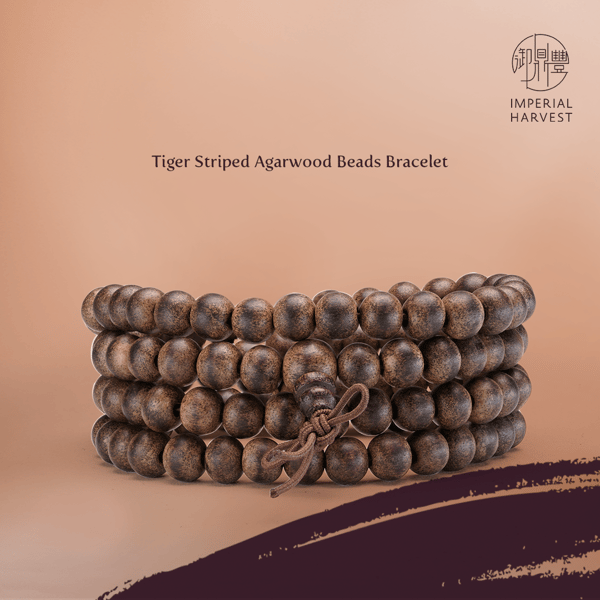
Tiger Striped Agarwood
Blog_10.08_Achieving Breakthroughs during the Chong Yang Festival-Tiger Striped-1

Over the course of no less than 300 years, this variation of Agarwood undergoes its fermentation process as it is half-buried in the ground. The unique positioning of the fallen log leads to thick stripes of Agarwood resin being formed across the wood which resembles a tiger’s stripes, thereby giving the Tiger Striped Agarwood its name. 

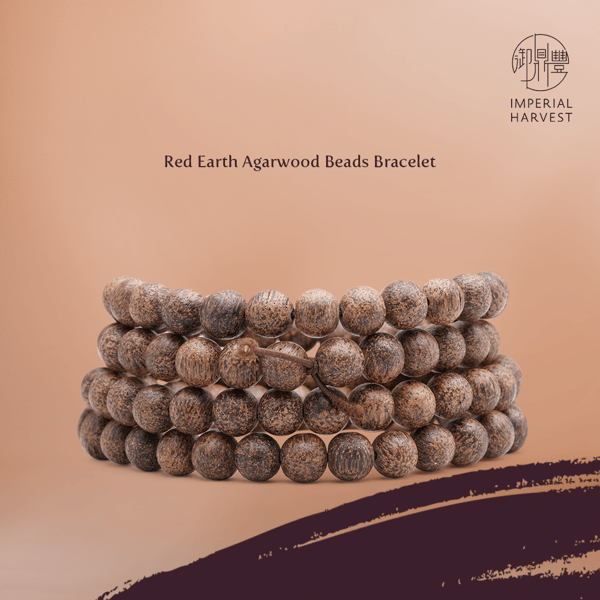
Red Earth Agarwood
Blog_10.08_Achieving Breakthroughs during the Chong Yang Festival-Red Earth-1

One of the most premium tiers of Agarwood available at Imperial Harvest, the Red Earth Agarwood is exceptionally rare due to the fermentation process that it must undertake. The fallen log is buried in moist, iron-rich soil which creates the optimal environment for the Agarwood mould to flourish. This process, which takes at least 500 years, gives the Red Earth Agarwood its signature reddish hue. 

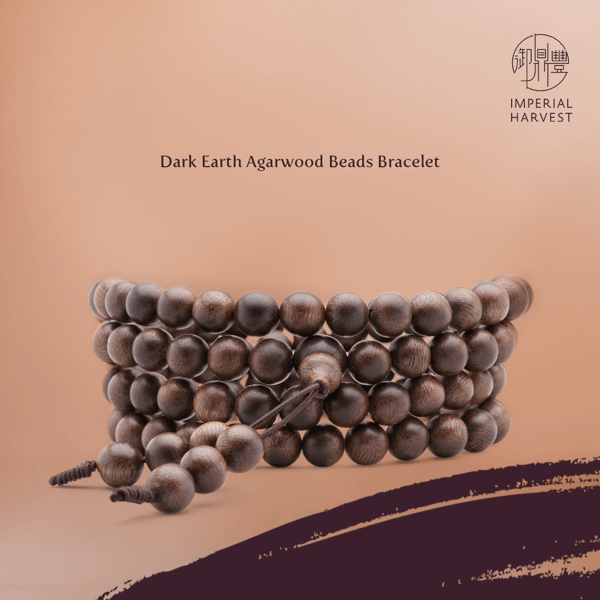
Dark Earth Agarwood
Blog_10.08_Achieving Breakthroughs during the Chong Yang Festival-Dark Earth-2

Dark Earth Agarwood is formed when the fallen log is buried in soil that contains a myriad of complex minerals. Its fermentation process occurs over the span of at least 800 years, contributing to the dark and intense colouring that characterises this grade of premium Agarwood.

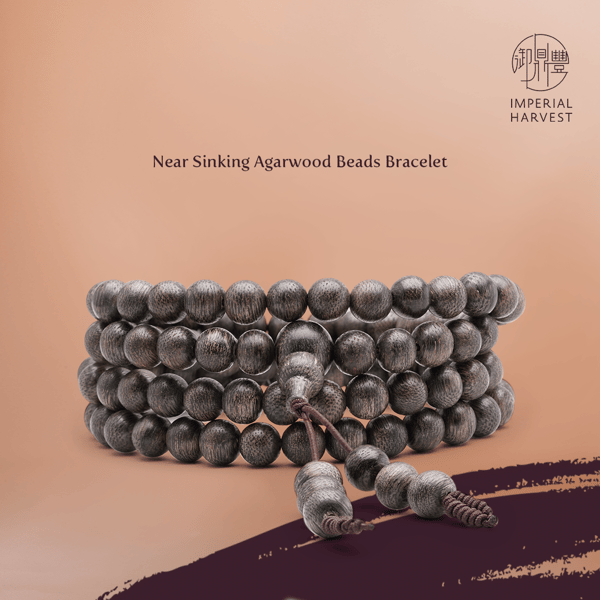
Near Sinking Agarwood
Blog_10.08_Achieving Breakthroughs during the Chong Yang Festival-Near Sinking-1

One of the finest grades of Agarwood in the world, this variation was typically reserved for the members of the imperial families in China’s dynastic history due to its rarity. During its millennia-long fermentation process, the density of the resin formed causes the Agarwood to nearly sink when placed in water. This dense resin is rich, intense, and evenly distributed across each bead, giving it an elegant appearance. 

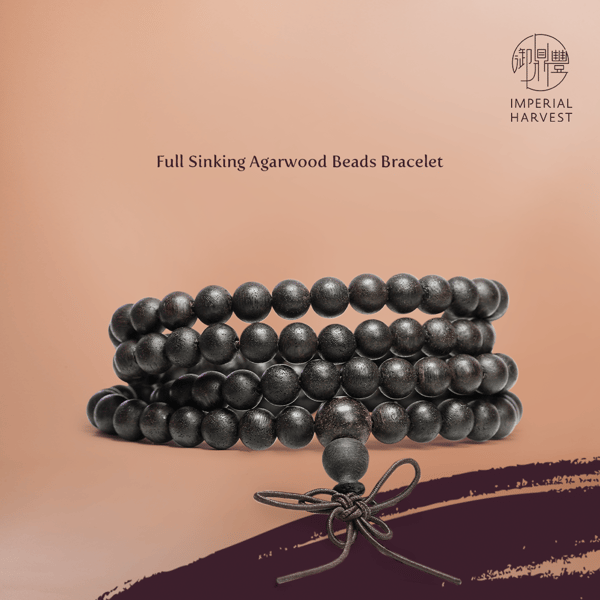
Full Sinking Agarwood
Blog_10.08_Achieving Breakthroughs during the Chong Yang Festival-Full Sinking-1

As its name suggests, this most premium grade of Agarwood sinks completely when placed in water. Its fermentation process spans several millennia, allowing the Full Sinking Agarwood to develop its signature intense, rich and dark resin. Coveted for its Imperial Feng Shui properties and elegant appearance, this rare and exclusive tier of Agarwood was strictly reserved for Chinese imperial families.

 Autumn Qian Long Jadeite Mountain Collection

Blog_10.08_Achieving Breakthroughs during the Chong Yang Festival-3 (1)

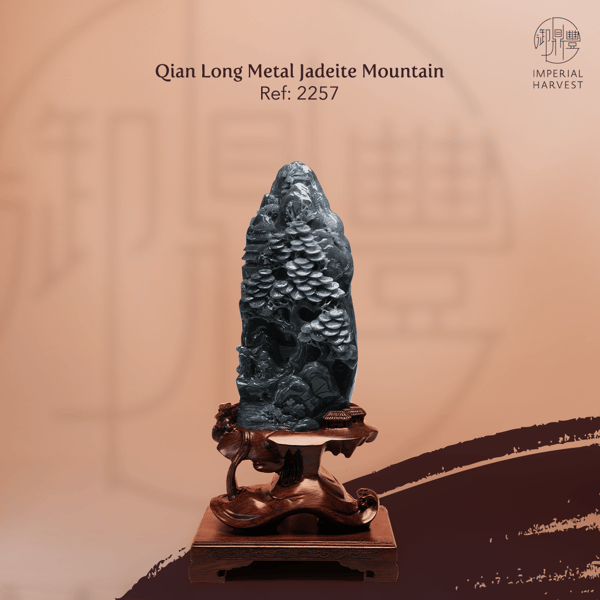
During the Qing dynasty, the Imperial Feng Shui masters advising Emperor Qian Long devised artefacts known as the Qian Long Jadeite Mountains, bestowing the Qing dynasty with the support of influential benefactors. In recent years, these rare and exquisite relics of Emperor Qian Long’s rule have found their places in the auction catalogues of internationally renowned auction houses like Sotheby’s and Christie’s, where they continue to command astronomical prices. The Jadeite Mountain is an important emblem of enduring success and stands as a testament to the legacy of the Qing dynasty.

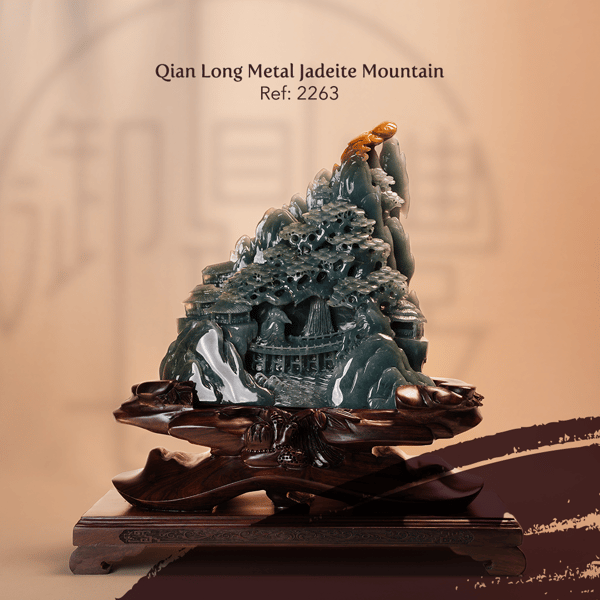
This season, Imperial Harvest presents the Autumn 2021 Jadeite Mountain Collection inspired by the revolutionary designs introduced to the Qing dynasty by the fusion of eastern and western cultures. 
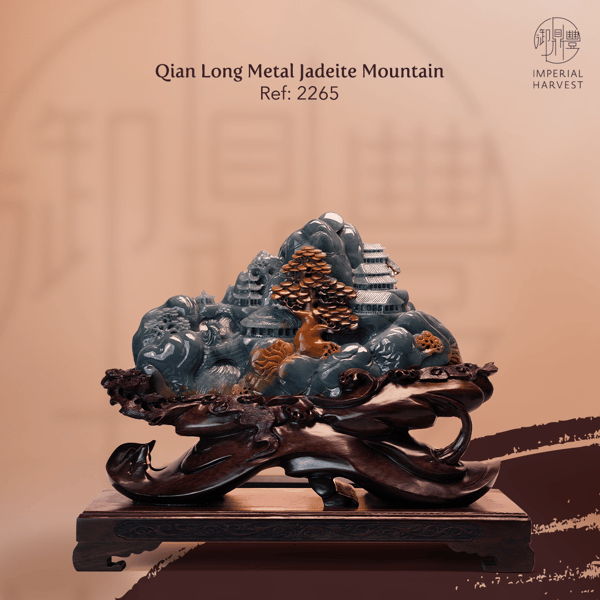
Blog_10.08_Achieving_Breakthroughs_during_the_Chong_Yang_Festival_Qian_Long_Metal_Jadeite_Mountain

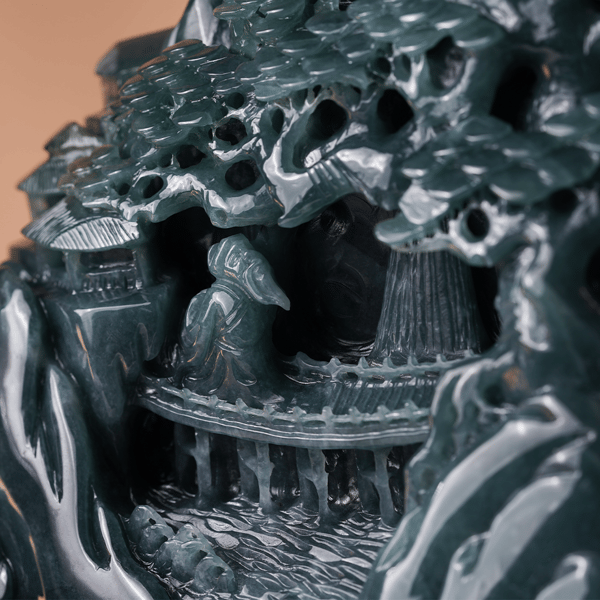
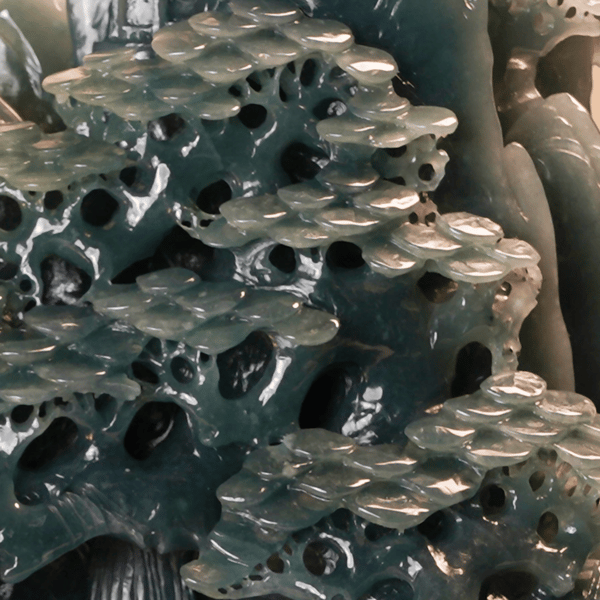
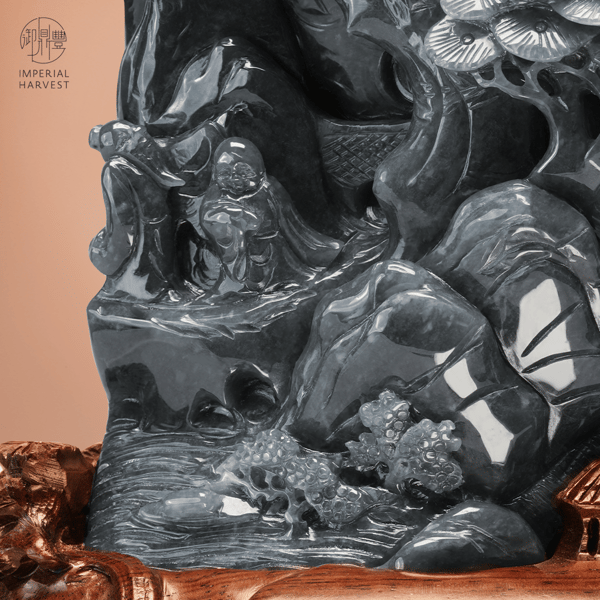
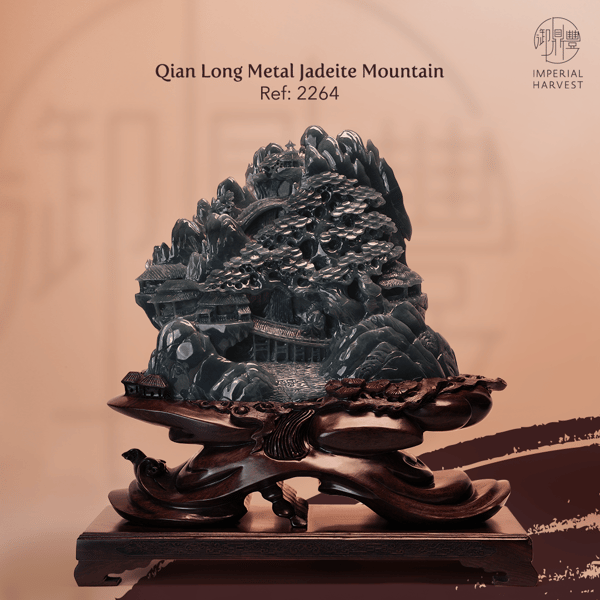
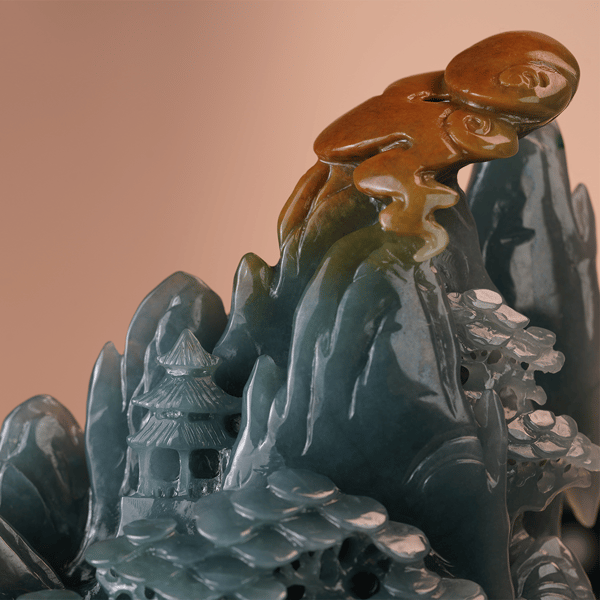
This exclusive collection features multiple strategically placed auspicious features, such as a grove of pine trees — symbolic of longevity, resilience and the capacity to thrive in any situation. The stream of flowing water indicates an influx of wealth, suggesting success in the blessed owner’s personal and professional ventures. 
Blog_10.08_Achieving_Breakthroughs_during_the_Chong_Yang_Festival_Qian_Long_Metal_Jadeite_Mountain_Close_Up

Blog_10.08_Achieving_Breakthroughs_during_the_Chong_Yang_Festival_Metal_Jadeite_Mountain_Close_Up

Blog_10.08_Achieving_Breakthroughs_during_the_Chong_Yang_Festival_Metal_Jadeite_Mountain_Close_Up

The collection features a bridge across the stream, which represents adaptability to challenges, and stands to empower its blessed owner to prevail over life’s challenges. Lastly, the house depicted is nestled among the low-lying hills, occupying an auspicious location known as the Dragon Meridian Point. This point gathers auspicious energy, ushering achievements in wealth and prosperity. 

Read more about the collection here

Imperial Harvest’s contemporary interpretation of Agarwood beads and Qian Long Jadeite Mountains adorn the homes and offices of numerous clients, seamlessly blending into the design of the home, ushering in prosperity and expressing the goals and aspirations of the blessed owner.


Your expert consultants are on hand to help you find the perfect Imperial Harvest treasure. Book a complimentary consultation today or contact us at +65 91221826

Book A Bazi Consultation

Our galleries are located at 402 Orchard Road, Delfi Orchard #02-07 & #02-08, Singapore 238876.

Opening Hours: Mon-Fri, 12pm-8pm, Sat: 10am-6pm, Closed on Sundays
Rites and Rituals of the Chong Yang Festival

Posted by Imperial Harvest on 01 October 2021

Estimated reading time: 3 mins

The Chong Yang Festival (重阳节), also known as the Double Ninth Festival, falls on the ninth day of the ninth lunar month. This year, this date coincides with the 14th of October and commemorates a day of great abundance and prosperity.

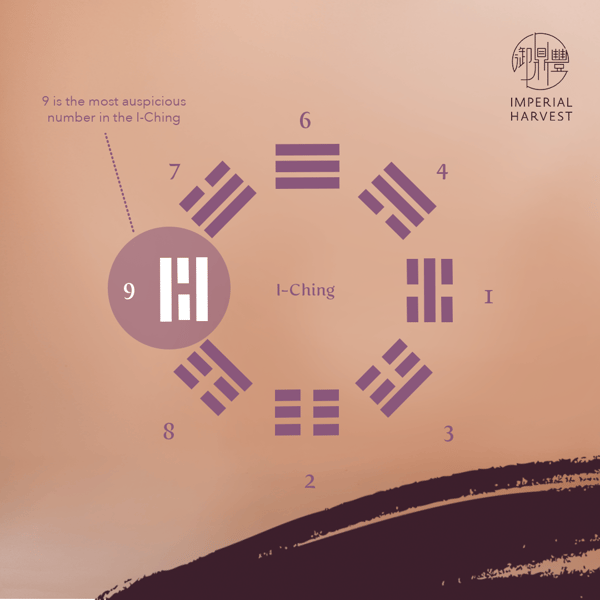
This festival was first introduced in the I-Ching and has been mentioned in other forms of ancient texts before the Eastern Han period (before 25 AD). The I-Ching is also known as the Book of Changes and stands as one of the oldest Chinese classics. This ancient divination text utilized numerology as a form of divination, which mentions that the number “9” holds significant, auspicious connotations. 

Blog_290921_Imperial Rites_Chongyang_IChing

According to principles explained in the I-Ching, the number “6” represents Yin energy, whereas “9” represents its complementary force — Yang. The number “9” was also believed to be indicative of longevity, eternity, and imperial authority. With the presence of two “9s”, the ninth day of the ninth lunar month indicates a doubling of Yang energies. This gives rise to the moniker, “Chong Yang”, with “chong” (重) translating to “double”.

Historical Importance of The Chong Yang Festival

Chong Yang Festival is an important date that bears witness to many historical events through ancient Chinese civilization. 

Blog_290921_Imperial Rites CY_Wu Zetian (1)

One of the most prominent events would be Empress Wu Zetian ascending the throne as the first female emperor of China on the ninth day of the ninth lunar month. During her long reign totalling 50 years, the empire had become prosperous, powerful and peaceful. Her regime is characterised by innovative government reforms, meritocratic civil service and sound economic policies. 

The rule of Empress Wu Zetian initiated the seismic change in social hierarchy where women broke out of the subservient roles they assumed through education reforms and state accordance of personal rights. This heralded a new chapter in human history, marked by the belief that women and girls have equal opportunities to realise their fullest potential.

Chong Yang Festival celebrates boldness and bravery that encourages every human to thrive and challenge the status quo. 

Origins of the Chong Yang Festival

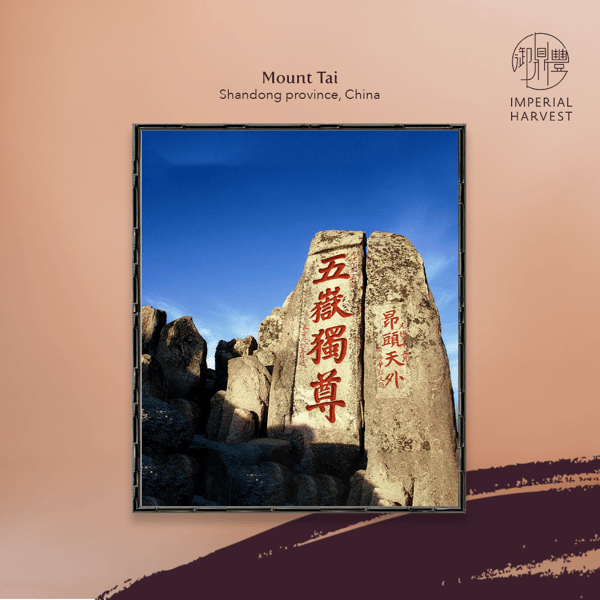
The origins of the Chong Yang Festival was often associated with the story of Heng Jing who eliminated a monster responsible for causing a widespread plague each time it appeared. On the auspicious ninth day of the ninth lunar month, Heng Jing defeated the pestilence-bringing monster on Mount Tai and ended the pandemic which has taken the lives of many people. 

Blog_290921_Imperial Rites CY_mount tai

Heng Jing’s fight denotes an underdog contest where a smaller, weaker opponent faces a much bigger, stronger adversary. Chong Yang’s festival soon became known as a festival that celebrates conquering our inner fears, liberating ourselves from the shackles and leading a limitless life filled with abundance and success. 

Cultural traditions of the Chong Yang Festival

During Chong Yang Festival, it is customary to view chrysanthemum trees in bloom, drink chrysanthemum wine, and eat Chong Yang cakes. Women would don chrysanthemum or zhuyu (茱萸) plants in their hair, as they were considered to have cleansing qualities, which would aid in avoiding disasters and warding off negative energy. 

In addition to Chong Yang’s cultural traditions, the festival was symbolic of the golden season of harvest. While many participated in the celebrations of the season, many also conducted heavenly prayers to offer their gratitude for the bountiful season. The imperial families of ancient China were no strangers to this custom and led in imperial rites to express their gratitude.

Blog_290921_Imperial Rites CY_heights

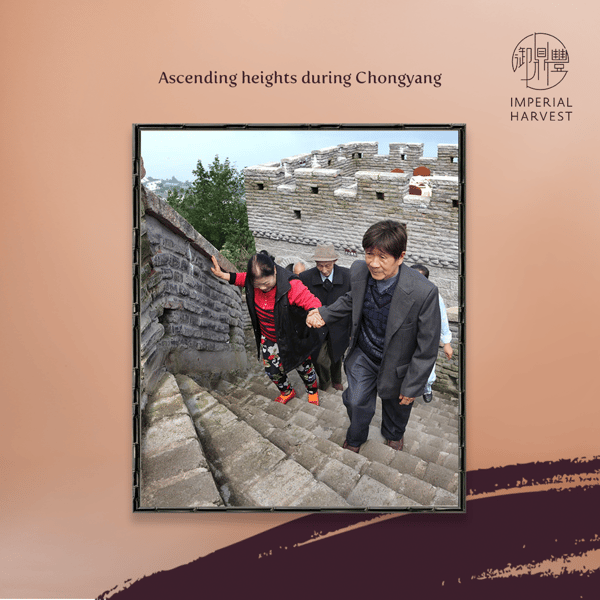
This act of ascending a height remained an important custom during the Chong Yang Festival and is related to the Chinese idiom,  “步步高升” — to rise further with each step taken. This saying alludes to taking the first step on your journey in order to ascend to new heights in careers, business and investments ventures.

The custom of performing imperial rites was undertaken by the Chinese imperial families, in order to give thanks for the harvest season. These rites played an integral role during Chong Yang and were believed to help maintain order, and align forces between Heaven, Earth, and humanity.

Imperial Rites during the Chong Yang Festival

Imperial rites were performed during Chong Yang festival to help maintain cosmic order while aligning metaphysical forces between Heaven, Earth, and Man. 

Upon reaching the summit of Mount Tai, the emperor would lead in a series of elaborate rites known as Feng Shan (封禪) and in doing so, would offer their prayers and tributes in gratitude to the Gods of Heaven and Earth. It was believed that the distance between Heaven and Earth was closest at the summit of Mount Tai so that prayers offered would be more readily answered. 

Blog_290921_Imperial Rites_Chongyang_Feng_Shan

According to early records written during the Eastern Han period, the Feng Shan rites involved building altars using the soil at the summit of Mount Tai to offer prayers to the God of Heaven. Land at the foot of the mountain would be cleared to express gratitude to the God of Earth for the year’s harvest. 

As part of the Imperial Feng Shui tradition, emperors would often adorn themselves with their Agarwood beads and personalised Jadeite pendants. In conducting their rites, emperors would weave their Agarwood beads onto their palms or meditatively roll the beads during their prayers. Their personalised Jadeite pendants were worn throughout the rite to best harness their Imperial Feng Shui properties of ushering harmony and prosperity for years to come.

The Chong Yang Festival represents one of the most auspicious times to acquire your Imperial Harvest-grade Agarwood beads and Jadeite treasures. This exquisite curation of Imperial Harvest Treasures expands your direct wealth capacity, and underpin the fusion of Imperial Feng Shui principles with contemporary aesthetics. 

Imperial Harvest Agarwood

Blog_10.08_Achieving Breakthroughs during the Chong Yang Festival-Tiger Striped-1

On this auspicious date, Chinese emperors would celebrate the harvest season and would pray for the following year of economic success by donning and honouring their Imperial Harvest-grade Agarwood to the heavens. 

Emperor Qian Long of the Qing dynasty was known to have brought two essential Imperial Feng Shui treasures with him – one being his Agarwood beads. Imperial Feng Shui masters serving under Emperor Qian Long uncovered the Agarwood’s Major Yang-balancing properties, which governs direct wealth capacity. Emperor Qian Long’s staunch dedication to the noble art of Imperial Feng Shui enabled the Qing dynasty to enjoy a golden age of tremendous wealth, harmony, and prosperity. 

Blog_290921_Imperial Rites_Chongyang_Agarwood_Tiger_Striped_Bead_Bracelet_Closeup

A signature collection at Imperial Harvest, the Agarwood collection is designed for those seeking to expand their direct wealth capacity, due to its ability to amplify the income that one may garner from their careers, businesses, sales, and other regular sources of income.

Imperial Harvest Qian Long Jadeite Mountain

Blog_290921_Imperial Rites_Chongyang_Qian_Long_Metal_Jadeite_Mountain

While the sacred Feng Shan rites were traditionally conducted at the summit of Mount Tai, this was not always a viable option. Over time, ageing Chinese emperors would no longer have the vitality required to ascend the sacred mountain to perform these annual rites. 

A team of Imperial Feng Shui masters aiding Emperor Qian Long devised an elegant solution during the Qing dynasty — the Qian Long Jadeite Mountain. The installation of this important Imperial Feng Shui artefact provided the imperial palaces with practical, yet continuous access to an auspicious mountain landform.

Read more about the rich history behind Imperial Harvest’s collection of Qian Long Jadeite Mountains 

Blog_290921_Imperial Rites_Chongyang_Qian_Long_Metal_Jadeite_Mountain_Closeup

Emperor Qian Long’s advocacy for Imperial Feng Shui inspired great leaps in the art of Imperial Feng Shui. Today, the Qian Long Jadeite Mountain adorns the homes and offices of our blessed clients, activating the auspicious mountain star that attracts powerful benefactors and mentors. 

Read more on Emperor Qian Long’s influence on Imperial Feng Shui 


Your expert consultants are on hand to help you find the perfect Imperial Harvest treasure. Book a complimentary consultation today or contact us at +65 91221826

Book A Bazi Consultation

Our galleries are located at 402 Orchard Road, Delfi Orchard #02-07 & #02-08, Singapore 238876.

Opening Hours: Mon-Fri, 12pm-8pm, Sat: 10am-6pm, Closed on Sundays

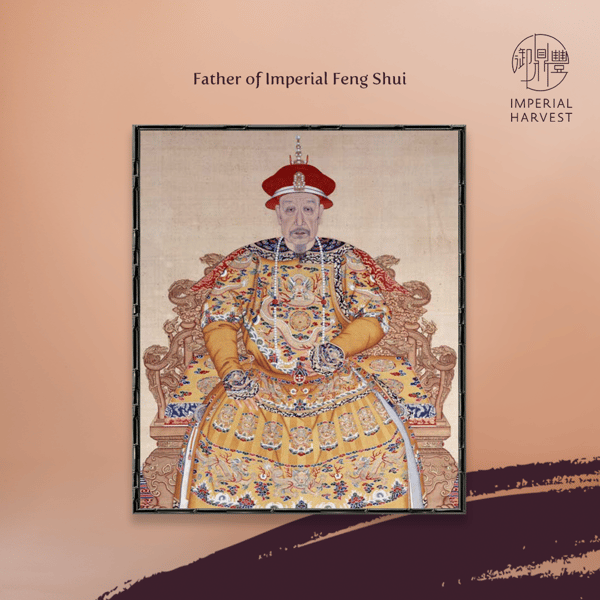
Emperor Qian Long: Father of Imperial Feng Shui

Posted by Imperial Harvest on 24 September 2021

Estimated Reading Time: 3 mins

The practice of Feng Shui can be traced to Neolithic civilizations scattered across China. Despite its long and illustrious history, it was only in more recent times that Imperial Feng Shui emerged as a prestigious branch of Feng Shui practised exclusively for the furtherance of Chinese royal interests.

Emperor Qian Long is well-known as one of the foremost proponents of Imperial Feng Shui in ancient Chinese history. To ensure Imperial Feng Shui principles were incorporated into all aspects of the Forbidden City, he appointed a team of trusted Imperial Feng Shui masters to oversee their consistent application. These experts were called upon to advise Emperor Qian Long on palace layouts, Imperial Feng Shui treasures and artefacts, and numerous other considerations in day-to-day palace administration. 

With their able support, the Qing dynasty’s fortunes soared by leaps and bounds, making it one of the most prosperous and successful eras of China’s dynastic history. It is renowned not only for its material abundance, but also for fostering a thriving exchange of cultures between the East and West. These make it widely acknowledged as a “Golden Age” in ancient Chinese history. 

Emperor Qian Long Father of Imperial Feng Shui

With his fervent patronage and endorsement, Emperor Qian Long catalysed the renaissance of Imperial Feng Shui during the Qing economic and cultural boom. As this ancient art flourished throughout his reign, he became widely dubbed the Father of Imperial Feng Shui. 

The Importance of Fine Jadeites in Imperial Feng Shui

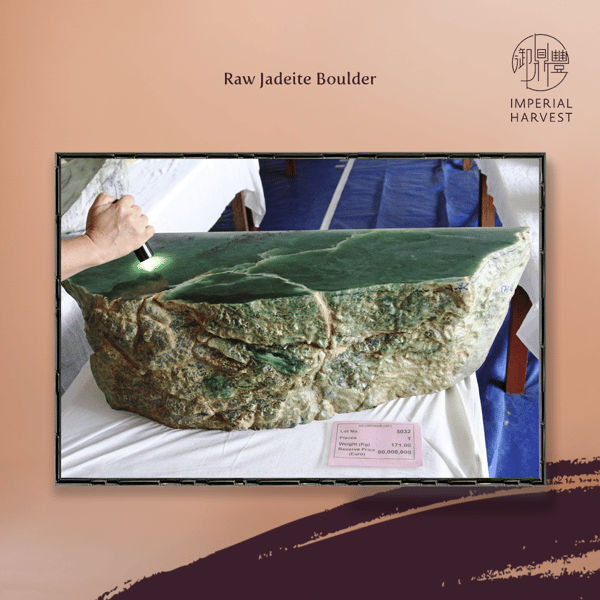
Imperial Feng Shui draws heavily on the innate properties of fine jadeites, which were cherished in ancient Chinese tradition as talismans that bestow long life and good luck. They were also prized for their durability, emerging as everlasting symbols of authority and status.

Raw jadeite boulder

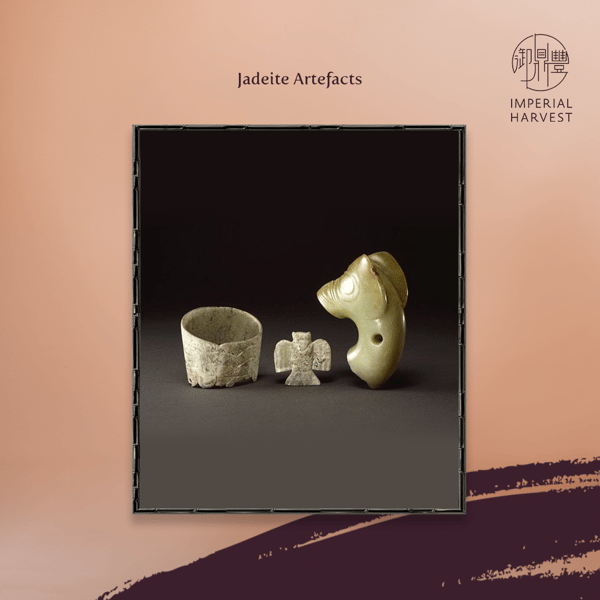
Throughout Chinese history, jadeites have been laboriously carved and polished into all manner of objects from jewellery to desk ornaments to even cups. Such is their historical significance that they have often been used to study the geopolitical and societal progress of ancient China. In fact, they were widely regarded as among the most precious materials, and even today remain highly valued for their luminosity and smooth texture. 

Acknowledging the significance of fine jadeites in Imperial Feng Shui, Emperor Qian Long consulted his Imperial Feng Shui masters on their application and relevance to his reign. Countless hours of rigorous research revealed the roles of specific fine jadeite treasures, from enhancing personal luck to endowing one with intuitive decision-making capabilities. 

Jadeite artefacts

The Qian Long Jadeite Mountain

One of the most important jadeite treasures is the Qian Long Jadeite Mountain. It was conceived by Emperor Qian Long’s Imperial Feng Shui masters as a powerful activator of the mountain star, bestowing the Qing dynasty with the support of influential benefactors.

Click here to find out more about the origins of the Qian Long Jadeite Mountain, and how it became an indispensable part of the Forbidden City.

The Autumn 2021 Qian Long Jadeite Mountain Collection - An Exquisite Embodiment of Emperor Qian Long’s Legacy 

In commemoration of the autumn equinox which marks the onset of autumn in the Northern Hemisphere, Imperial Harvest presents the Autumn 2021 Qian Long Jadeite Mountain collection. 

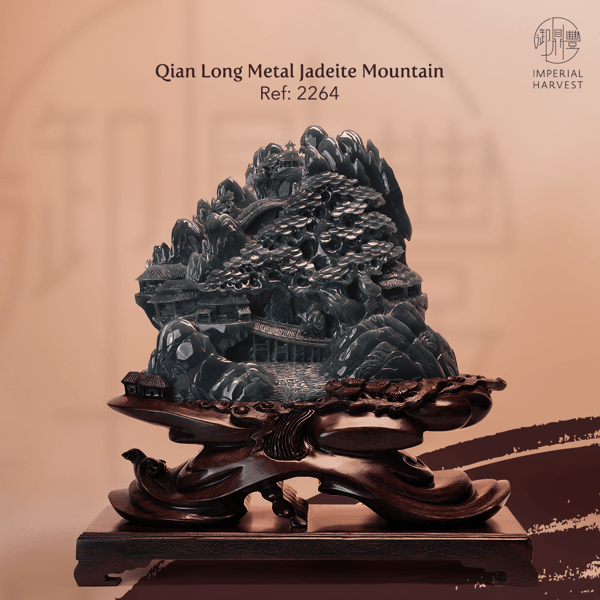
Qian Long Metal Jadeite Mountain Ref: 2264

Every Imperial Harvest Qian Long Jadeite Mountain is meticulously carved by master craftsmen from the centres of the finest raw jadeite boulders - the jadeite hearts. This is where the Imperial Feng Shui energies are the densest and most intense. The unrivalled quality and craftsmanship of each Imperial Harvest jadeite mountain translates to an unparalleled luminosity and smoothness to the touch. 

Bridging Connection (水到渠成)
Qian Long Metal Jadeite Mountain close-up

Pine Trees for Long-Term Growth (松鹤连年)

Qian Long Metal Jadeite Mountain close-up

Dragon Meridian Point (寻龙点穴)

Qian Long Metal Jadeite Mountain close-up

The Autumn 2021 Qian Long Jadeite Mountain collection bears witness to the enduring Imperial Feng Shui heritage galvanised by Emperor Qian Long himself. It meticulously replicates the east-meets-west aesthetic that characterised his reign, melding it with auspicious symbols of success and prosperity. 

Click here for more details on the incorporation of Western artistic techniques into this blessed collection

The Imperial Jadeite Beads Bracelet

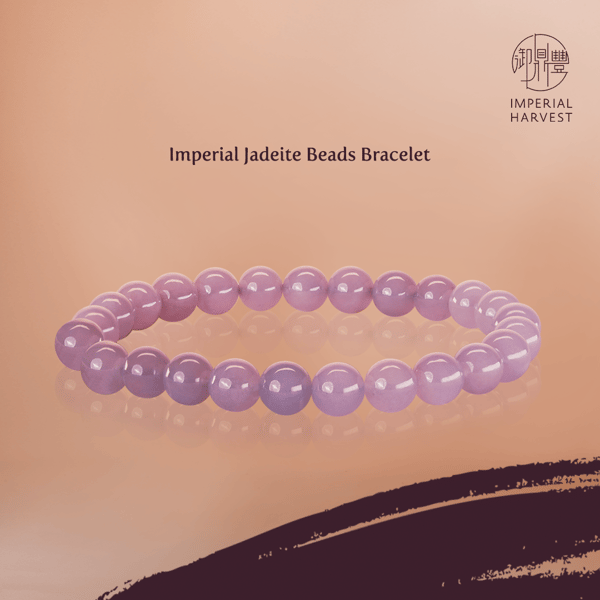
Imperial Jadeite Beads Bracelet

Amidst Emperor Qian Long’s varied personal collection of Imperial Feng Shui artefacts, his jadeite bead bracelet features as one of the most prominent. He was often depicted donning his personalised white jadeite beads, in accordance with his favourable element of metal. 

According to Imperial Feng Shui principles, the jadeite bead bracelet balances the Minor-Yang, equipping the wearer with intuitive decision-making attributes. It would also empower the wearer to distill information from ambiguity, and in making timely decisions to gain decisive competitive advantages.

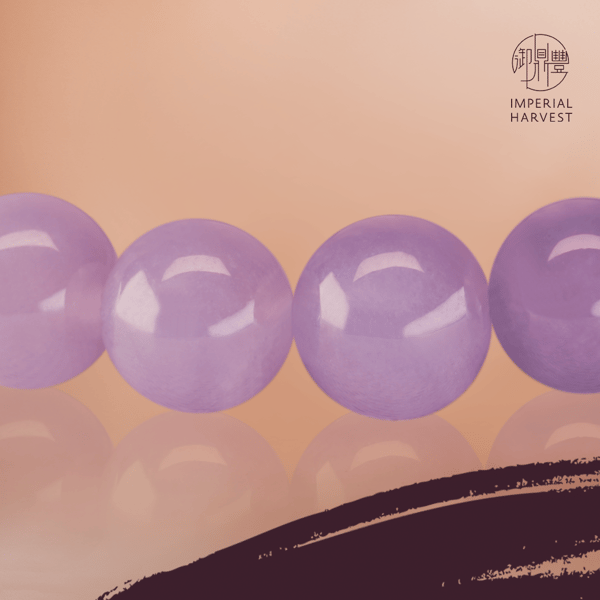
Imperial Jadeite Beads Bracelet close-up

Throughout his reign, this iconic jadeite treasure featured extensively as an omnipresent symbol of his passion in harnessing Imperial Feng Shui to advance his empire.

The Imperial Harvest Jadeite Bead Bracelet is crafted from the same exquisite jadeite as the Qian Long Jadeite Mountain, bestowing upon destined owners its unrivalled Imperial Feng Shui properties. It is also fully customizable, with the inclusion of agarwood and sandalwood beads being popular amongst our blessed clients. 

Agarwood

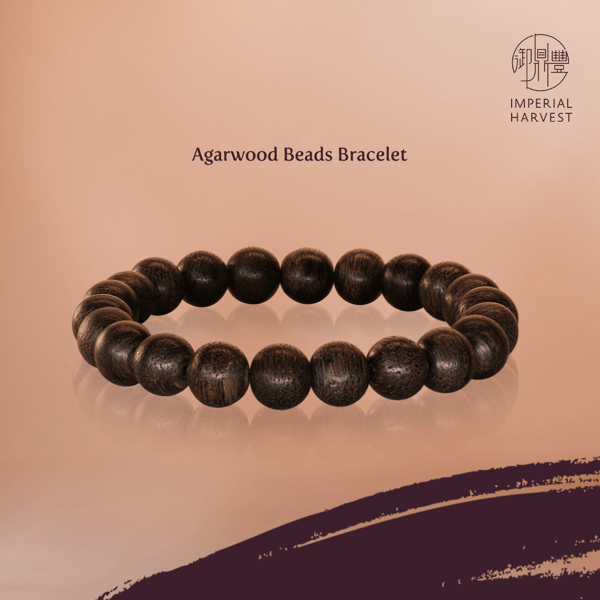
Agarwood Beads Bracelet

Emperor Qian Long’s unwavering dedication to Imperial Feng Shui extends to the agarwood treasures widely used today to enhance direct wealth capacity (正财库). This refers to the income potential derived from one’s primary professional pursuits.

Rigorous studies by Emperor Qian Long’s Imperial Feng Shui masters reflected that agarwood, or fermented wood resins in aquilaria trees, balances the major yang, which governs direct wealth capacity. This gives rise to its unique wealth-enhancing trait.  

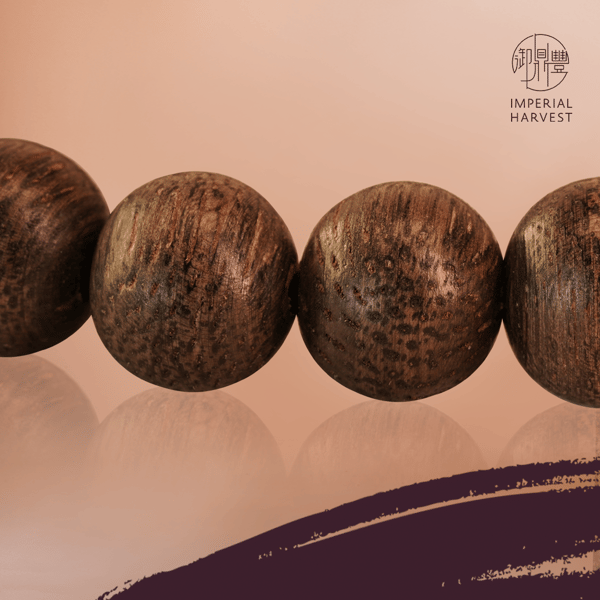
Agarwood Beads Bracelet close-up

Recognizing the auspicious properties of agarwood, Emperor Qian Long made sure to always readily have with him his bespoke bracelet of agarwood beads. This was often spotted alongside his white jadeite bead bracelet, accompanying him even on his extensive travels.

The Imperial Harvest Agarwood Collection is inspired by Emperor Qian Long’s discovery of agarwood’s Imperial Feng Shui properties. Every Imperial Harvest Agarwood bead is hand-polished to perfection by master artisans of their craft, making it an essential amplifier of direct wealth capacity. 

Emperor Qian Long’s Legacy

Since its conception, Imperial Harvest has remained true to the ethos of Imperial Feng Shui, as practised and preached by Emperor Qian Long in the Qing golden age. Having indelibly shaped its course throughout his reign, Emperor Qian Long is rightly heralded as the Father of this ancient art. Today, Imperial Harvest honours his legacy by spearheading a new era of Imperial Feng Shui, as Master David reimagines its timeless principles with contemporary design language as a modern architect of this enduring art.


Your expert consultants are on hand to help you find the perfect Imperial Harvest treasure. Book a complimentary consultation today or contact us at +65 91221826

Book A Bazi Consultation

Our galleries are located at 402 Orchard Road, Delfi Orchard #02-07 & #02-08, Singapore 238876.

Opening Hours: Mon-Fri, 12pm-8pm, Sat: 10am-6pm, Closed on Sundays

2021 Autumn Exclusive Qian Long Jadeite Mountains

Posted by Imperial Harvest on 17 September 2021

Estimated Reading Time: 3 mins

With their able and committed leadership, eminent Qing dynasty emperors such as Kang Xi and Qian Long steered the empire through a golden age in its illustrious history. Under their stewardship, the Qing dynasty prospered economically, militarily, and also in its cultural and artistic pursuits. 

Well-known as an avid cultural connoisseur, Emperor Qian Long amassed extensive collections of fine art over the course of his reign. Paintings, sculptures and numerous other works were painstakingly researched and acquired by his team of art and culture aides. These precious artefacts firmly entrenched Emperor Qian Long’s legendary status as an ardent patron of fine art. Some of these pieces have withstood the test of time, providing precious insights into the richness and diversity of the Qing dynasty’s cultural scene. 

The plurality of Qing dynasty art and culture is exemplified by its incorporation of foreign elements. Emperor Qian Long’s penchant for exotic artistic styles led to the invitation of Giuseppe Castiglione, a Jesuit missionary and painter, to produce artwork and design structures within the Forbidden City. Throughout his service to the imperial court, his fusion of Western artistic techniques with Oriental cultural symbols imbued the palace with a distinctive East-meets-West aesthetic.  

The Qian Long Jadeite Mountain

Amidst Emperor Qian Long’s varied collections lies an important artefact commonly known today as the Qian Long Jadeite Mountain. This is of particular interest to contemporary practitioners of Imperial Feng Shui, given its immense significance to this ancient art. 

2021 Autumn Exclusive Qian Long Jadeite Mountain_Qing Dynasty Mountain

Click here for an insight into the benefactor sector within homes and offices, and how the Qian Long Jadeite Mountain activates it to usher in support from influential benefactors. Such powerful support may be harnessed in a variety of ways to facilitate the furtherance of one’s personal and professional pursuits. 

Given the importance of the Qian Long Jadeite Mountain to Imperial Feng Shui, it is a crucial tool in Imperial Harvest’s empowerment of blessed clients towards their goals and aspirations. In commemoration of the spirit of abundant harvests this autumn, Imperial Harvest proudly commissions the Autumn 2021 Qian Long Jadeite Mountain collection.

The Celebration of Abundance in Autumn 

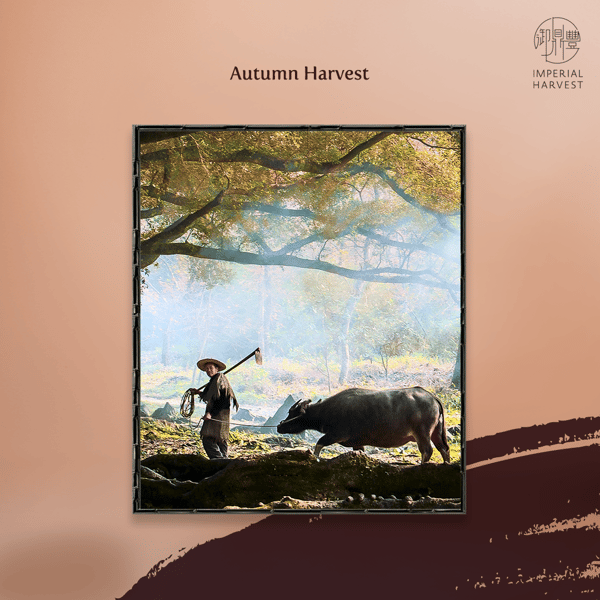
In ancient China, the season of autumn was eagerly anticipated, as it was when many crops matured and bore fruit. This resulted in autumn becoming inextricably associated with a season of harvest.

2021 Autumn Exclusive Qian Long Jadeite Mountain_Autumn Harvest

The abundance of the autumn harvest was a cause for celebration. It was when friends, family and even acquaintances gathered to partake in communal feasts and other activities. Apart from prayers to give thanks for the bountiful harvest, many participated in special autumn fairs and festivals that emerged during this time. The rich cultural festivities and abundance of this period transformed it into a time of thanksgiving and conviviality. 

The immense significance of autumn was also not lost on the imperial court. During this period, the emperor led court officials in a series of elaborate imperial rites and rituals. As the majority of imperial court revenue was derived from agriculture, this season of harvest was marked by ancestral worship and livestock sacrifices to express gratitude for the abundant yield. Other imperial practices included ceremonies for various deities, as well as the emperor’s sampling and endorsement of the first harvests.

Autumn and the Metal Element in Imperial Feng Shui

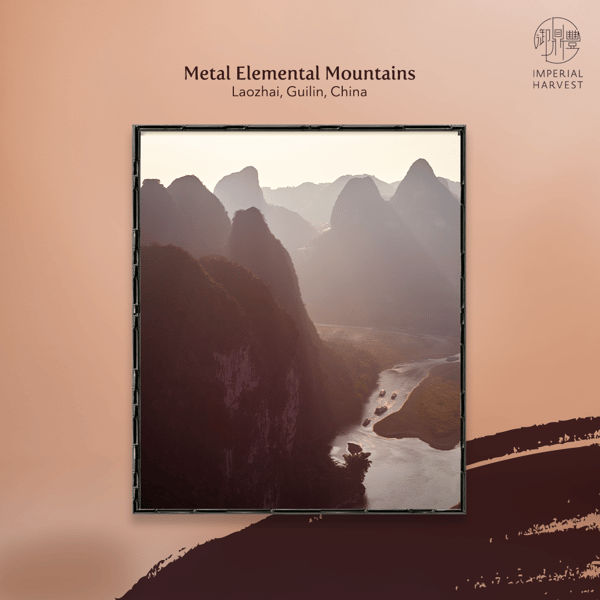
In the study of landforms in Imperial Feng Shui, there are five mountain formations that correspond to the five elements of metal, earth, wood, fire and water. Each of these bears a unique distinguishing shape or structure. 

2021 Autumn Exclusive Qian Long Jadeite Mountain_Metal Mountain in China

According to Imperial Feng Shui principles, autumn corresponds to the metal element. In a tribute to the season of metal, the Imperial Harvest Autumn 2021 Qian Long Jadeite Mountain collection consists of metal elemental mountains, which possess a smooth rounded top. They are widely feted as powerful wealth-creating structures, bringing multiple large streams of wealth to those who effectively leverage their auspicious properties.

The Imperial Harvest Autumn 2021 Qian Long Jadeite Mountain Collection - Inspired by the cross-cultural grandeur of the Qian Long Garden 

The Autumn 2021 Qian Long Jadeite Mountain Collection pays tribute to the pioneering east-meets west aesthetic of the Qian Long Garden. 

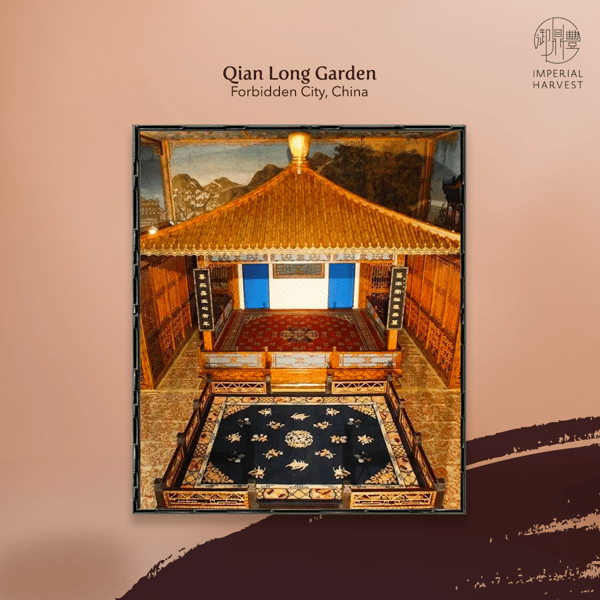
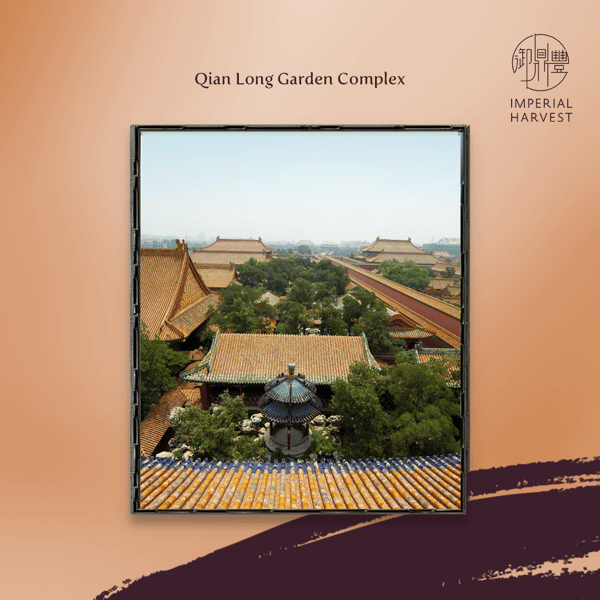
This sprawling garden complex was commissioned by Emperor Qian Long as a luxurious retirement abode, and was completed in the late 18th century. Kept largely intact over the years, it today offers unique insights into the golden age of his reign.

2021 Autumn Exclusive Qian Long Jadeite Mountain_Qian Long Garden

The Qian Long Garden was built to reflect its namesake’s embracement of cross-cultural exchange and interaction. Its extensive incorporation of European cultural and artistic elements is a testament to the influence of Castiglione, the Jesuit imperial court designer invited from Italy by Emperor Qian Long. 

One of these is the trompe l’oeil technique, which was commonly employed in European paintings to achieve three-dimensional depictions of objects. Borrowing from this artistic technique, many prevailing buildings and structures deftly manipulated human visual perception to generate optical illusions of their design elements. This gave rise to a novel genre of “forced perspective”, which allowed designers to create desired perceptions or “perspectives” of their work. 

2021 Autumn Exclusive Qian Long Jadeite Mountain_Qian Long Garden Artwork

Within the Qian Long Garden, a wall of trompe l’oeil silk paintings deploys this European technique on a canvas material highly favoured by Chinese nobility. An assortment of elaborate murals throughout the garden extensively employs chiaroscuro techniques, harnessing the interplay of darkness and light to accentuate contrasts and shadows. These were applied to common Oriental materials such as bamboo carvings and jade pieces. Such novel architectural language gave rise to a unique fusion of diverse cultures within the garden compound.

Just like the Qian Long Garden, the Imperial Harvest Autumn 2021 Qian Long Jadeite Mountain Collection weaves into its construction the bold and innovative styles of Western art introduced by Castiglione. It repurposes these Western techniques to accentuate the exquisite design of each masterpiece. Forced perspectives of each jadeite mountain are achieved by manipulating visual perception to direct the viewer’s gaze towards the strategically-placed auspicious features.

2021 Autumn Exclusive Qian Long Jadeite Mountain_Ref2264

Pine Trees for Long-Term Growth (松鹤连年)

Qian Long Metal Jadeite Mountain Pine Trees for Long Term Growth

Pines are famed for being extremely long-lived. This species is known to survive for up to a thousand years, with a few rare specimens documented in excess of four thousand years. They have also adapted well to harsh conditions, with extreme temperatures and inconsistent water supply. This is a testament to their ability to overcome severe hardship and unforgiving circumstances. Furthermore, the evergreen nature of pines makes them a common symbol in Chinese art of enduring growth and development. On the Qian Long Jadeite Mountain, they represent the blessed owner’s resilience and capacity to thrive in any situations.

Dragon Meridian Point (寻龙点穴)

Qian Long Metal Jadeite Mountain Dragon Meridian Point

Designed based on the principles of locating the Dragon Meridian Spot (寻龙点穴), the house depicted in this Qian Long Jadeite Mountain is nestled amidst the low-lying hills and occupies an auspicious site known as the Dragon Meridian Point (结穴点).

The Dragon Meridian Point (结穴点) gathers auspicious energy from the incoming Imperial Dragon, empowering the occupants to achieve wealth and prosperity. The same landform principles are being applied for the selection of the residence of Hong Kong’s wealthiest tycoon Mr Li Ka Shing.  

Bridging Connection (水到渠成)

Qian Long Metal Jadeite Mountain Bridging Connection

The presence of a channel of flowing water bears auspicious connotations of an inflow of wealth. This suggests smooth success in all of the blessed owner’s personal and professional endeavours. 

The bridge constructed across the stream indicates adaptation to obstacles, and flourishing despite challenging circumstances. This is inspired by the Chinese idiom “水到渠成”, which suggests that given the right conditions, success inevitably follows. By negating the impediment posed by the stream, the bridge is indicative of the blessed owner prevailing over life’s challenges. 

In anticipation of the Qian Long Garden’s imminent public unveiling, the Autumn 2021 Qian Long Jadeite Mountain collection draws inspiration from Emperor Qian Long and his fervent patronage of Imperial Feng Shui. Its intricate designs embody the distinctive east-meets-west aesthetic of Qing dynasty art and culture, seamlessly melding it with auspicious representations of abundance and success.

Over the years, Imperial Harvest has remained steadfastly focused on prospering generations and empowering countless individuals in their pursuit and attainment of their aspirations. This is achieved by remaining true to the Imperial Feng Shui tradition that flourished during the Qing dynasty, and by leveraging the unlimited human potential that exists in every individual.


Your expert consultants are on hand to help you find the perfect Imperial Harvest treasure. Book a complimentary consultation today or contact us at +65 91221826

Book A Bazi Consultation

Our galleries are located at 402 Orchard Road, Delfi Orchard #02-07 & #02-08, Singapore 238876.

Opening Hours: Mon-Fri, 12pm-8pm, Sat: 10am-6pm, Closed on Sundays

Untold Story of the Qian Long Jadeite Mountains

Posted by Imperial Harvest on 10 September 2021

Estimated Reading Time: 4 mins

The abundant prosperity and success of the Qing dynasty is well-documented. Legendary rulers such as Emperors Kang Xi and Qian Long were well-known for their wisdom and foresight. Their timely and inspired decisions were responsible for numerous military conquests, as well as fiscal masterstrokes that greatly boosted the empire’s economic might. With their profound eminence and capable leadership, the Qing dynasty lasted and thrived for nearly three hundred years. Throughout this period, the reach and fiefdom of the Chinese empire increased by leaps and bounds, making it the largest in Chinese dynastic history.

The Qing dynasty was also a time of cultural renewal and increase. Emperor Qian Long, in particular, saw himself not only as a leader and military commander, but also as a custodian of the empire’s cultural artefacts and narratives. His passion for fine art led him to acquire numerous paintings, sculptures and carvings, which he installed around the Forbidden City as part of an endorsed imperial collection. To advise him on artistic trends and precious artefacts, Emperor Qian Long relied on research and advice from a trusted team of cultural aides.

Blog_2021_Sep_Untold Story of the Qian Long Jadeite Mountains-1-1

Throughout his reign, Emperor Qian Long became inextricably associated with his beloved collections of culturally-significant artwork. Pieces were strategically installed at specific locations within the Forbidden City, for Emperor Qian Long’s pleasure and to inspire and guide him in everyday imperial affairs.

The Qian Long Garden

The legacy of Emperor Qian Long and the Qing dynasty remains culturally significant even today. Beyond cultural artefacts and practices, a sprawling garden complex commissioned by Emperor Qian Long has been kept largely intact, and today offers unique insights into the golden age of his reign. 

Blog_2021_Sep_Untold Story of the Qian Long Jadeite Mountains-2-1

Commonly known as the Qian Long Garden, this complex was completed in the late 18th century, and is a testament to Emperor Qian Long’s exquisite tastes. It was also heavily influenced by European cultural and artistic elements, reflecting his embracement of cross-cultural exchange and interaction. This is further evidenced by his appointment of Giuseppe Castiglione, an Italian missionary and designer, as an imperial court artist. Over the years, Castiglione became known for the incorporation of Western artistic techniques into his paintings and building designs, imbuing the Forbidden City with a decidedly east-meets-west aesthetic. 

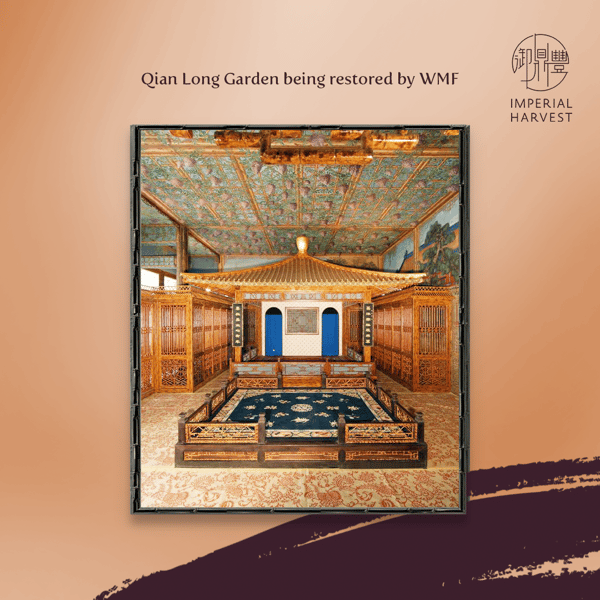
Qian Long Gardens being restored by WMF

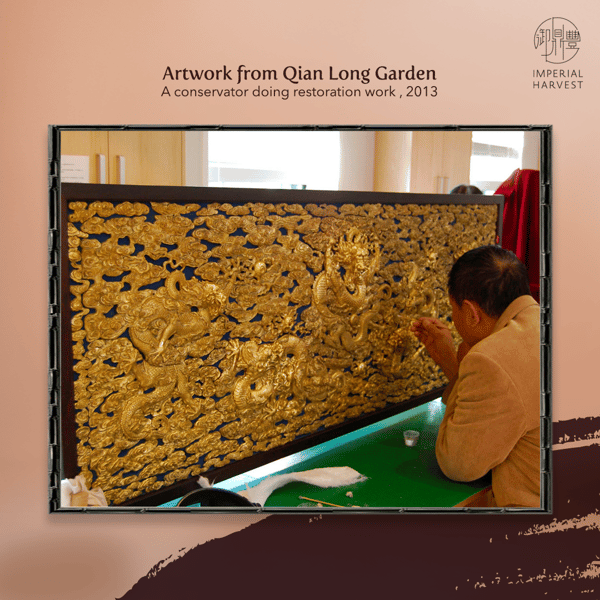
The bold and innovative styles of Western art are reflected throughout the Qian Long Garden complex. An ongoing project by the World Monuments Fund (WMF) to restore and conserve the Qian Long Garden reveals the influence of Western artistic techniques introduced by Castiglione and his peers. A wall of trompe l’oeil silk paintings adeptly manipulates visual perception to generate desired perspectives of the artwork. Murals within the complex extensively employ chiaroscuro techniques, harnessing the interplay of darkness and light to accentuate contrasts and shadows. These Western influences existed alongside bamboo carvings and jade pieces that were a hallmark of prevailing Chinese art, seamlessly marrying these diverse cultural tropes within the garden compound. 

The cultural legacy of the Qian Long Garden complex

While the Qian Long Garden complex never fulfilled its original purpose as Emperor Qian Long’s retirement abode, it was nevertheless well-utilised by generations of emperors after him. Many of them turned the complex into a recreational space, using it as a retreat from the affairs of the imperial court.

Qian Long Garden being restored by WMF

Today, the Qian Long Garden complex is an enduring representation of the Qing dynasty’s outstanding success, as well as its unique fusion of Eastern and Western cultural elements. Its four courtyards, 27 building structures and elaborate landscaping proudly showcase the progressive and eminent leadership of Emperor Qian Long and other luminaries of the Qing dynasty. Led by the WMF, its conservation and upcoming public showcase heralds a new dawn not only for Qing-era cultural arts, but also for the Imperial Feng Shui tradition that flourished throughout the dynasty.

Preserving Imperial Feng Shui: The Imperial Harvest Mission

The preservation of the Qian Long Garden, along with the richness of its illustrious culture, resonates deeply with Imperial Harvest. Since conception, Imperial Harvest has been dedicated to preserving and promoting the art of Imperial Feng Shui, whose fabled history predates even Emperor Qian Long and the Qing dynasty.

Emperor Qian Long was well-known for his fervent patronage and endorsement of this venerable art. Throughout his distinguished reign, it grew in prominence and was harnessed to guide numerous affairs of the imperial court.  

Mountains and the Benefactor Sector in Imperial Feng Shui

In Imperial Feng Shui, each property such as a home or office is divided into a number of “sectors”. Each sector corresponds to a specific aspect of occupants’ lives, such as wealth and the presence of benefactors. The east-meets-west aesthetic of the Qian Long Garden provides the inspiration behind the Imperial Harvest Autumn 2021 Qian Long Jadeite Mountain collection, which powerfully activates the benefactor sector in homes and offices.

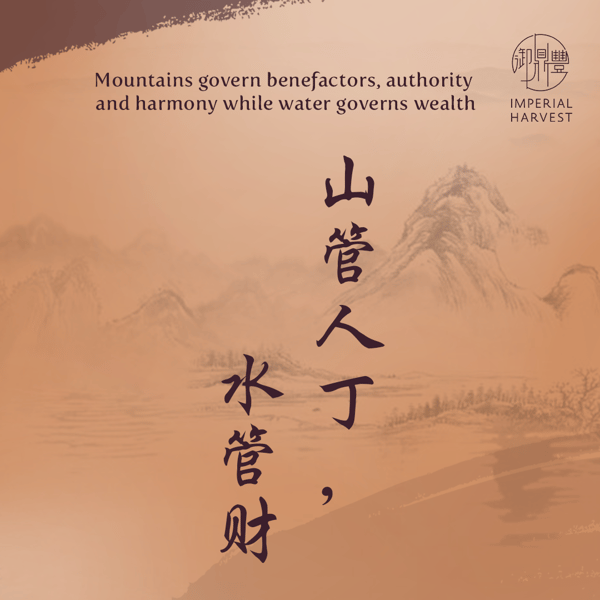
Mountains govern benefactors, authority  and harmony

According to Imperial Feng Shui classics, “Mountains govern benefactors, authority and harmony while water governs wealth” (山管人丁,水管财).  Being stable and immovable, mountains represent power and support from benefactors. The power of the benefactor sector is therefore harnessed by activating the mountain star.

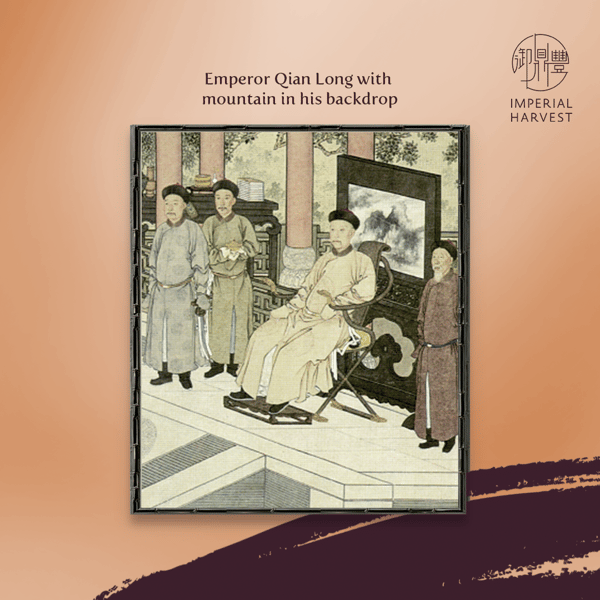
In Chinese cosmology, mountains are regarded as one of the most powerful symbols, regulating cosmic order and ensuring permanence. In recognition of their monumental role, generations of Chinese emperors ensured mountain images were emblazoned alongside their royal thrones, mirroring their mandate and authority over the land. The activation of the mountain star also empowered emperors with benefactor support, authority and nobility, and symbolised their ability to rule with stability and steadfastness.

Emperor Qian Long with mountain in his backdrop

These considerations gave rise to the commissioning of the Qian Long Jadeite Mountain in the late 18th century. This powerful jadeite artefact was conceived by Emperor Qian Long’s Imperial Feng Shui masters as an ingenious alternative to building palace structures on mountainous terrain, which was inherently challenging with prevailing engineering and architectural capabilities. The mountain star was therefore activated by these visual representations of auspicious mountain landforms. In a nod to Emperor Qian Long’s artistic inclinations, these jadeite mountains were designed with reference to various pieces in his extensive art collection. 

The Heritage of Emperor Qian Long's Jadeite Mountains lives on at Imperial Harvest

Blog_2021_Sep_Untold Story of the Qian Long Jadeite Mountains-7-1

The Qian Long Jadeite Mountain was initially conceptualised as a practical means of leveraging auspicious mountain landforms. In the centuries since, it has come to be feted as a celebration of the innovation and craftsmanship of Emperor Qian Long’s Imperial Feng Shui artisans. 

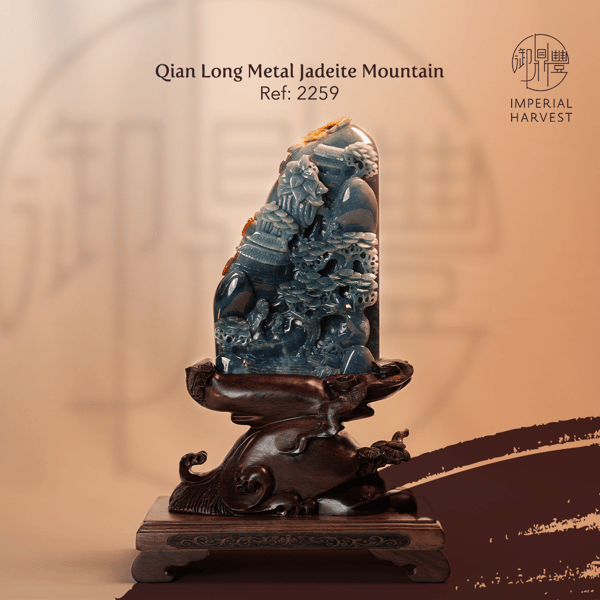
Qian Long Metal Jadeite Mountain

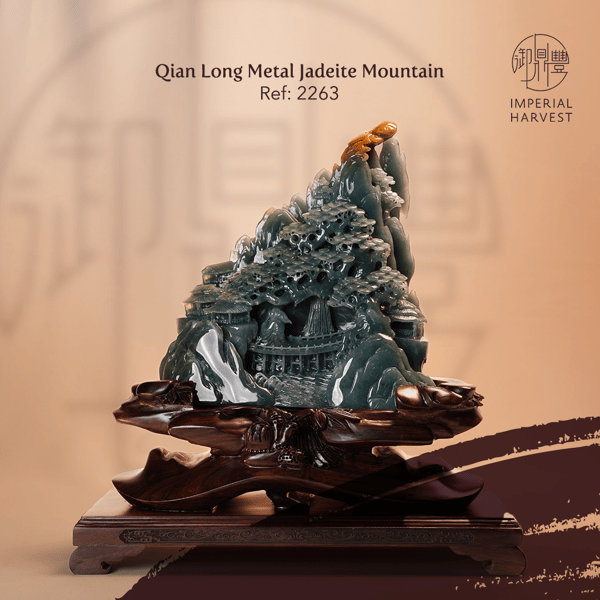
Qian Long Metal Jadeite Mountain

Unlike other gemstones, jadeite production requires a laborious grinding process due to its exceptional hardness. Imperial Harvest’s Qian Long Jadeite Mountain collection bears witness to the meticulous process undertaken 300 years ago by Emperor Qian Long’s craftsmen, in which elegant and lifelike details were painstakingly relayed from paper outlines to jadeite sculptures. Today, Imperial Harvest’s timeless reimagination of Emperor Qian Long’s jadeite masterpieces adorn the homes and offices of numerous blessed clients, empowering them with amplified benefactor support, relationship harmony and success.


Your expert consultants are on hand to help you find the perfect Imperial Harvest treasure. Book a complimentary consultation today or contact us at +65 91221826

Book A Bazi Consultation

Our galleries are located at 402 Orchard Road, Delfi Orchard #02-07 & #02-08, Singapore 238876.

Opening Hours: Mon-Fri, 12pm-8pm, Sat: 10am-6pm, Closed on Sundays

From the Qing Court to Imperial Harvest: The Royal Heritage of Imperial Feng Shui

Posted by Imperial Harvest on 03 September 2021

Estimated Reading Time: 3mins

The Qing dynasty bears witness to one of the most prosperous and successful eras of China’s dynastic history. Led by ethnic Manchus, it is renowned not only for its material abundance, but also for fostering a thriving exchange of cultures between the East and West. The unparalleled fortunes of the Qing dynasty make it widely acknowledged as a “Golden Age” in ancient Chinese history. 

The achievements of the Qing dynasty are especially evident during the reign of Emperor Qian Long. Under his wise and eminent rule, the Qing dynasty underwent a renaissance of the arts, culture, architecture and innovation. Inspired by his fervent endorsement of and adherence to the principles of Imperial Feng Shui, this ancient art also thrived and was widely adopted by officials in the Qing court. 

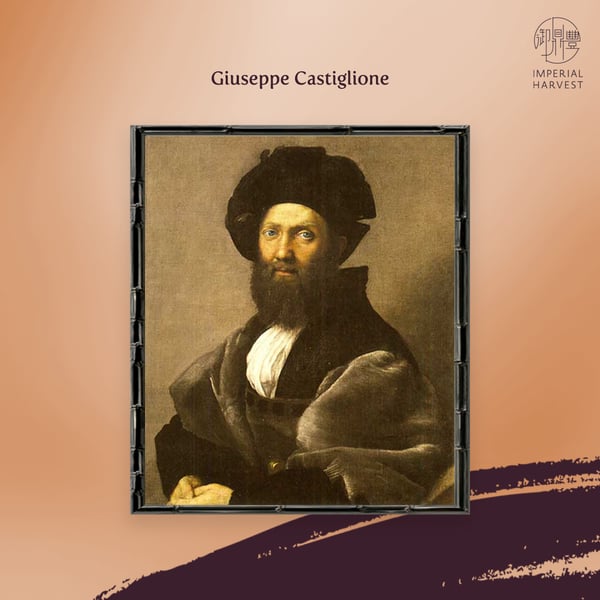
The extensive influence of the West throughout the Qing dynasty is clearly evident in the prevailing imperial architecture and design language. Emperor Qian Long’s appreciation of Western design techniques and elements led him to extensively engage the services of Jesuit missionary and painter Giuseppe Castiglione. In 1747, Castiglione was appointed to oversee the design and construction of Western-style structures in the imperial gardens of the Old Summer Palace. He was assisted by a diverse team of designers that included other Jesuits such as Jean-Denis Attiret, giving the palace a unique East-meets-West aesthetic. 

Blog_030921_Master David Architect_Giuseppe Castiglione

Castiglione also brought this harmonious fusion of Eastern and Western artistic styles to imperial court paintings, which he was invited to produce. He adeptly applied his Italian artistic training to prevailing Chinese tastes, creating bold and innovative styles of court paintings. Under Castiglione’s influence, these paintings took on increasingly Western qualities, giving rise to a novel genre of East-meets-West artwork that endured throughout the Qing dynasty.

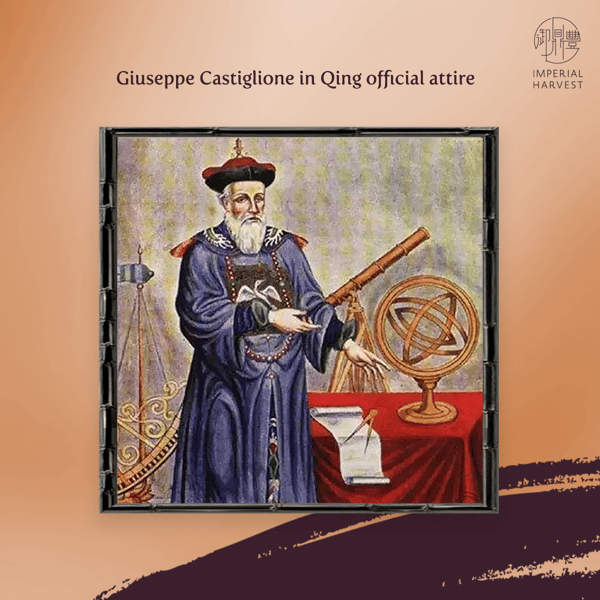
With his service to the imperial court spanning the reigns of three emperors, Castiglione played a large role in fostering fruitful dialogue between Eastern and Western artistic styles. His extensive contributions were greatly respected and appreciated by Emperor Qian Long, who appointed him an official of the third rank.

Blog_030921_Master David Architect_Giuseppe in Qing-1

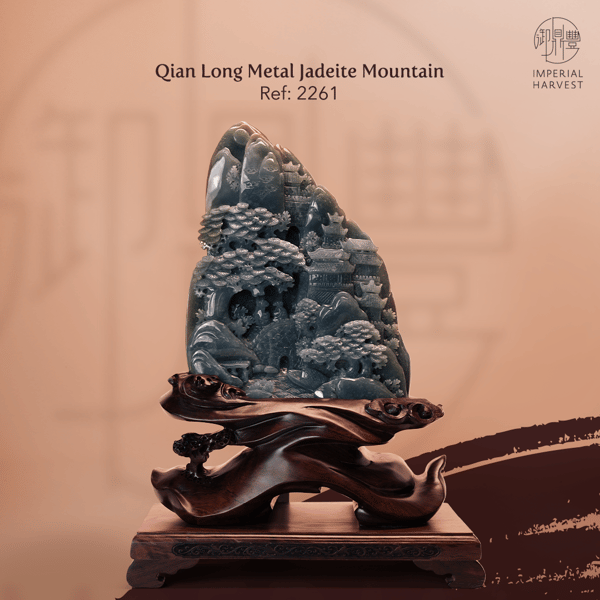
Qian Long Jadeite mountains inspired by east-meets-west aesthetic of Qing dynasty designs

Blog_020921_Master David Architect_2261_updated

Today, the pioneering east-meets-west aesthetic that widely permeated the Qing dynasty lives on at Imperial Harvest. Inspired by the revolutionary designs introduced to the imperial court by Castiglione, the Imperial Harvest Qian Long Jadeite Mountain Collection incorporates Western design elements and techniques that gained popularity throughout Emperor Qian Long’s reign.

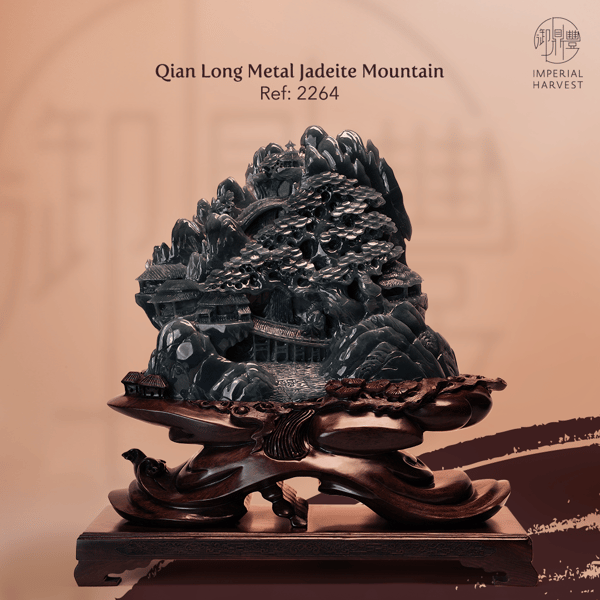
Blog_020921_Master David Architect_2264_updated

Taking reference from the trompe l’oeil technique popular in European paintings, the Qian Long Jadeite Mountains incorporate elements of forced perspective into their design. Through deft manipulation of human visual perception, Master David and his team of designers amplify and draw attention to the auspicious features that adorn each Imperial Harvest Qian Long Jadeite Mountain.

Blog_020921_Master David Architect_2265_updated

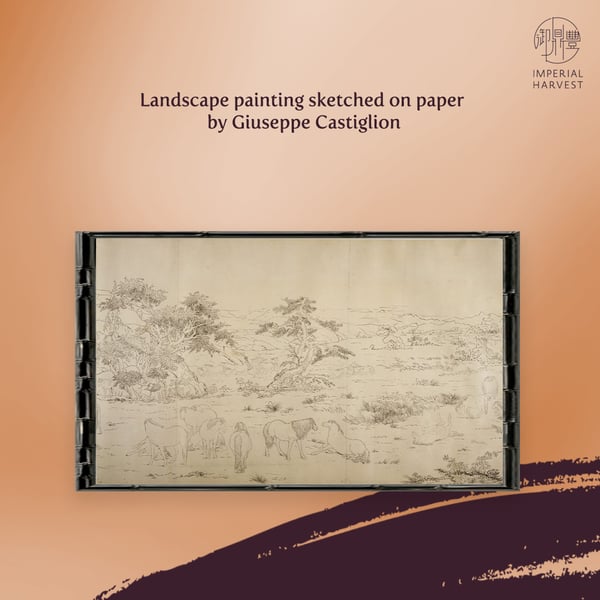
The preparatory groundwork for the carving of each Qian Long Jadeite Mountain also bears resemblance to the elaborate process undertaken by Castiglione in his paintings for the imperial court. The emperors favoured silk as the medium for such artworks, in appreciation of its uniquely soft and smooth texture. As painting brushwork on silk is difficult to remove or revise, Castiglione often perfected his sketches on paper before proceeding to transfer his elaborate artwork to the delicate silk canvas.

Blog_030921_Master David Architect_Landscape Painting

Similarly, every Imperial Harvest Qian Long Jadeite Mountain begins life in the fertile creativity of Master David’s design sketchbook. After meticulous work to determine and finalize the sketches, they are sent to our state-of-the-art workshops, where our master craftsmen cut and carve the finest raw jadeite according to Master David’s enlightened vision.

Master David - Architect of Modern Imperial Feng Shui

With his patronage of Western design styles and techniques, Emperor Qian Long catalysed the fusion of Western artistic cultures with traditionally Oriental symbols, themes and design elements. His appointment of numerous Western art and design consultants to the imperial court came to be seen as a bold endorsement of novel and exotic ideas and approaches.

Emperor Qian Long’s penchant for reimagining the status quo makes him a prominent architect of the Qing dynasty’s cultural and physical landscape. His reign brought about thriving intercultural exchange and new forms of creative expression within the empire.

At Imperial Harvest, the influence of Emperor Qian Long’s pioneering spirit guides the development of every earthly treasure. Just as Emperor Qian Long left his lasting imprints on the Qing dynasty through his groundbreaking initiatives, Master David decisively shapes the course of modern Imperial Feng Shui with his bold vision. In staying true to the Imperial Feng Shui ethos that flourished in the Qing dynasty with Emperor Qian Long’s patronage, Master David today plays a prominent role in revitalizing this ancient lost art.

Blog_03092021_MD

As an architect of modern Imperial Feng Shui, Master David is passionate about contemporary applications of this noble art. Over the years, Imperial Harvest has partnered countless clients on the journey towards attaining their personal and professional goals. While these may be in areas as diverse as career aspirations, familial relationships and personal development, Imperial Harvest’s commitment to Imperial Feng Shui and adherence to its core tenets remain constant and enduring.


Your expert consultants are on hand to help you find the perfect Imperial Harvest treasure. Book a complimentary consultation today or contact us at +65 91221826

Book A Bazi Consultation

Our galleries are located at 402 Orchard Road, Delfi Orchard #02-07 & #02-08, Singapore 238876.

Opening Hours: Mon-Fri, 12pm-8pm, Sat: 10am-6pm, Closed on Sundays

Imperial White Inkstones to Address Missing Indirect Wealth Sectors

Posted by Imperial Harvest on 26 August 2021

Estimated Reading Time: 4minutes

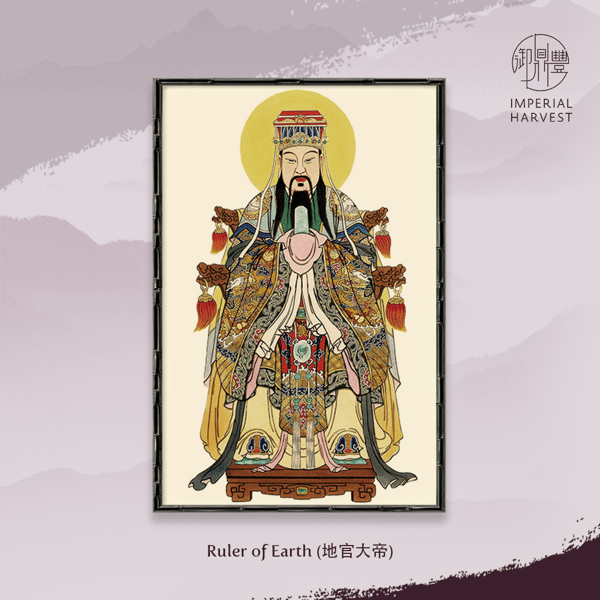
This Seventh Lunar Month is the birthday month of Di Guan Da Di (地官大帝), the Ruler of Earth who oversees indirect wealth (偏财库). This refers to wealth derived from secondary income sources such as investments, trading and windfalls. Di Guan Da Di’s birthday makes this month a highly auspicious period to take steps to enhance one’s indirect wealth.

Blog_2021_Aug_Investment Breakthroughs during Seventh Lunar Month-1-2

According to Imperial Feng Shui principles, there are two groups of stars, namely the mountain star and water star. Each star fulfills a specific set of roles in our lives. One of the most important verses in the classics of Imperial Feng Shui states that “Mountains govern benefactors, authority and harmony, while Water governs wealth, opportunities and intuition.” (“山管人丁,水管财”). This verse indicates the significance of the Water Star in one’s pursuit of abundance and prosperity.

In Imperial Feng Shui, the Water Star is primarily activated by the installation of fine natural crystals at the wealth sectors of homes and offices. This practice stays true to the wisdom of Emperor Qian Long. who extensively harnessed the properties of such crystals to lead the Qing dynasty to a golden era of growth, abundance and stability. 

Blog_2021_Aug_Investment Breakthroughs during Seventh Lunar Month-2-1

Click here to read about how Imperial Harvest stays true to this ancient tradition with our fine crystal collections.

Missing Sectors and the Imperial White Inkstone

While Imperial Harvest’s fine natural crystals are powerful enhancers of indirect wealth this Seventh Lunar Month, other interventions are required in homes and offices with missing indirect wealth sectors. 

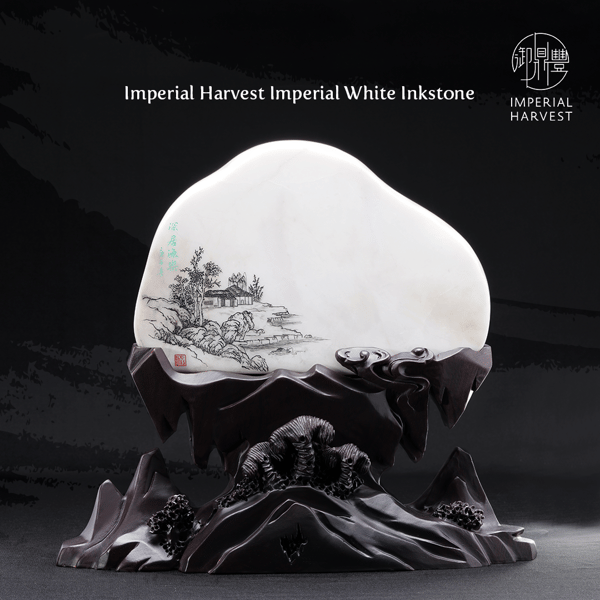
The Imperial White Inkstone has the potent ability to promote the auspicious energy of one sector while countering three inauspicious sectors (一白遮三丑, 一旺挡三煞). Apart from addressing the problems arising from missing sectors, it also counteracts the ill effects of Sha Qi and activates the authority sector in homes and offices.

Inkstones are commonly mined from the famed Seven Star Crags in Zhaoqing City, Guangdong. While they come in a variety of colours, only 0.02% of them are white, making them the rarest type of inkstone available. The renowned exclusivity of white inkstones made them historically reserved for Chinese Emperors, with Imperial Feng Shui masters using them to empower the royals with ruling authority and legitimacy. 

Blog_2021_Aug_Investment Breakthroughs during Seventh Lunar Month-3-1

One of the foremost proponents of Imperial Feng Shui, Emperor Qian Long commissioned a variety of inkstones in ancient and classical styles. Some of these even bore inscriptions of his own poetry. The production of Imperial White Inkstones was strictly overseen by government officials and handcrafted by top imperial artisans using materials of the highest quality. The finest inkstones are free from impurities and famed for their luminous white-as-snow appearance. They also boast a jade-like texture that makes them smooth to the touch.

Imperial Harvest’s Preservation of Emperor Qian Long’s Inkstone Traditions

The complex motifs on each Imperial Harvest Imperial White Inkstone are sketched and designed by Master David, who engages only the most experienced engravers to etch his iconic handiwork on the precious stones. These artisans employ specialized tools such as binocular microscopes to carve the most minute of details with care and precision, sometimes spending more than a month on each inkstone.

Each Imperial White Inkstone is then polished to highlight its distinctive design and accentuate its shape. This is done by hand using the free-floating technique. While technically challenging, this produces a smooth and blemish-free surface.

The result of these meticulous processes is a collection of stunning Imperial White Inkstones that befit the Imperial Harvest brand. They also embody the heritage of the inkstones of Emperor Qian Long’s Imperial Court 300 years ago, along with their unrivalled Imperial Feng Shui properties.

This auspicious Seventh Lunar Month, Master David curates and presents his Imperial White Inkstone recommendations to counter the limitations of missing indirect wealth sectors in the home and office. 

Royal Panda Collection

The Imperial Harvest Royal Panda Collection is inspired by the clean and precise painting style of Wu Zuoren, one the most prominent artists of contemporary China.

Blog_2021_Aug_Investment Breakthroughs during Seventh Lunar Month-13-1

Wu Zuoren is renowned for his deft fusion of traditional Chinese depictions of scenery and nature with Occidental painting techniques. His works are characterised by simplicity, clarity of expression and vigour.

The Royal Panda Collection represents Imperial Harvest’s tribute to the widely-acclaimed genius of Wu Zuoren.

Blog_2021_Aug_Investment Breakthroughs during Seventh Lunar Month-9-1

The panda is often depicted as leading a carefree life full of joy and inquisitiveness, and is also a symbol of abundance. The Royal Panda Collection pairs the panda with bamboo, whose ladder-like structure represents steps of endurance and steady progress towards success.

The pointillism technique is employed to project minuscule dots onto the stone’s surface, creating lifelike shadows that contrast the lighter shades against darker ones. The bold overlay of black on white borrows from the Renaissance-inspired chiaroscuro to augment the depth and volume of the pandas’ features, along with their jovial expressions suggesting their bliss of contentment.  

Blog_2021_Aug_Investment Breakthroughs during Seventh Lunar Month-4-1

Endowed with the remarkable stylistic harmony of traditional Chinese ink wash painting techniques, the Royal Panda Collection’s complexity of artistic expression places it firmly within the top echelons of classic paintings.

Landscapes Collection

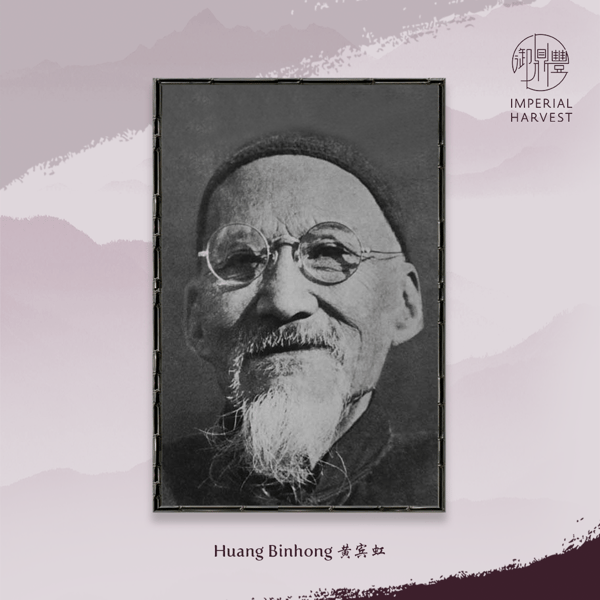
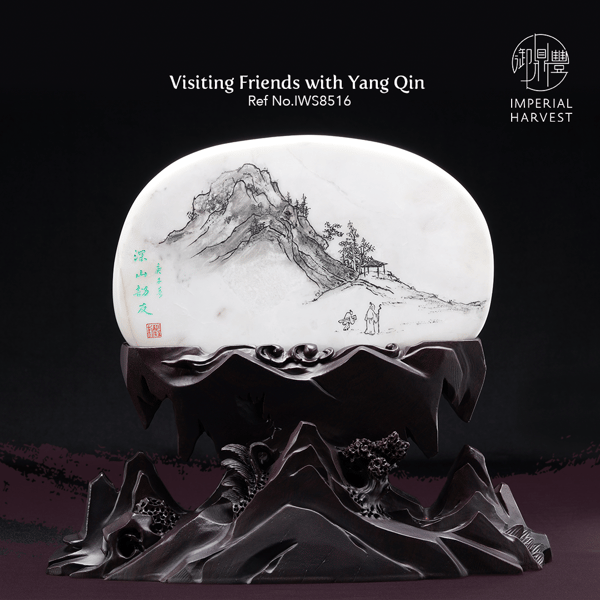
The designs in the Landscapes Collection are influenced by the landscape paintings of famous Chinese artist Huang Binhong.

Blog_2021_Aug_Investment Breakthroughs during Seventh Lunar Month-26

Huang Binhong possessed exceptional skill in the manipulation of brush and ink, as well as a keen understanding of positive and negative spaces that amplified the abstract nature of his brushwork. He is widely considered to be one of the last innovators in literati-style paintings, and widely acclaimed for his freehand landscapes.

Blog_2021_Aug_Investment Breakthroughs during Seventh Lunar Month-17-1

These qualities are reproduced and reflected in the Landscapes Collection, which encapsulates a nuanced depiction of the natural world. Master David’s renditions of traditional landscape paintings exhibit a richness of detail garnered from a bird’s eye perspective of landforms, flora, and fauna. Broad calligraphic strokes are incorporated cohesively into faithful mimetic representations of reality, creating stunning masterpieces brimming with technical finesse and mastery of Oriental art.

Blog_2021_Aug_Investment Breakthroughs during Seventh Lunar Month-14-1

In Chinese, landscapes are known as 山水 (Shan Shui), which literally translates to “mountains and water”. These are two of the most important elements found in nature, and are thought to be harmoniously in equilibrium. Imperial Harvest’s true-to-life Landscapes Collection seamlessly marries fine artistic pedigree with the inkstones’ inherent properties to counter the effects of missing indirect wealth sectors. 

Blog_2021_Aug_Investment Breakthroughs during Seventh Lunar Month-21

For ambitious individuals seeking massive growth in their secondary income streams, living in a home with missing indirect wealth sectors would be akin to fighting a losing battle. The Imperial Harvest Imperial White Inkstone is an indispensable treasure for such circumstances. 


Your expert consultants are on hand to help you find the perfect Imperial Harvest treasure. Book a complimentary consultation today or contact us at +65 91221826

Book A Bazi Consultation

Our galleries are located at 402 Orchard Road, Delfi Orchard #02-07 & #02-08, Singapore 238876.

Opening Hours: Mon-Fri, 12pm-8pm, Sat: 10am-6pm, Closed on Sundays

Indirect Wealth Sectors in the Home and Office

Posted by Imperial Harvest on 23 August 2021

Estimated Reading Time: 4minutes

The indirect wealth sectors in our homes and offices hold the key to ushering in prosperity from secondary streams of income. These supplementary income streams could include sources such as financial investment portfolios, unanticipated windfalls and various inheritances.

This year, the seventh lunar month runs from 8 August to 6 September of the Gregorian calendar. Being the birthday month of Di Guan Da Di (地官大帝), the Supreme Ruler who oversees indirect wealth (偏财库), it is an ideal period to reap the auspicious indirect wealth blessings he bestows.

Based on rigorous studies and research, Imperial Feng Shui masters of the Qing dynasty found that indirect wealth sectors within each property could be activated with the proper installation of fine natural crystals. The correct activation of these sectors, according to Imperial Feng Shui principles, empowers the occupants with robust and rewarding streams of indirect wealth.

Read more about the rich Imperial Feng Shui heritage of activating indirect wealth sectors with fine crystals here.

Activating Indirect Wealth Sectors this Auspicious Seventh Lunar Month 

Staying true to the wisdom of Emperor Qian Long’s Imperial Feng Shui masters, Imperial Harvest today empowers thousands of blessed clients with the finest earthly treasures to realize their personal and professional pursuits. Just as the Qing dynasty flourished with Emperor Qian Long’s fervent patronage of Imperial Feng Shui, Imperial Harvest’s esteemed clients have gone on to become leaders and pioneers in their own right, with the blessings of their earthly treasures.

This auspicious seventh lunar month, Imperial Harvest celebrates the birthday of Di Guan Da Di with exquisite crystals designed to activate the indirect wealth sectors in your home or office.

The Three Cs of Imperial Harvest Crystals

The Imperial Harvest Crystal collection is meticulously designed by Master David, incorporating the wealth-garnering features of auspicious deities and creatures to endow the destined owner with abundance and prosperity. Imperial Harvest works directly with mine owners in Brazil to curate the finest raw crystals available. 

Every Imperial Harvest crystal undergoes eight rounds of rigorous testing before it is certified by independent gemological institutes. The exquisite quality of Imperial Harvest crystals, as embodied by their three Cs, elevates them above ordinary crystals for our discerning blessed clients.

Clarity

blog_200821_indirect wealth_Clarity

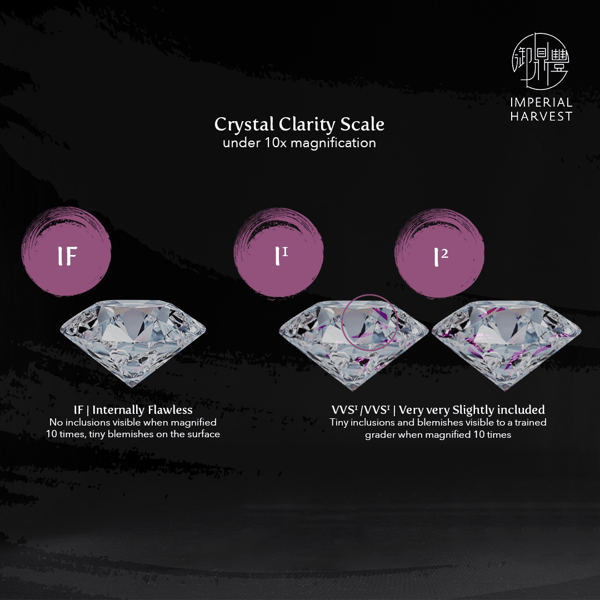
As crystals are formed deep within the earth, under extreme heat and pressure, virtually all contain "birthmarks", or small imperfections. The clarity of a crystal refers to the degree to which these imperfections are present. Depending on the size, location and darkness of these imperfections, they can interfere with light as it passes through the crystal. Imperial Harvest’s crystals are invariably of impeccable clarity - they are of similar clarity as the crystals used to carve Emperor Qian Long's extensive crystal collection 300 years ago. 

Imperial Harvest’s crystals are those that achieve only the most stringent gemological standards. In Imperial Feng Shui, the clarity of a crystal is directly correlated with the speed at which prosperity is achieved. 

Colour

Imperial Harvest’s Crystal collection consists of only the world’s finest naturally-coloured crystals. This means they have never been artificially treated to remove, add or alter any colours. 

Spanning a range of colours, some of Imperial Harvest’s crystals are completely colourless, while others sport faint natural hues of brown, yellow or pink.

blog_200821_indirect wealth_Colour_clear quartz closeup-2

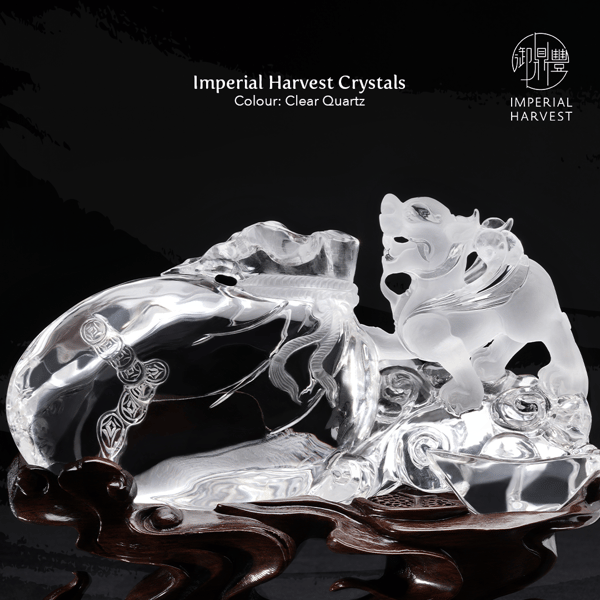
Clear Quartz is colourless and transparent, a result of the crystals growing with very little or no contact with their host rock. 99% of clear quartz in the market is tainted with impurities and hues of faint colours, having been treated with heat or gamma irradiation to induce colour. Imperial Harvest clear quartz crystals are derived only from the remaining top 1%.

blog_200821_indirect wealth_Colour_Smoky quartz closeup-2

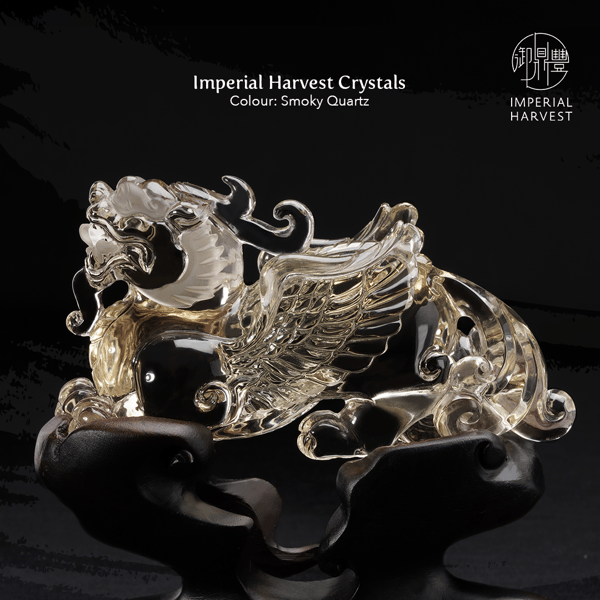
Smoky Quartz derives its smoky brown colour from the natural irradiation of silicon dioxide that creates the free silicon. Imperial Harvest’s highly-translucent smoky quartz crystals are extremely rare, making up just 0.5% of all smoky quartz in the market. The remaining 99.5% is either opaque or partially translucent.

blog_200821_indirect wealth_Colour_Citrine closeup-1

Citrine is one of the rarest crystals in the world. 97% of citrines available in the market are heat-treated amethysts or smoky quartz. In contrast, Imperial Harvest’s all-natural citrine crystals obtain their brilliant fancy yellow colour from natural ferric minerals present in quartz.

blog_200821_indirect wealth_Colour_Rose Quartz closeup-1

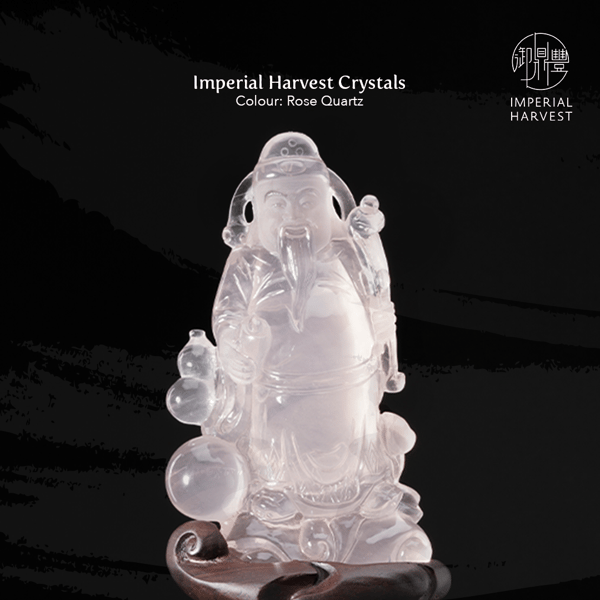
Rose quartz is one of the world’s most highly-prized crystals. Trace amounts of titanium, iron and manganese give rise to its pinkish hue. Only less than 5% of crystals in the Imperial Harvest collection is rose quartz.

blog_200821_indirect wealth_Colour_Rutilated Quartz closeup-1

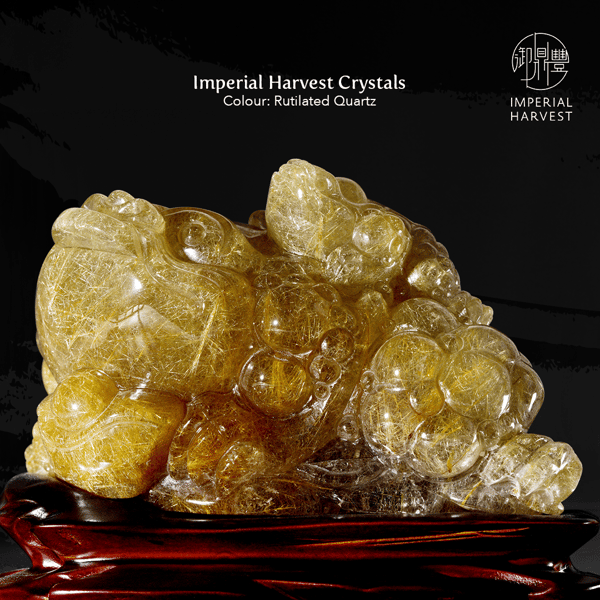
Rutilated quartz contains natural acicular (needle-like) inclusions of rutile. These are usually gold-tinged, but may sometimes appear silver, copper red or deep black. Imperial Harvest offers only full rutilated quartz - the highest quality rutilated quartz available.

Craftsmanship

blog_200821_indirect wealth_Craftsmanship

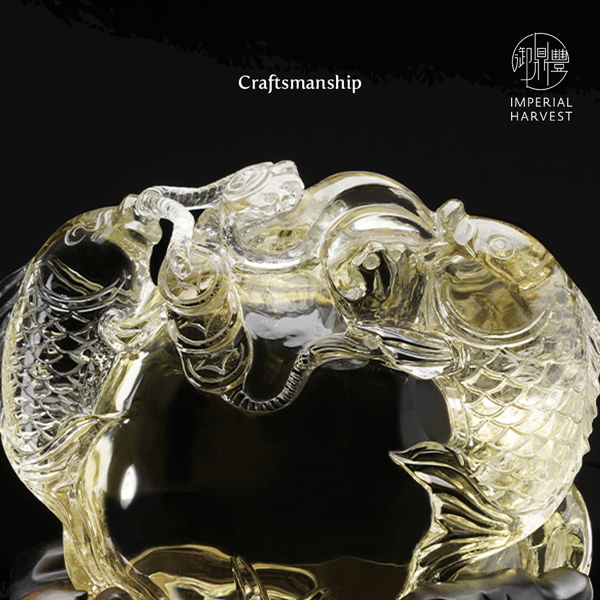
While a raw crystal owes much of its beauty to nature, its manipulation in the hands of a master craftsman allows it to truly shine as a work of art. Imperial Harvest honours the world’s finest crystals with the most impeccable craftsmanship available. From conceptualization to completion, each Imperial Harvest crystal undergoes extensive designing and hand-carving before the finishing touches are applied by the most skillful artisans of our time.

Every Imperial Harvest crystal begins life in Master David’s design sketchbook. After meticulous work to determine and finalize the sketches, they are sent to our state-of-the-art workshops, where our master craftsmen cut and carve according to Master David’s enlightened vision.

This process is carried out entirely by hand, by a dedicated artisan, with skills acquired from generations of master artisans before him. This imbues each Imperial Harvest crystal with impeccable detailed elements which no machine on Earth could ever replicate. 

Drawing on Imperial Feng Shui principles, crystals must be deftly created to maximize the amount of light reflected from their surfaces. This allows them to redirect earthly energies to the fullest extent, thereby channeling the greatest amounts of auspicious energies to the occupants. At Imperial Harvest, all of our crystals are hand-fashioned with a technique that accounts for their unique refraction index and reflective properties.

Pixiu (貔貅)

blog_200821_indirect wealth_Colour_Smoky quartz-1

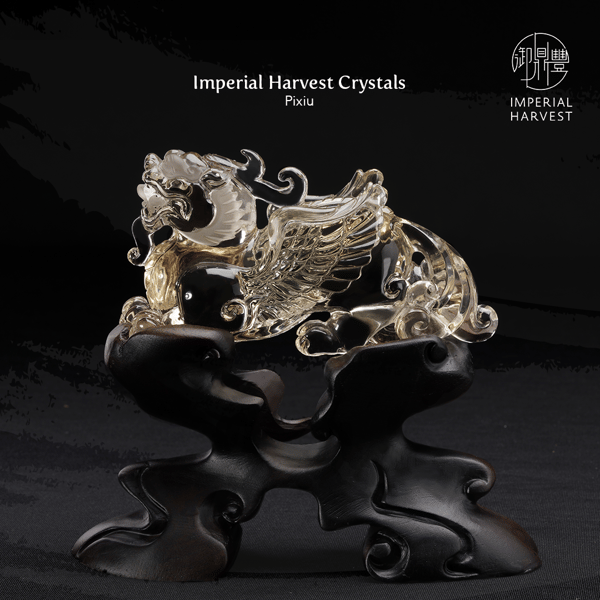
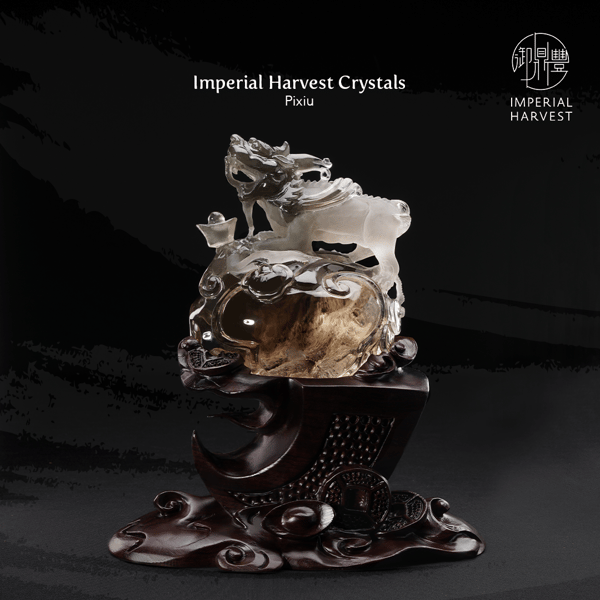
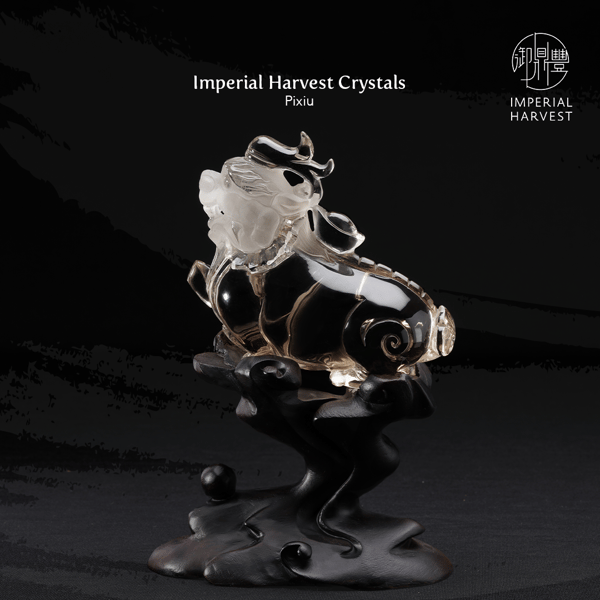
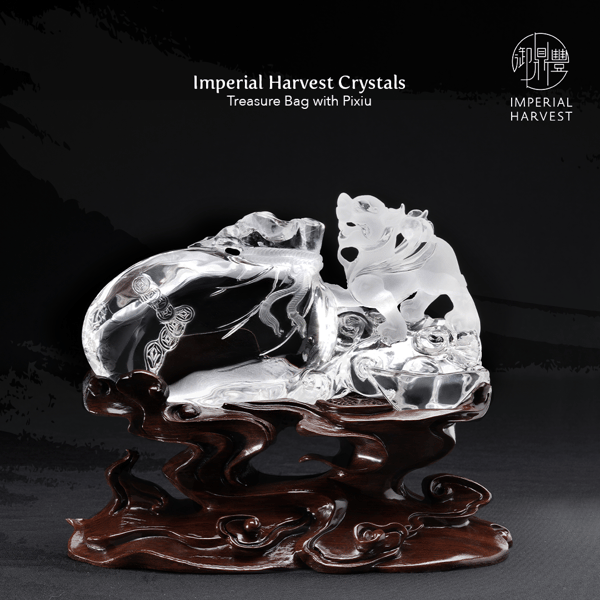
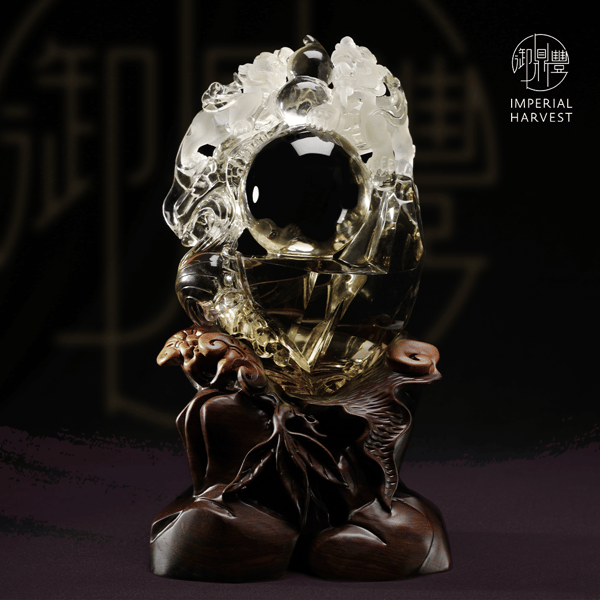
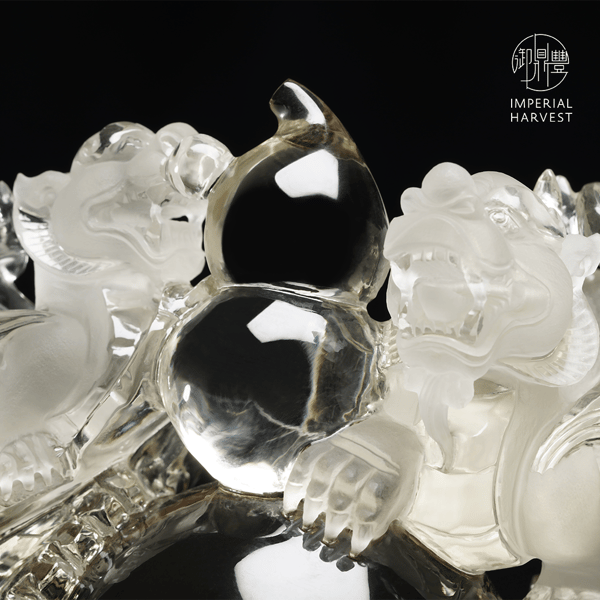
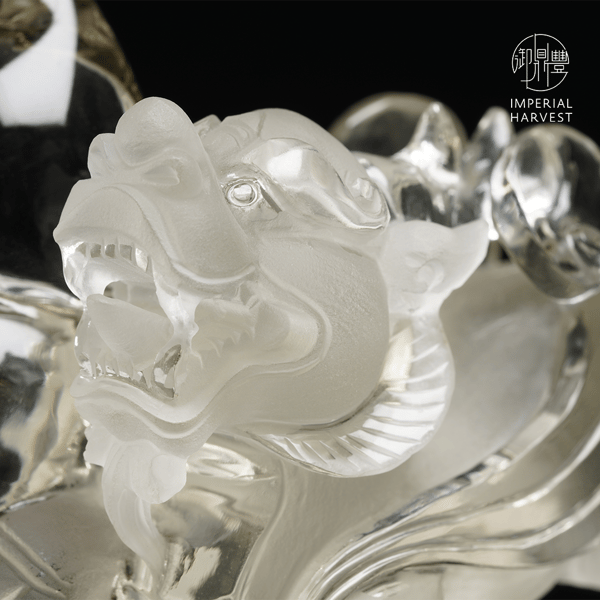
The Pixiu is one of the most iconic mythical creatures in the Imperial Harvest collection. It is a ferocious-looking fusion of a dragon’s head, a horse’s body and unicorn claws. The winged animal's bold silhouette resembles that of a lion.

blog_200821_indirect wealth_Pixiu 2

Legend has it that the Pixiu regularly consumes large amounts of precious elements such as gold and silver, but does not excrete any of it. This gives it the unique ability to draw wealth from all directions while preventing it from flowing out. As the Pixiu possesses an insatiable appetite, it is a symbol of a constant inflow of extremely good fortune and prosperity. This helps its destined owner rapidly accumulate assets and resources from a range of investment and windfall sources.

blog_200821_indirect wealth_Pixiu

Laughing Buddha’s Treasure Bag 

blog_200821_indirect wealth_LB Treasure bag

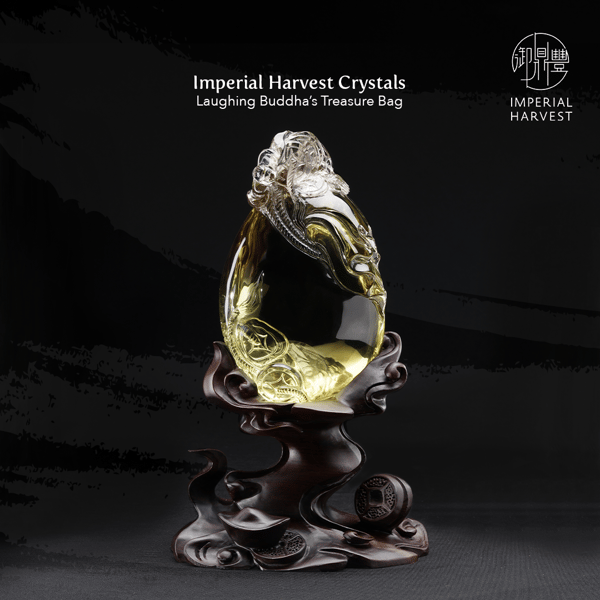
The Imperial Harvest Laughing Buddha Crystal Collection is a tribute to the Laughing Buddha’s joyous outlook. He is almost always depicted with his treasure bag that is filled with rare jewels, gold ingots and elixirs, making it a prominent symbol of perennial auspicious luck and prosperity. This evokes the notion of amassing a large fortune and achieving financial contentment in life.

blog_200821_indirect wealth_Colour_clear quartz-2

The Laughing Buddha’s Treasure Bag Crystal is the ultimate representation of abundance and prosperity, and the destined owner is blessed with a life of contentment.

blog_200821_indirect wealth_Treasure bag 2-1

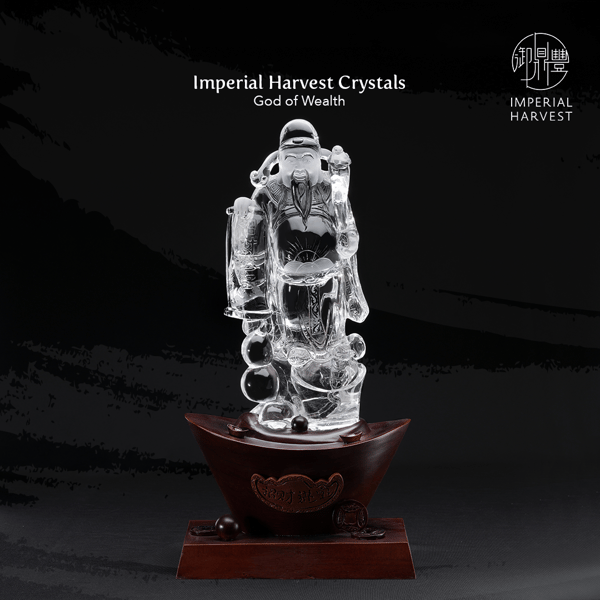
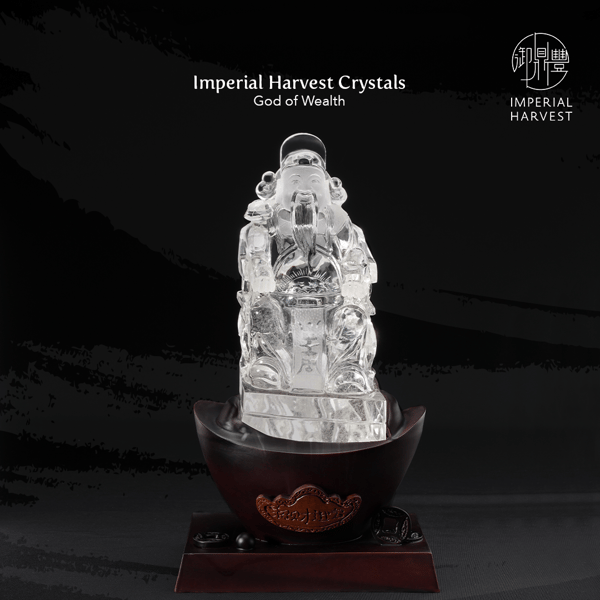
God of Wealth 

blog_200821_indirect wealth_Colour_Rose Quartz-1

The God of Wealth is widely worshipped for his governance of fortunes. The Imperial Harvest God of Wealth crystal depicts him holding an auspicious scroll with the Chinese words “招财进宝”, proclaiming the arrival of wealth. In his other hand is the Ruyi Scepter, a symbol of authority and respect that confers exceptional luck upon those seeking power and leadership. It also represents a smooth-sailing life for its destined owner. 

blog_200821_indirect wealth_GOW-1

Bringing a torrent of auspicious luck, the Imperial Harvest God of Wealth ushers good fortune into destined owners’ homes and workplaces, and helps them secure prosperous and fulfilling lives with secure, high-paying and respectable careers.

blog_200821_indirect wealth_GOW 2

Addressing missing indirect wealth sectors

blog_200821_indirect wealth_Indirect wealth-1

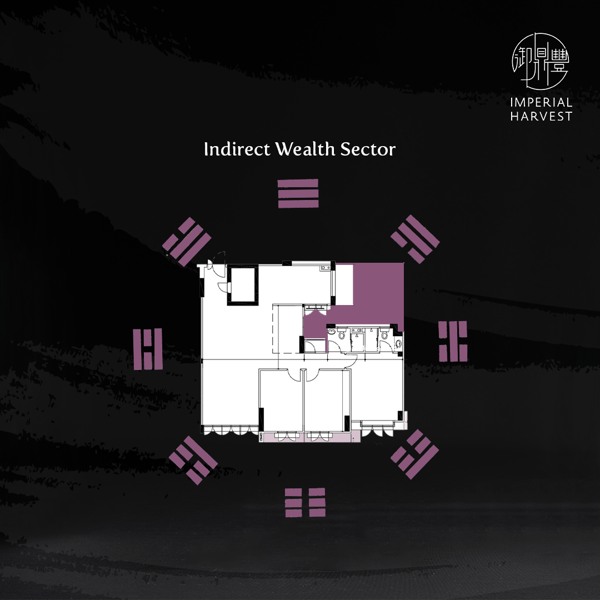
While Imperial Harvest crystals are effective in activating the indirect wealth sectors within the property, these sectors may sometimes be missing. 

In ancient China, the presence of important sectors was ensured by constructing properties in “regular” shapes, most commonly squares or rectangles. Unfortunately, modern-day considerations, competing priorities and architectural techniques often gloss over the importance of such “regularity”, resulting in missing sectors and negatively affecting the occupants.

The Imperial White Inkstone negates the noxious energies resulting from the missing sectors, and restores the optimal balance of energy within the property. At the same time, it empowers occupants with benefactors, power and authority.

blog_200821_indirect wealth_White Inkstone

The Imperial White Inkstone’s versatility and range of applications was recognized by Emperor Qian Long. He amassed an impressive collection which he used on a daily basis to grind his specially-concocted red vermilion, while reviewing daily state affairs at the Imperial Court.

According to Imperial Feng Shui principles, this meditative grinding of the vermillion empowered Emperor Qian Long with intuition, benefactors and luck to make important state decisions.

This steadfast adherence to Imperial Feng Shui fuelled the success of the Qing Dynasty, propelling it to a long and prosperous reign of 268 years.


Your expert consultants are on hand to help you find the perfect Imperial Harvest treasure. Book a complimentary consultation today or contact us at +65 91221826

Book A Bazi Consultation

Our galleries are located at 402 Orchard Road, Delfi Orchard #02-07 & #02-08, Singapore 238876.

Opening Hours: Mon-Fri, 12pm-8pm, Sat: 10am-6pm, Closed on Sundays

Making Indirect Wealth Breakthroughs with Imperial Harvest this Seventh Lunar Month

Posted by Imperial Harvest on 13 August 2021

Estimated Reading Time: 5 mins

The seventh lunar month holds great significance for Buddhist and Taoists across the world. This is especially so in East Asia, where entire communities often gather to commemorate important events or occasions within this month. 

Seventh lunar month festivities culminate on the 15th day as Zhong Yuan Festival (中元节), which marks the birthday of the Ruler of Earth, one of three Supreme Rulers. The Ruler of Earth, also known as Di Guan Da Di (地官大帝), oversees indirect wealth (偏财库) and earthly wealth capacity (地财库). He also grants devotees intuition and instinct to build a consistently increasing financial portfolio.

Ruler of Earth Seventh Lunar Month

Golden opportunity to supercharge your indirect wealth 

The financial empowerment conferred by Di Guan Da Di through indirect wealth sources makes his birthday month an opportune period to enhance one’s indirect wealth luck and indirect wealth capacity. Indirect wealth refers to wealth streams that derive from secondary income sources, or income that supplements one’s main livelihood. For example, a full-time teacher who also invests in property derives his indirect wealth from his investments.  

Diversifying your income with indirect wealth streams

A common source of indirect wealth would be a portfolio of financial investment instruments. In volatile financial times such as these, building a strong and diverse portfolio is of paramount importance. With improved investment wealth luck, individuals are able to experience consistent and healthy portfolio growth, regardless of the state of the financial markets. 

Such income could also include wealth derived from windfalls. Windfall wealth refers to unanticipated wealth acquired from ad-hoc activities such as inspired and timely trading decisions. Windfalls enable one to effectively take advantage of evolving situations to benefit one’s position. Enhancing one’s windfall wealth luck attracts and manifests prosperity across a variety of financial endeavours.

Many blessed clients of Imperial Harvest have turned to bolstering their indirect wealth streams of income to ensure their financial security. Over the years, Imperial Harvest has provided invaluable advice and the finest earthly treasures to empower clients in their financial pursuits. 

Click here to read more about how Imperial Harvest empowers our blessed clients with powerful indirect wealth treasures this seventh lunar month.

Wealth sectors at home and in the office 

In the home or office setting, wealth sectors must be activated in order for the occupants to maximize their wealth. When activated correctly, they empower occupants with abundance and prosperity in their lives. 

According to Imperial Feng Shui principles, the mountain star and water star are two groups of stars that play different roles in our lives. One of the most important verses in Imperial Feng Shui classics states that “Mountains govern benefactors, authority and harmony, while Water governs wealth, opportunities and intuition.” (“山管人丁,水管财”). From this verse, we can discern that the activation of the Water Star brings about material abundance and prosperity. 

The birthday of Di Guan Da Di makes the seventh lunar month an auspicious period to activate the indirect wealth sector (偏财位), which governs occupants’ secondary sources of income.

Activating the Water Star (Wealth Star)

With their profound eminence, Emperor Qian Long’s Imperial Feng Shui masters discerned the importance of using fine crystals to activate the water star and catalyse the spread of wealth and prosperity across the kingdom. One of the foremost advocates of Imperial Feng Shui, Emperor Qian Long liberally installed these crystals to activate the auspicious water star in and around the imperial palace. As a result, the Qing dynasty enjoyed robust economic development, consistent agricultural yield, social peace and stability. 

Today, based on Imperial Feng Shui principles, our blessed clients activate the water star in their living or work spaces with the world’s finest crystals - the same grade of crystals used by Emperor Qian Long himself. The Imperial Harvest Crystal collection is a contemporary embodiment of the Imperial Feng Shui tradition that flourished in the Qing Dynasty. It empowers our blessed clients to attain their financial goals and destinies, by ushering boundless wealth and prosperity into their homes and offices.

Mythical Creatures - Pixiu

Seventh Lunar Month Pi Xiu Imperial Harvest Crystal

The Pixiu is a cornerstone of the Imperial Harvest Mythical Creatures collection, which draws inspiration from the mythology of legendary creatures in ancient China. These are iconic symbols associated with auspicious meanings such as good fortune and prosperity. 

Seventh Lunar Month Pi Xiu Imperial Harvest Crystal Close Up

According to folklore, the Pixiu is fond of water, gold, silver and other precious jewels, and consumes wealth from all directions as sustenance. However, as it has no means of excreting these, the Pixiu heralds the acquiring and retention of wealth and treasures. It also represents the heavenly manifestation of good fortune.

Blog_2021_Aug_Investment Breakthroughs during Seventh Lunar Month-4

In ancient China, Pixiu were commonly displayed in grand locations such as palaces and halls to ward off inauspicious Qi (陰氣) and harness auspicious Qi.

In Imperial Feng Shui, the Pixiu is one of the strongest manifestations of raw auspicious luck, and installing it in the auspicious water star sector of your home or workplace can help you attract and accumulate wealth. It also has the power to protect you from calamity and dangers. 

Golden Hall of Prosperity - Laughing Buddha’s Treasure Bag 

Seventh Lunar Month Treasure Bag Imperial Harvest Crystal

The Buddha is a symbol of happiness as he enhances positive aspirations such as wealth, health, career and descendent luck. He is also almost always shown smiling or laughing, hence his nickname, the "Laughing Buddha" (笑佛). Throughout Chinese culture, he appears as a representation of contentment and abundance. 

A Laughing Buddha Crystal is a symbol of auspicious luck and abundance which bestows a plenitude of wealth, happiness and satisfaction upon its destined owner. It also revitalises the intellect and reduces tension within the environment. 

Seventh Lunar Month Treasure Bag Imperial Harvest Crystal Close Up

The figurative definition of the Laughing Buddha’s Treasure Bag derives from the Laughing Buddha’s name, which literally means "cloth sack". This refers to the bag that he is conventionally depicted with as he wanders along. According to folklore, the Laughing Buddha had an open and big heart, and in time he came to be loved by many as he added the often missing lightheartedness, joy and laughter to everyday life. 

Celestial Deities - God of Wealth 

Seventh Lunar Month God of Wealth Imperial Harvest Crystal

The Imperial Harvest Celestial Deities collection depicts a series of heavenly beings with immeasurable powers. They represent the most prominent and powerful crystals in the Imperial Harvest collection. 

Seventh Lunar Month God of Wealth Imperial Harvest Crystal Close Up

Throughout history, devotees have been known to pray conscientiously and earnestly to these powerful deities, summoning good luck and prosperity upon themselves and their families. Today, the omnipotence of these deities is immortalised in Imperial Harvest’s Celestial Deities Crystals. Featuring intricate details of their unique features brought to life by Imperial Harvest’s master craftsmen, these everlasting earthly treasures are cherished as heirlooms for generations to come. 

Seventh Lunar Month God of Wealth Imperial Harvest Crystal Close Up

The God of Wealth, or Cai Shen (财神), has long been one of the most popular gods in China. Statues bearing his image can be found on the premises of businesses run by Chinese merchants across the world. Numerous temples and shrines are also dedicated to the God of Wealth.

Seventh Lunar Month God of Wealth Imperial Harvest Crystal Close Up

According to traditional Chinese beliefs, the God of Wealth is one of the most prominent symbols of prosperity, wealth and good fortune. Many rituals are held to invite him into homes to bring good fortune to its occupants. He has the ability to expand windfalls and bring luck for the year ahead, and blesses lives with unimaginable good fortune.

This seventh lunar month, seize the golden opportunity to leverage the indirect wealth blessings of Di Guan Da Di. Through a Bazi consultation, our expert consultants will share with you invaluable insights into your lifetime favourable elements, and advise you on harnessing auspicious energies by installing Imperial Harvest fine crystals at the indirect wealth sectors of your home or office.


Your expert consultants are on hand to help you find the perfect Imperial Harvest treasure. Book a complimentary consultation today or contact us at +65 91221826

Book A Bazi Consultation

Our galleries are located at 402 Orchard Road, Delfi Orchard #02-07 & #02-08, Singapore 238876.

Opening Hours: Mon-Fri, 12pm-8pm, Sat: 10am-6pm, Closed on Sundays

Imperial Harvest Celebrates the Bountiful Harvest of Li Qiu

Posted by Imperial Harvest on 06 August 2021

Estimated Reading Time: 3 mins

Li Qiu (立秋) denotes the start of the autumn season. Based on the solar calendar, Li Qiu marks the 13th of the 24 solar terms, which begins on 7th August 2021. In many parts of China, the onset of Li Qiu heralds the start of the autumn harvest. 

Cultural traditions of Li Qiu (立秋)

In ancient times, many Chinese came together during Li Qiu to celebrate the joyous season of harvest and abundance. 

LiQiu_Autumn Prayers

Qiu She (秋社) Autumn Prayers: On the fifth Wu (戊) stem day after the start of Autumn (立秋后第五个戊日), government officials and farmers commenced the autumn prayers to the God of Earth to express gratitude for the bountiful harvest. Prayers to the God of Earth were conducted throughout the four seasons as the ancient Chinese believed in respecting Earth as a source of shelter, food and clothing.  

Li Qiu_Eating Autumn Peaches

Eating Autumn Peaches (食秋桃): The ancient Chinese traditionally consumed autumn peaches during Li Qiu, keeping the seed till Chu Xi (the day before Lunar New year) when they would throw it into the stove for burning. This was believed to stave off bad health and prevent ailments related to the changing of seasons.

Li Qiu_Autumn Fair

Busy Autumn Fair (秋忙节): Li Qiu marked the commencement of the annual business and trade fair to welcome the busy autumn harvest. Merchants from different states gathered to offer products such as mules, horses, grain, farm machinery and cloth. Organisers would also provide entertainment like opera performances, horse races and monkey shows to attract customers. 

Imperial Traditions of Li Qiu (立秋)

In ancient Chinese history, the majority of imperial court revenue was derived from agriculture. This elevated the importance of the primary production industry, hence Li Qiu was traditionally welcomed with pomp and splendour. 

On this auspicious day, the emperor engaged in a series of elaborate rites and rituals to commemorate the beginning of harvest. Ancestral worship which incorporated sacrifices of livestock was conducted to give thanks for a bountiful harvest.

For generations, many emperors continued the celebration of Li Qiu to mark the foremost significance of the autumn harvest. 

Zhou Dynasty

During the Zhou Dynasty, Li Qiu marked an important annual pilgrimage undertaken by the emperor. On this day, he would lead an entourage of court officials to the western suburbs, where he would conduct a ceremony to welcome the start of autumn. A key part of this ceremony involved offering sacrifices to Shao Hao (少昊), one of Five Emperor Gods, as well as Liao Shou (蓐收), who governs the yield of the crops.

Blog_060821_LiQiu_Shao Hao

Blog_060821_LiQiu_Liao Shou

Upon the emperor’s return to the palace, he would proceed to reward officials according to their merits and achievements, similar to the promotion or awards ceremonies of modern times. Prominent farmers would also present the first rice harvests to the emperor, who would assess the crop quality and give thanks through ancestor worship.   

Han Dynasty

The elaborate imperial rituals of the Zhou Dynasty remained mostly intact throughout the Han Dynasty. A large entourage of civil and military officials, led by the emperor, partook in elaborate ceremonies to welcome the arrival of autumn and its blessings of harvest. Through song and dance, these officials offered sacrifices to Shao Hao (少昊) and Liao Shou (蓐收) to usher in the abundance of the upcoming autumn harvest. Han dynasty emperors would then embark on an autumn festive hunt to provide a sacrifice to the heavens.

Song Dynasty

In contrast, the imperial commemoration of Li Qiu in the Song Dynasty took on a more sombre atmosphere. To mark the start of autumn, the emperor would lead his entourage in transplanting potted sycamore trees to designated areas within the imperial court. Upon successful relocation of the trees, officials would verbally declare the arrival of autumn. This seasonal shift was emphasized by the subsequent shedding of leaves by these trees, which provided a visual representation of one of autumn’s most iconic natural phenomena.

Imperial Harvest Celebrates the Bountiful Harvest of Li Qiu 

This Li Qiu season, Imperial Harvest pays tribute to the significance of crop harvesting to this important period in the Chinese calendar. While farmers tirelessly reap the fruits of their labour in their crop fields, Imperial Harvest works closely with reputable mines in Myanmar to harvest their rich jadeite reserves. 

In line with Imperial Harvest’s relentless pursuit of excellence, our jadeite treasures are derived from only the finest jadeite boulders. Less than 1% of all commercially available jadeite qualifies for use in our fine jadeite treasures. 

The coming-to-life of an Imperial Harvest Fine Jadeite Treasure

Every Imperial Harvest fine jadeite treasure is meticulously carved by master craftsmen from the centres of the finest raw jadeite boulders - the jadeite hearts. This is where the Imperial Feng Shui energies residing in the boulders are the densest and most intense. In harvesting only the most premium raw jadeite, Imperial Harvest imbues our fine jadeite treasures with the most robust Imperial Feng Shui properties. This empowers our blessed clients to pursue their aspirations with confidence and a peace of mind.

Enter a world of unlimited possibilities with our fine jadeite cabochons.

Bliss of Harvest: Temple of Heaven Edition

LiQiu_Bliss of Harvest_BOH6001

The Bliss of Harvest: Temple  of Heaven edition is a tribute to the renowned Temple of Heaven - the home of Imperial Feng Shui. The five patented ring designs showcase the highest standards of Imperial Harvest craftsmanship, and raise the bar for Imperial Feng Shui jewellery.

Iconic, bold and revolutionary, The Temple of Heaven Collection pays homage to the revered Hall of Prayer for Good Harvests nestled deep within the Temple complex. It establishes new frontiers in the practice of contemporary Imperial Feng Shui, while remaining true to the core tenets of this ancient art.

FA_Blog_060821_LiQiu_BOH 4

LiQiu_Bliss of Harvest_BOH6003

LiQiu_Bliss of Harvest_BOH6004

LiQiu_Bliss of Harvest_BOH6005

QING Collection

LiQiu_QING Collection_Octagon Cut Jadeite Cabochon

With Emperor Qian Long’s patronage and encouragement, imperial jewellery of the Qing era became increasingly lavish, fashion-focused and started to take on an east-meets-west aesthetic. This shifting trend gradually also permeated mainstream jewellery of that age, which began to evolve and incorporate Western jewellery techniques such as lapidary, enameling, and inlay.

The Imperial Harvest QING Collection epitomizes the fashion and philosophy of the Qing Golden Age. Simultaneously, it expresses the natural beauty of three precious materials - gold, jadeite, and diamonds.

Our brilliantly cut diamonds which adorn the collection are a modern interpretation of the prayer bead chains that were common in the Qing Dynasty. Like the beads, the elegant fluidity of our QING Collection designs represents everlasting longevity and prosperity.

FA_Blog_060821_LiQiu_QING Round

LiQiu_QING Collection_Pear Cut Jadeite Cabochon

LiQiu_QING Collection_Dew Cut Jadeite Cabochon

LiQiu_QING Collection_Asscher Cut Jadeite Cabochon

This Li Qiu, Imperial Harvest celebrates the rich cultural festivities that accompany the eagerly-anticipated autumn harvest. Join us in welcoming the season of harvest with our Bliss of Harvest and QING Collections.


Your expert consultants are on hand to help you find the perfect Imperial Harvest treasure. Book a complimentary consultation today or contact us at +65 91221826

Book A Bazi Consultation

Our galleries are located at 402 Orchard Road, Delfi Orchard #02-07 & #02-08, Singapore 238876.

Opening Hours: Mon-Fri, 12pm-8pm, Sat: 10am-6pm, Closed on Sundays

RECENT POSTS