




Estimated reading time: 3 mins
The Chong Yang Festival (重阳节), also known as the Double Ninth Festival, falls on the ninth day of the ninth lunar month. This year, this date coincides with the 14th of October and commemorates a day of great abundance and prosperity.
This festival was first introduced in the I-Ching and has been mentioned in other forms of ancient texts before the Eastern Han period (before 25 AD). The I-Ching is also known as the Book of Changes and stands as one of the oldest Chinese classics. This ancient divination text utilized numerology as a form of divination, which mentions that the number “9” holds significant, auspicious connotations.
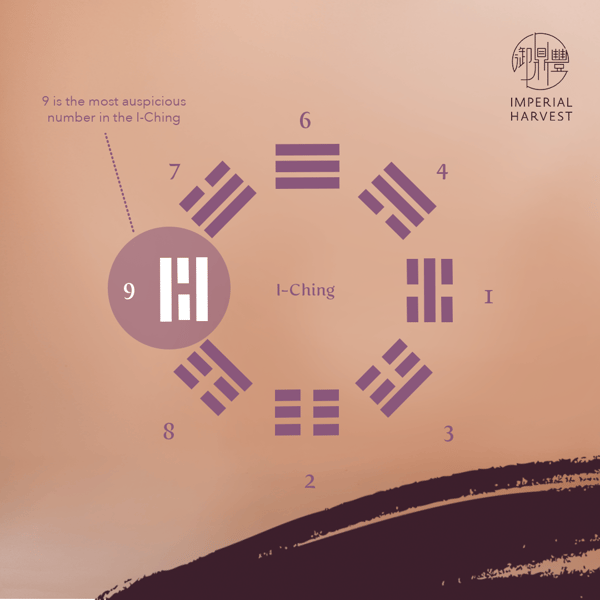
According to principles explained in the I-Ching, the number “6” represents Yin energy, whereas “9” represents its complementary force — Yang. The number “9” was also believed to be indicative of longevity, eternity, and imperial authority. With the presence of two “9s”, the ninth day of the ninth lunar month indicates a doubling of Yang energies. This gives rise to the moniker, “Chong Yang”, with “chong” (重) translating to “double”.
Historical Importance of The Chong Yang Festival
Chong Yang Festival is an important date that bears witness to many historical events through ancient Chinese civilization.
.png?width=600&name=Blog_290921_Imperial%20Rites%20CY_Wu%20Zetian%20(1).png)
One of the most prominent events would be Empress Wu Zetian ascending the throne as the first female emperor of China on the ninth day of the ninth lunar month. During her long reign totalling 50 years, the empire had become prosperous, powerful and peaceful. Her regime is characterised by innovative government reforms, meritocratic civil service and sound economic policies.
The rule of Empress Wu Zetian initiated the seismic change in social hierarchy where women broke out of the subservient roles they assumed through education reforms and state accordance of personal rights. This heralded a new chapter in human history, marked by the belief that women and girls have equal opportunities to realise their fullest potential.
Chong Yang Festival celebrates boldness and bravery that encourages every human to thrive and challenge the status quo.
Origins of the Chong Yang Festival
The origins of the Chong Yang Festival was often associated with the story of Heng Jing who eliminated a monster responsible for causing a widespread plague each time it appeared. On the auspicious ninth day of the ninth lunar month, Heng Jing defeated the pestilence-bringing monster on Mount Tai and ended the pandemic which has taken the lives of many people.
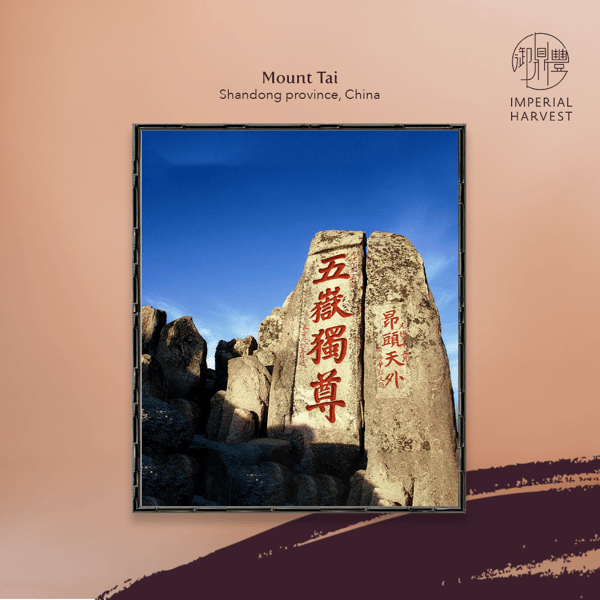
Heng Jing’s fight denotes an underdog contest where a smaller, weaker opponent faces a much bigger, stronger adversary. Chong Yang’s festival soon became known as a festival that celebrates conquering our inner fears, liberating ourselves from the shackles and leading a limitless life filled with abundance and success.
Cultural traditions of the Chong Yang Festival
During Chong Yang Festival, it is customary to view chrysanthemum trees in bloom, drink chrysanthemum wine, and eat Chong Yang cakes. Women would don chrysanthemum or zhuyu (茱萸) plants in their hair, as they were considered to have cleansing qualities, which would aid in avoiding disasters and warding off negative energy.
In addition to Chong Yang’s cultural traditions, the festival was symbolic of the golden season of harvest. While many participated in the celebrations of the season, many also conducted heavenly prayers to offer their gratitude for the bountiful season. The imperial families of ancient China were no strangers to this custom and led in imperial rites to express their gratitude.
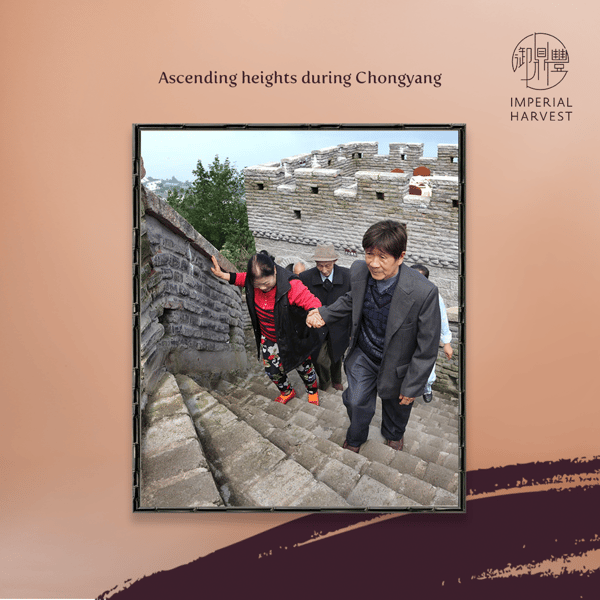
This act of ascending a height remained an important custom during the Chong Yang Festival and is related to the Chinese idiom, “步步高升” — to rise further with each step taken. This saying alludes to taking the first step on your journey in order to ascend to new heights in careers, business and investments ventures.
The custom of performing imperial rites was undertaken by the Chinese imperial families, in order to give thanks for the harvest season. These rites played an integral role during Chong Yang and were believed to help maintain order, and align forces between Heaven, Earth, and humanity.
Imperial Rites during the Chong Yang Festival
Imperial rites were performed during Chong Yang festival to help maintain cosmic order while aligning metaphysical forces between Heaven, Earth, and Man.
Upon reaching the summit of Mount Tai, the emperor would lead in a series of elaborate rites known as Feng Shan (封禪) and in doing so, would offer their prayers and tributes in gratitude to the Gods of Heaven and Earth. It was believed that the distance between Heaven and Earth was closest at the summit of Mount Tai so that prayers offered would be more readily answered.
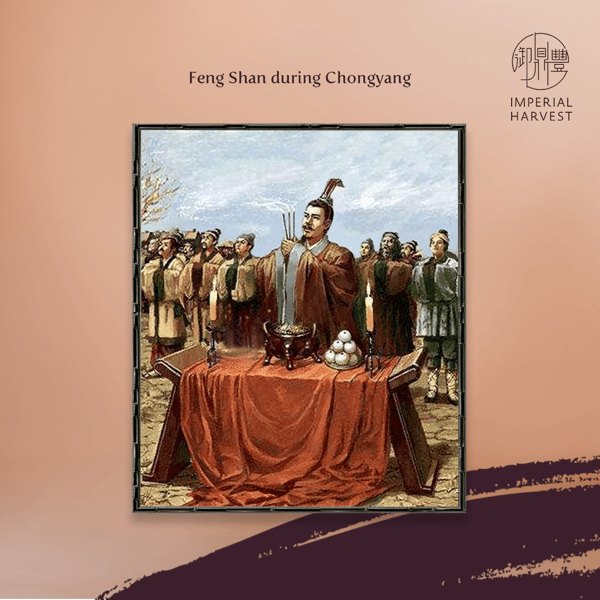
According to early records written during the Eastern Han period, the Feng Shan rites involved building altars using the soil at the summit of Mount Tai to offer prayers to the God of Heaven. Land at the foot of the mountain would be cleared to express gratitude to the God of Earth for the year’s harvest.
As part of the Imperial Feng Shui tradition, emperors would often adorn themselves with their Agarwood beads and personalised Jadeite pendants. In conducting their rites, emperors would weave their Agarwood beads onto their palms or meditatively roll the beads during their prayers. Their personalised Jadeite pendants were worn throughout the rite to best harness their Imperial Feng Shui properties of ushering harmony and prosperity for years to come.
The Chong Yang Festival represents one of the most auspicious times to acquire your Imperial Harvest-grade Agarwood beads and Jadeite treasures. This exquisite curation of Imperial Harvest Treasures expands your direct wealth capacity, and underpin the fusion of Imperial Feng Shui principles with contemporary aesthetics.
Imperial Harvest Agarwood
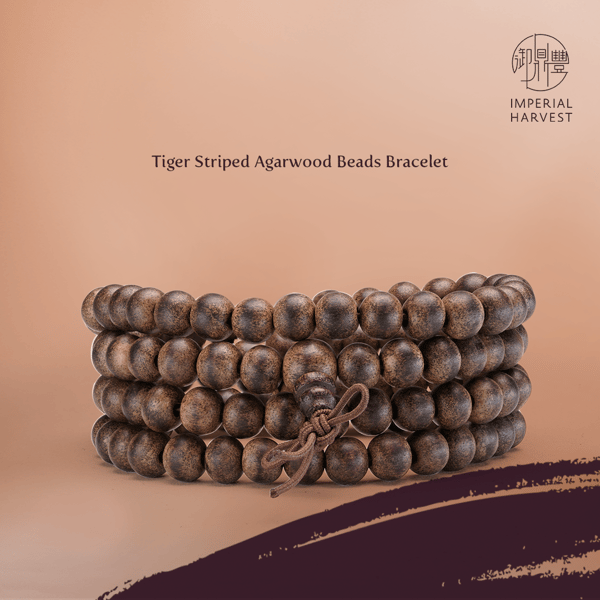
On this auspicious date, Chinese emperors would celebrate the harvest season and would pray for the following year of economic success by donning and honouring their Imperial Harvest-grade Agarwood to the heavens.
Emperor Qian Long of the Qing dynasty was known to have brought two essential Imperial Feng Shui treasures with him – one being his Agarwood beads. Imperial Feng Shui masters serving under Emperor Qian Long uncovered the Agarwood’s Major Yang-balancing properties, which governs direct wealth capacity. Emperor Qian Long’s staunch dedication to the noble art of Imperial Feng Shui enabled the Qing dynasty to enjoy a golden age of tremendous wealth, harmony, and prosperity.
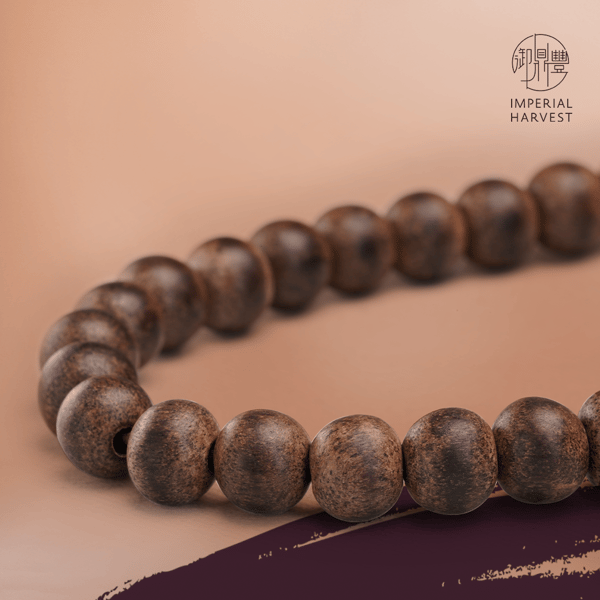
A signature collection at Imperial Harvest, the Agarwood collection is designed for those seeking to expand their direct wealth capacity, due to its ability to amplify the income that one may garner from their careers, businesses, sales, and other regular sources of income.
Imperial Harvest Qian Long Jadeite Mountain
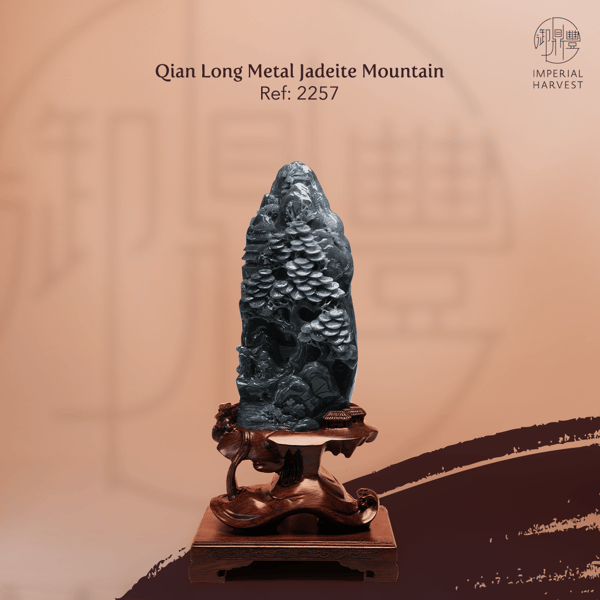
While the sacred Feng Shan rites were traditionally conducted at the summit of Mount Tai, this was not always a viable option. Over time, ageing Chinese emperors would no longer have the vitality required to ascend the sacred mountain to perform these annual rites.
A team of Imperial Feng Shui masters aiding Emperor Qian Long devised an elegant solution during the Qing dynasty — the Qian Long Jadeite Mountain. The installation of this important Imperial Feng Shui artefact provided the imperial palaces with practical, yet continuous access to an auspicious mountain landform.
Read more about the rich history behind Imperial Harvest’s collection of Qian Long Jadeite Mountains
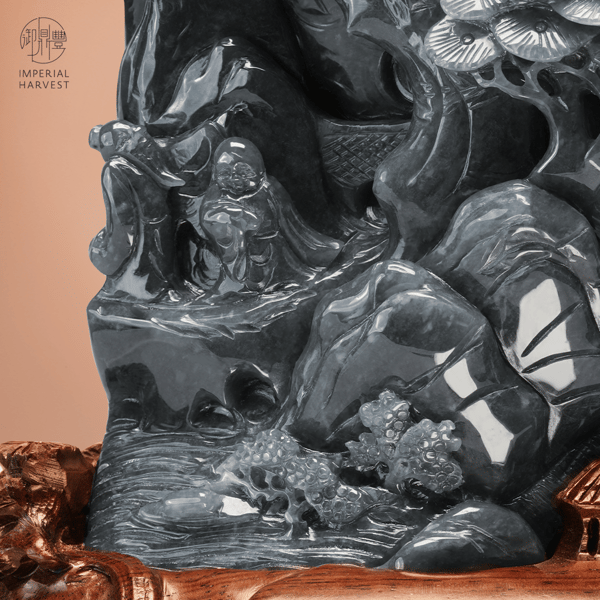
Emperor Qian Long’s advocacy for Imperial Feng Shui inspired great leaps in the art of Imperial Feng Shui. Today, the Qian Long Jadeite Mountain adorns the homes and offices of our blessed clients, activating the auspicious mountain star that attracts powerful benefactors and mentors.
Read more on Emperor Qian Long’s influence on Imperial Feng Shui
Your expert consultants are on hand to help you find the perfect Imperial Harvest treasure. Book a complimentary consultation today or contact us at +65 91221826.

Our galleries are located at 402 Orchard Road, Delfi Orchard #02-07 & #02-08, Singapore 238876.
Opening Hours: Mon-Fri, 12pm-8pm, Sat: 10am-6pm, Closed on Sundays
 Facebook
 Instagram
 Youtube
 LinkedIn