Blog

Imperial Harvest

Recent Posts

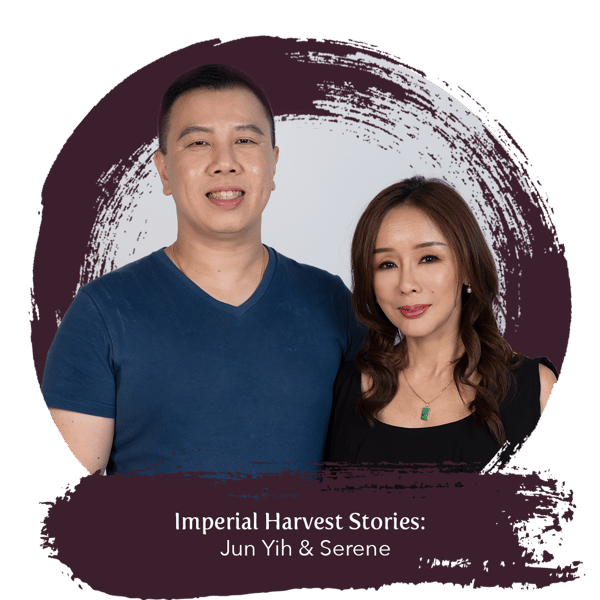
Imperial Harvest Stories - Jun Yih and Serene

Posted by Imperial Harvest on 21 October 2020

Estimated Reading Time: 3mins

21102020 jun yih blog Both


In 2016, Jun Yih was starting out in the E-commerce industry while working as a grab driver to make ends meet. 

It was a booming year for the industry as many who pursued the venture full-time became millionaires and even multi-millionaires. Unfortunately, it wasn’t the same for Jun Yih. His journey to success was far from a bed of roses as he faced constant challenges and failures to turn his business around. 

Nothing was working out no matter how hard he tried. The turning point came in March 2019 when he chanced upon Imperial Harvest and decided to take a leap of faith to come onboard as a client.   

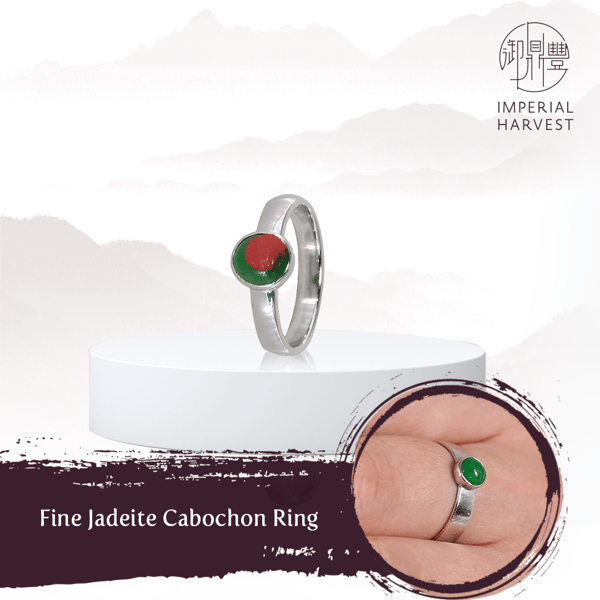
After Master David and senior consultant, Jowel, assessed his situation and identified his favourable element, Jun Yih acquired the Fine Jadeite Cabochon Ring to enhance his benefactor luck and to achieve sales breakthroughs.

21102020 jun yih blog Ring


" I felt very comfortable during the consultation, Master David and his team were extremely helpful and professional, to this day I am still very grateful for their expert advice and that I took the first step to make a change in my life that very day.“ - Jun Yih

After wearing his first Imperial Harvest treasure, Jun Yih started seeing positive changes in his business as sales finally began to pick up. His benefactor luck also improved as he met an E-commerce mentor who generously shared his knowledge and expertise with him. 

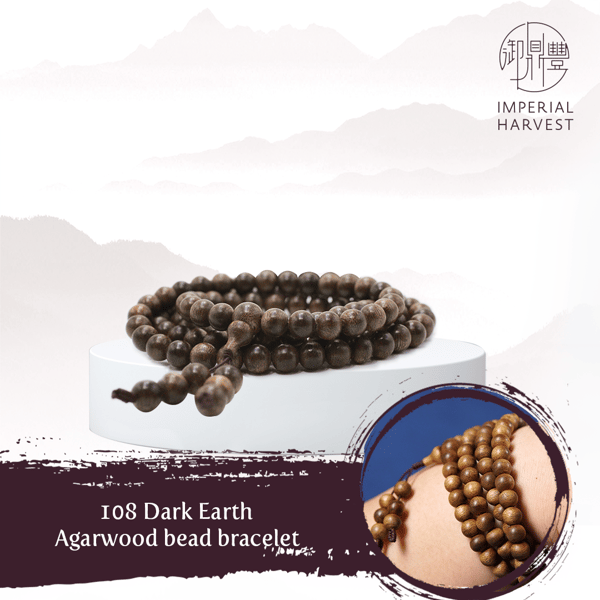
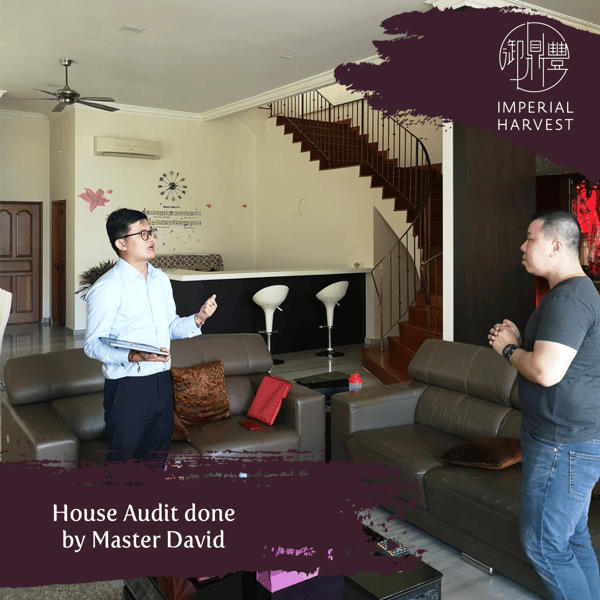
Two months later, he decided to acquire the Dark Earth Agarwood to expand his direct wealth capacity and invited Master David to audit his house Feng Shui.

108-dark-earth-agarwood-ihstories

Upon analysing his house Feng Shui, Master David explained that his apartment was afflicted with Sha Qi, which explains the disharmony his family was experiencing. 

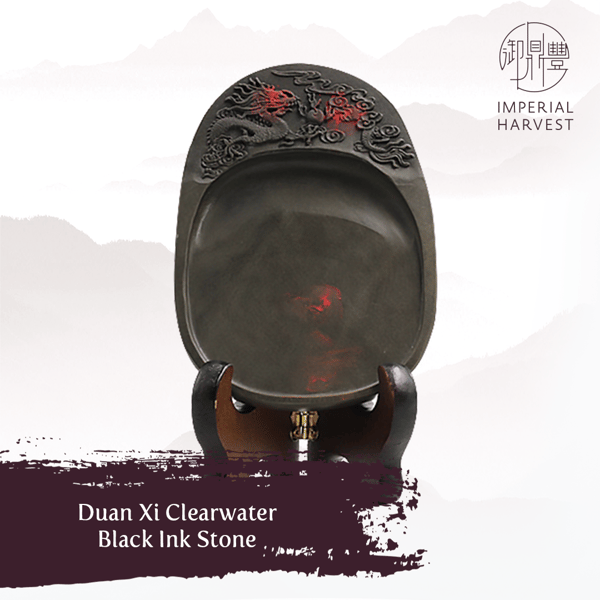
Jun Yih then took up Master David’s advice to acquire the Duan Xi Clearwater Black Ink Stone to counter this negative energies in his home. 

21102020 jun yih blog Black Inkstone

To his surprise, his family relationship almost immediately became better and his father’s health improved. In addition, he continuously observed a steady growth in his e-commerce business.

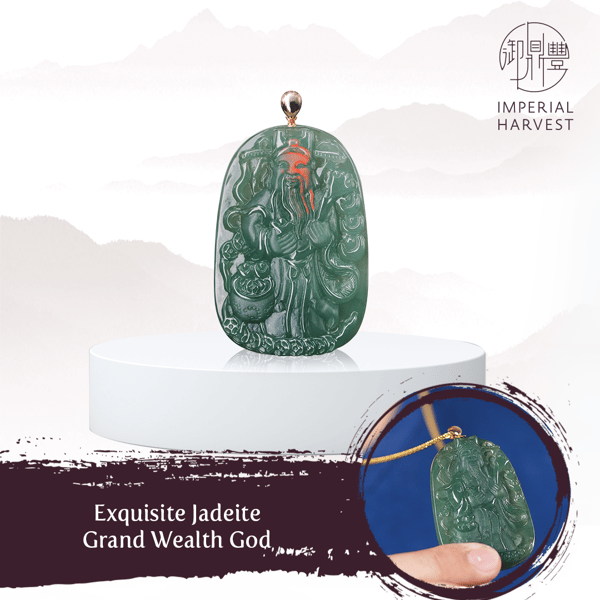
Witnessing these positive changes, Jun Yih proceeded to add an Exquisite Jadeite Grand Wealth God pendant to his collection. 

21102020 jun yih blog GWG

In the same month, he decided to test a new product and launched a new E-commerce store. His new store generated $800 profit from just 1 day of testing. After 2 weeks, he generated $40,000 profit from the product. He never imagined this would ever happen to him. 

In September 2019, he upgraded his Dark Earth Agarwood bead bracelets to 108 beads to further expand his direct wealth capacity. 

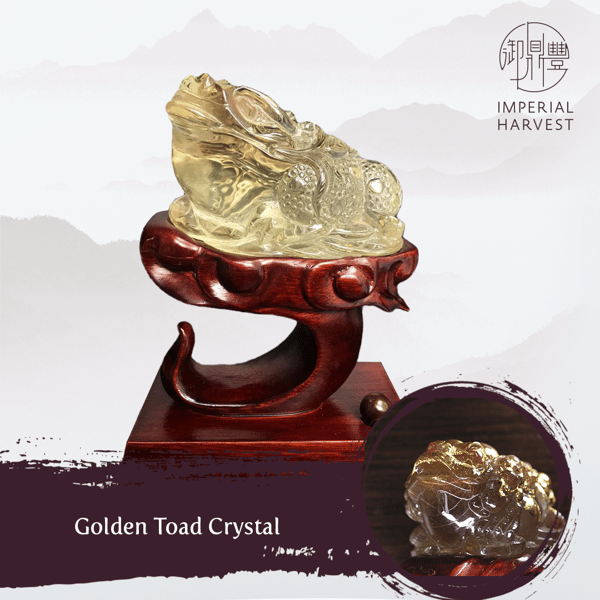
He also acquired the Imperial Harvest Golden Toad Crystal to activate the water star in his home, ushering in even more prosperity. 

21102020 jun yih blog Golden Toad

"I have been achieving steady and consistent breakthroughs in my life ever since meeting Imperial Harvest, I’m grateful for this long-term relationship that we have and look forward to achieving even greater heights together." - Jun Yih

Impressed with his results, Jun Yih has referred his friends and family members to Imperial Harvest. 

In particular, his partner, Serene has seen breakthroughs in her wealth and relationships after consulting Master David.

21102020 jun yih blog House audit

In February this year, Serene invited Master David to audit her house Feng Shui.

After seeking Master David's advice, Serene decided to install the Imperial White Ink Stone to usher in prosperity, benefactor support and blissful relationships for her family.   

21102020 jun yih blog white inkstone


After installing the Imperial White Ink Stone, Serene began to see a significant improvement in her family harmony, especially in her relationship with her children.

In addition, she also saw excellent returns in her investment portfolio, achieving a 5-figure ROI.

"I am very satisfied with the results and grateful to Master David and Imperial Harvest for their expertise and guidance." - Serene


Book a free consultation to learn how Imperial Harvest can help you achieve your goals and aspirations with our practical, effective and personalised Imperial Feng Shui solutions.

Book A Bazi Consultation

Our galleries are located at 402 Orchard Road, Delfi Orchard #02-07 & #02-08, Singapore 238876.

Opening Hours: Mon-Fri, 12pm-8pm, Sat: 10am-6pm, Closed on Sundays

The Temple of Heaven - Imperial Rites and Rituals

Posted by Imperial Harvest on 16 October 2020

Estimated reading time: 4min

Millions of visitors flock to the Temple of Heaven in Beijing every year, drawn by its mystery, mystique and magnificence. Larger than the Forbidden City, the vast Temple of Heaven is still the largest building in Beijing, and known as the home of Imperial Fengshui.

The Temple of Heaven was at the centre of imperial rituals and ceremonies for centuries.

Chinese Theology and the Cosmic Order
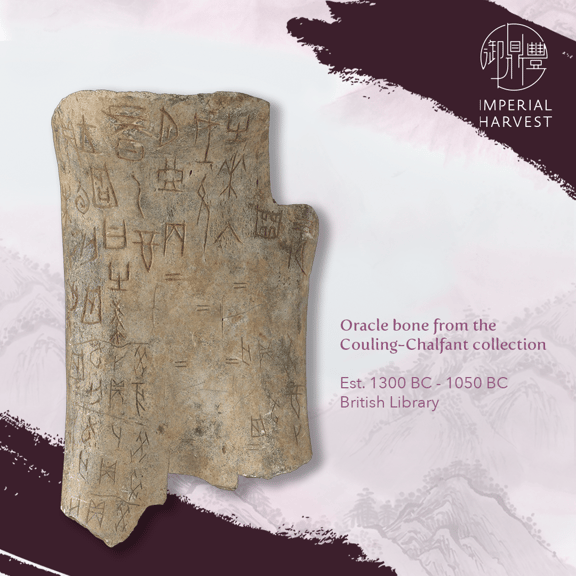
16102020 blog Oracle Bones

The earliest records of the Chinese civilisation were the oracle bone inscriptions carved into tortoise shells or animal bones for divination during the Shang dynasty. Even then, we observe a well-developed understanding of Chinese theology that would serve as a foundation for society for thousands of years.

At the core was the idea of Heaven - an eternal force that regulated all of nature.

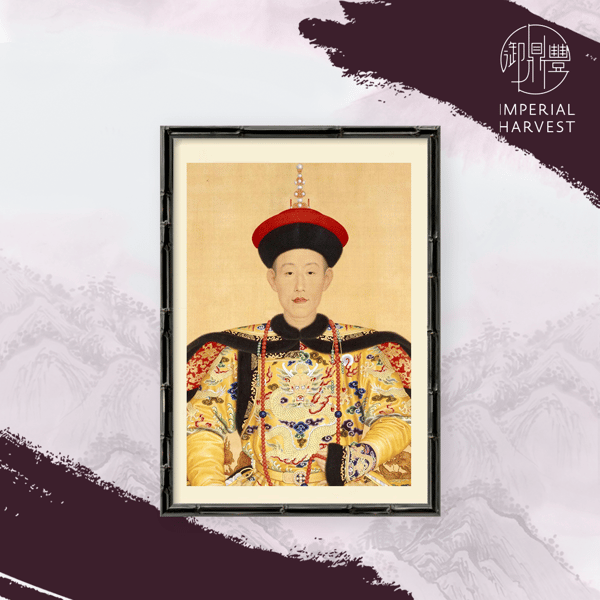
The king (and later emperor) was the “Son of Heaven" and was the representative of Heaven on Earth. The legitimacy of his rule is bestowed directly from Heaven as the “Mandate of Heaven”, and thus commanded reverence from the people.
16102020 rites and rituals Son of heaven

But this also meant that the king had responsibilities to create and maintain order, to protect his people from all forms of calamity, and to govern in accordance with the cosmic laws. This was summed up analogously by Confucius who said “To rule by virtue is like the North Star – it dwells in its place whilst commanding the homage of the multitude of other stars revolving around it.”

In the human realm, ancestors represented Heaven (the “utmost ancestral father”) and had the power to produce and influence living beings on Earth. This formed the basis of ancestor veneration, a way for the living to connect with Heaven.

Imperial Rites and Rituals

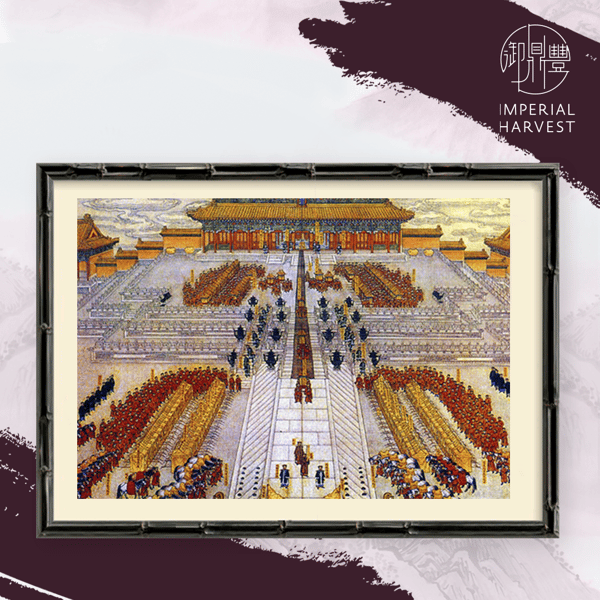
Rites play an important role. They help to maintain the cosmic order and align the forces of Heaven, Earth, and Humanity. They maintain the balance of qi between worshippers and the god, and between ancestors and descendants. As is the Confucian tradition, a meticulous observance of protocol is of the utmost importance.
16102020 rites and rituals Rituals and rites

There are five types of rites prescribed by the ancient Rites of Zhou — auspicious rites (offerings to Heaven, Earth, and spirits), inauspicious rites (e.g. funerals and crop failures), celebratory rites (e.g. weddings and banquets), hosting rites (receiving audiences at royal court), and military rites (e.g. declaring war, dispatching armies, and triumphant returns). Auspicious rites were the most important, considered “great affairs of the state” and performed solely by the Chinese emperor in his role as the Son of Heaven.
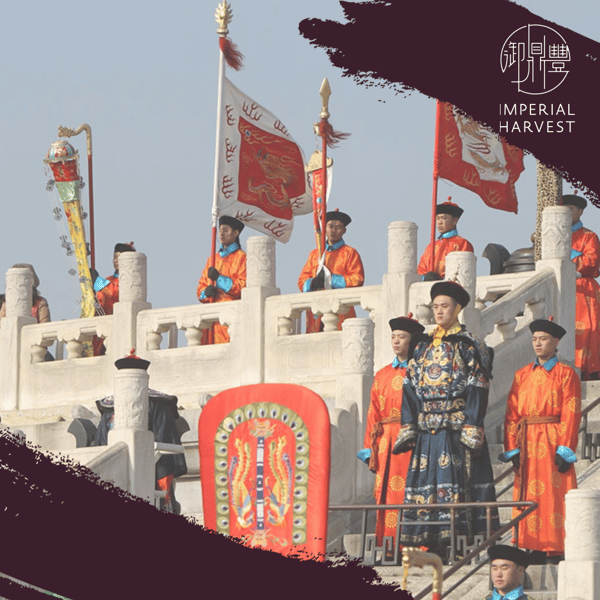
16102020 rites and rituals Emperor Leading

To fulfil his responsibilities, the emperor conducted three ceremonies every year at the Temple of Heaven. On the first Xin day stem of the first lunar month (正月上辛日), he would pray for abundant harvest in the Hall of Prayer. On the Summer solstice, the emperor would pray for rain at the Circular Mound Altar.

But the most important ceremony was the worship of Heaven, held on the Winter solstice. This was to thank Heaven for a good harvest that year. It was believed that even the smallest mistakes would bring bad luck to the empire, and so everything had to be perfect.

The Winter Solstice Ceremony

The day before the Winter Solstice, the emperor would leave the Forbidden City and travel through Beijing to the Temple of Heaven in a yellow Imperial covered sedan chair. At its height during the reign of Emperor Qianlong, there were 3,500 officials forming the guard of honour stretching several miles. There were elephants, horse chariots, and huge banners and flags.
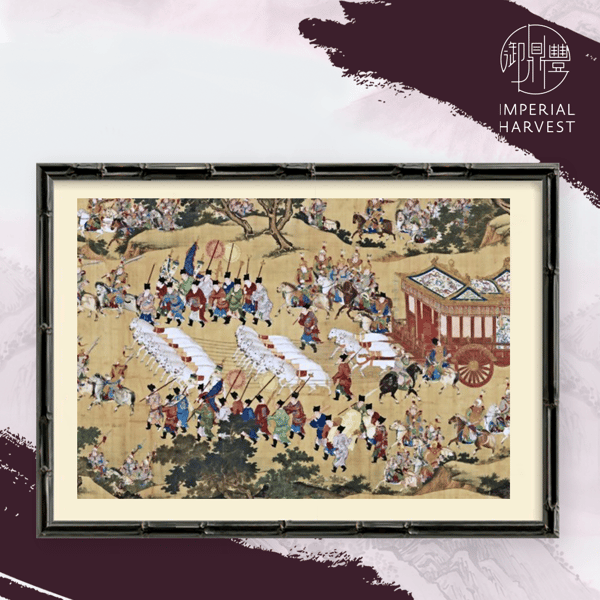
16102020 rites and rituals Entourage

But this was no celebration. It was a most sacred procession which took place in almost complete silence. Commoners were not even allowed to witness this, and were ordered to close all doors and windows and remain indoors.

When he reached the Temple of Heaven, the emperor would conduct a ritual at the Imperial Vault of Heaven and inspect the preparations (e.g. sacrifices in the Divine Kitchen). He would then retire into the Palace of Abstinence to pray, fast, and meditate. This was to purify himself in preparation for the next day.

The ceremony began at four o’clock in the morning of the Winter Solstice with the striking of a large bell - the Bell of Supreme Harmony - at the bell tower of the Palace of Abstinence. The emperor would enter the grounds of the Circular Mound Altar dressed in ceremonial attire.
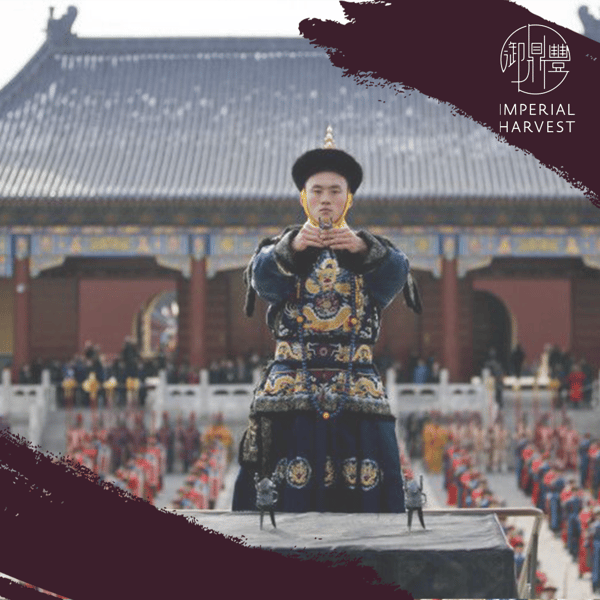
16102020 blog circular altar

Odd numbers were considered heavenly. And the highest single-digit odd number, 9, represented eternity and imperial authority. As such, the number 9 could be found throughout the design of the Circular Mound Altar. In addition, the carefully choreographed ritual had 9 parts to it.

1. Welcoming the Emperor God

Pine tree boughs are burned in twelve iron stoves arranged around the altar. These created scented smoke that drove out evil and brought prayers up to heaven. To welcome the emperor God, the ritual officer sings "The Burntwood Meets the Emperor God" (燔柴迎帝神) to the music of “Welcoming the Emperor God”. The emperor then ascends the first flight of stairs up the Altar, comprising nine steps, and offers incense.

2. Presenting jade and silk

The emperor ascends the second flight of stairs, comprising nine steps, and offers jade and silk. The Jingping (景平) chapter of the music plays.

3. Offering sacrifice

The emperor ascends the final flight of stairs, comprising nine steps, and offers a sacrifice of cattle. The Xianping (咸平) chapter of the music plays.

4. First prayer

The emperor kneels at the altar, offers wine, before returning to his praying position. The Fengping (奉平) chapter of the music plays and a martial dance is performed with shields (representing temperance) and axe weapons (representing strength). Standing on the Heart of Heaven stone, the ritual officer then recites prayers to Heaven.
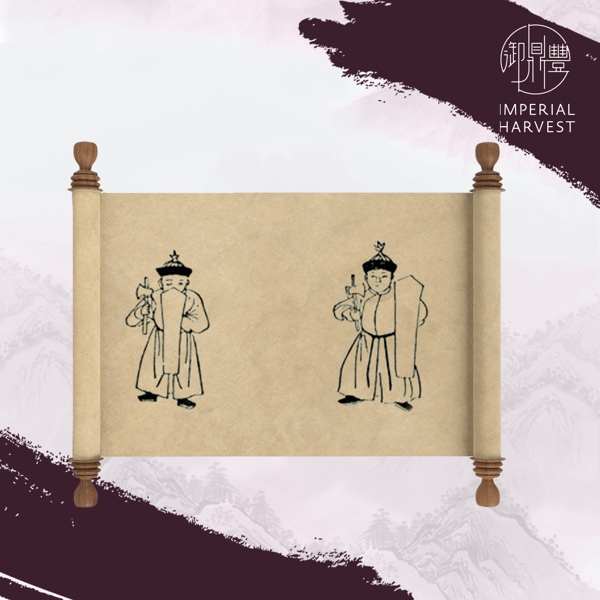
16102020 blog Martial Dance

5. Second prayer

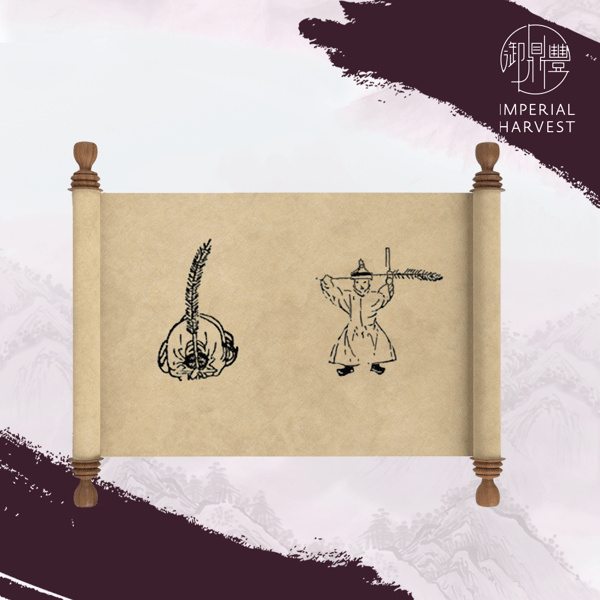
The emperor kneels at the altar, offers wine, before returning to his praying position. The Jiaping (嘉平) chapter of the music plays and a civil dance is performed with the use of long feathers from mountain pheasants. Unlike the first part of the prayer, there is no recital.
16102020 blog Civil Dance

6. Third prayer

The emperor makes a final wine offering. The Yongping (永平 - Eternal Peace) chapter of the music plays and a civil dance is performed with the use of long feathers from mountain pheasants.

7. Withdrawal

The Xiping (熙平) chapter of the music plays. Sacrifices are withdrawn from the altar.

8. Send-off for the emperor

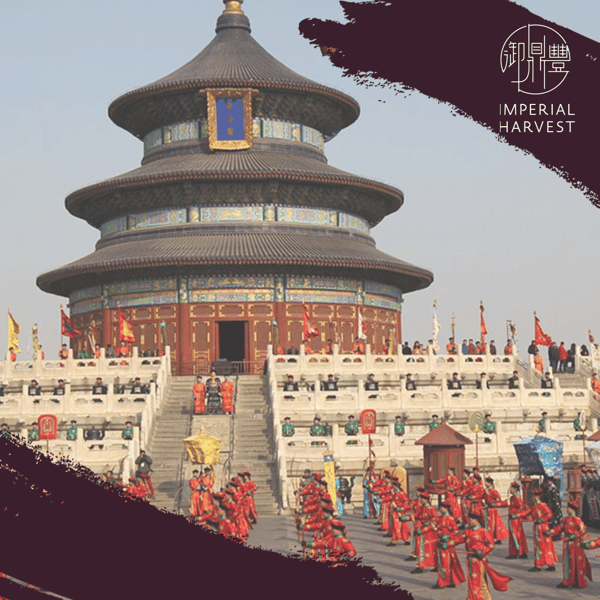
The emperor leads the congregation for three kneels and nine prayers whilst the Qingping (清平) chapter of the music plays. The sacrifices are burned in stoves. As the Emperor leaves to the inspection pedestal, the Taiping (太平) chapter of the music plays.
16102020 blog Emperor Rites

9. Inspection of the burning of offerings

The emperor inspects the burning of sacrifices. The Youping (佑平) chapter of the music plays. He returns to the Forbidden Palace in a procession and the ceremony officially ends.

Our homage to the Hall of Prayer

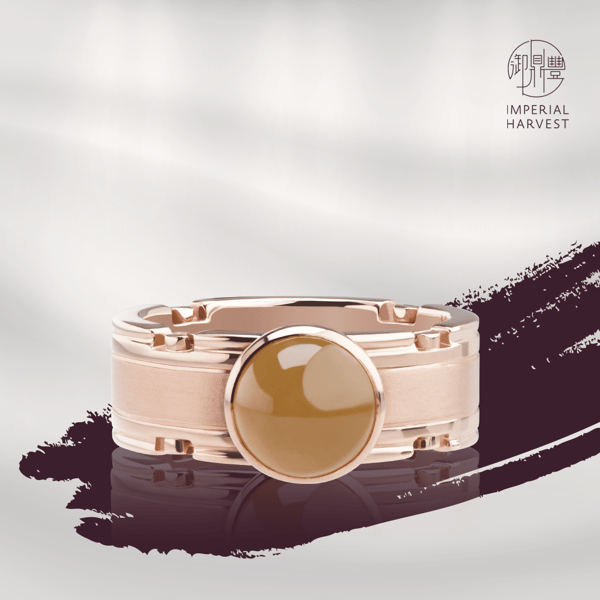
To commemorate 600 years since the building of the renowned Temple of Heaven in Beijing, Imperial Harvest is proud to present the new generation of our Bliss of Harvest ring collection showcasing our highest level of skill and craftsmanship.

The Bliss of Harvest ring is arguably our most iconic collection, paying homage to the famous Hall of Prayer for Good Harvests in the Temple of Heaven. It exemplifies the historic links between Imperial Harvest and our Imperial Feng Shui traditions.

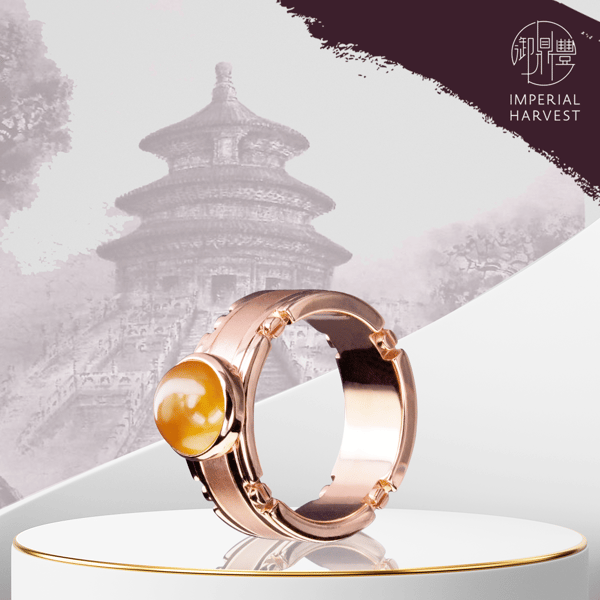
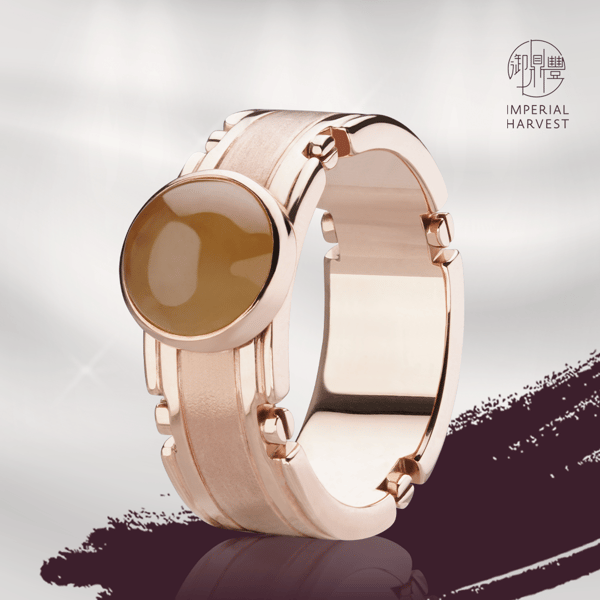
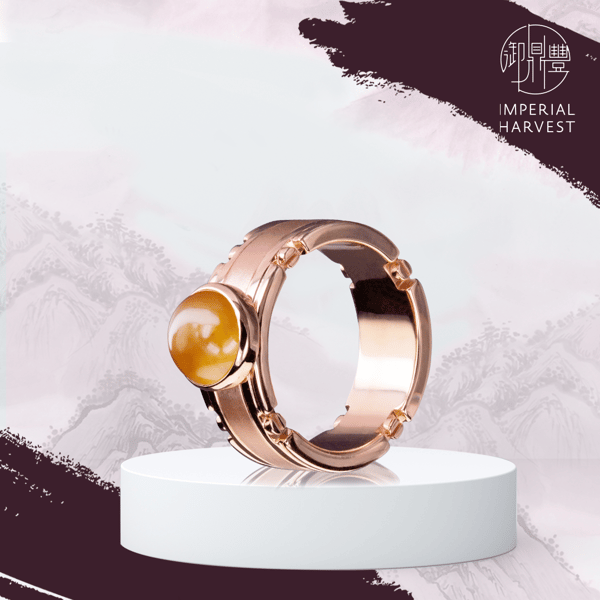
Ref: BOH6001

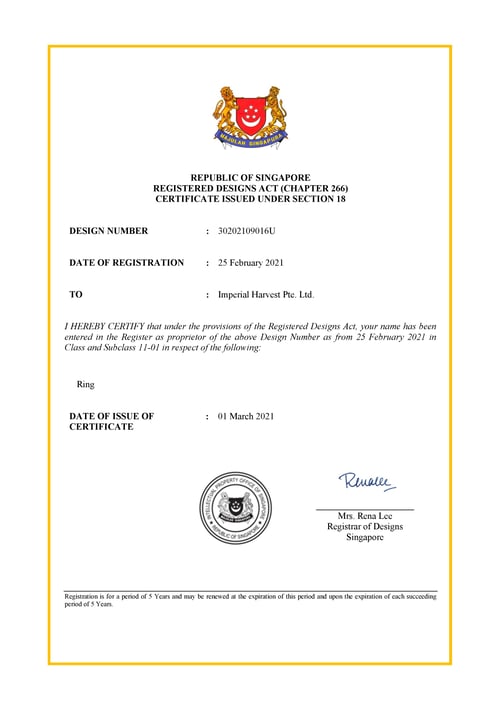
(Singapore Design Patent No.30202109016U)
16102020 rites and rituals yellow

Design notes:

  • Yin-Yang matte and mirror finish providing a tasteful contrast
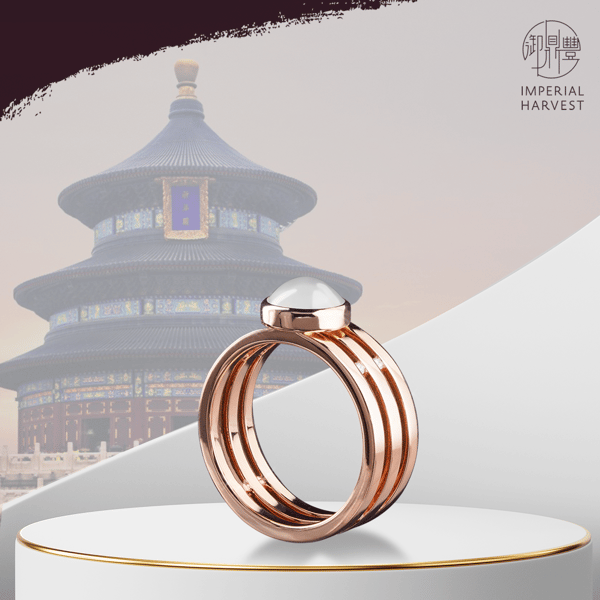
  • Accented by four handcrafted screws representing the four innermost pillars of the Hall of Prayer

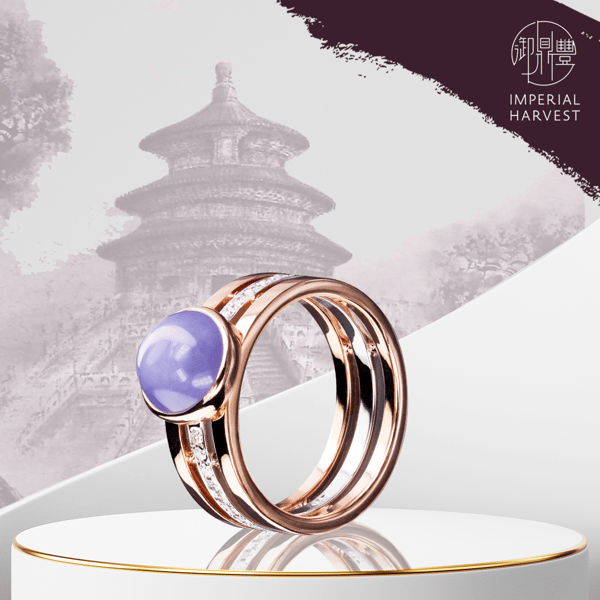
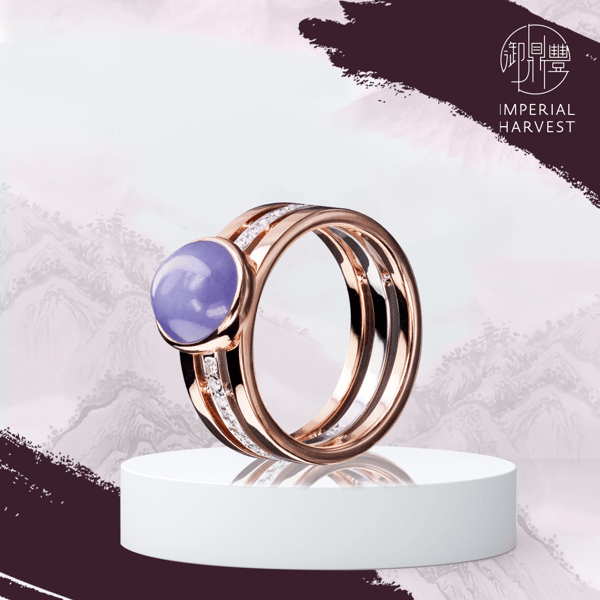
Ref: BOH6002

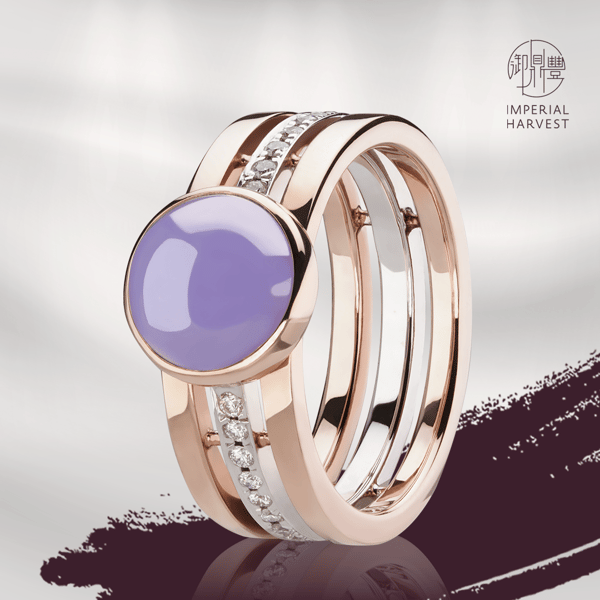
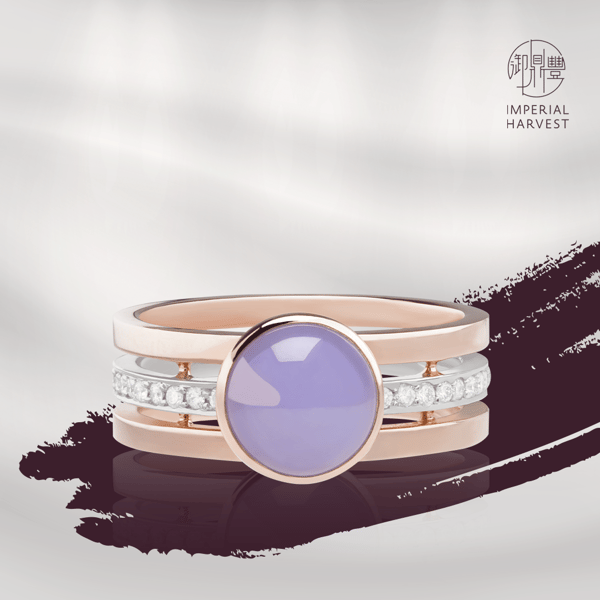
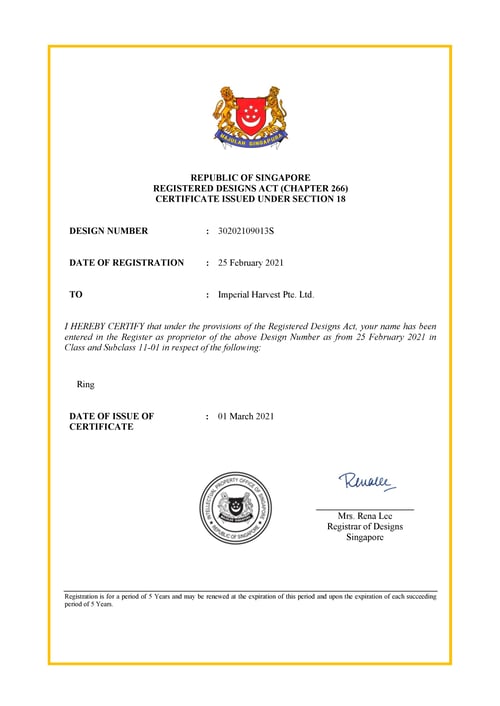
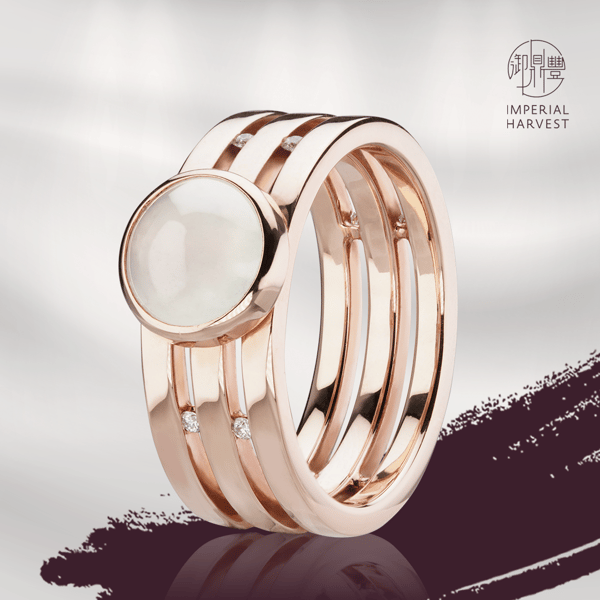
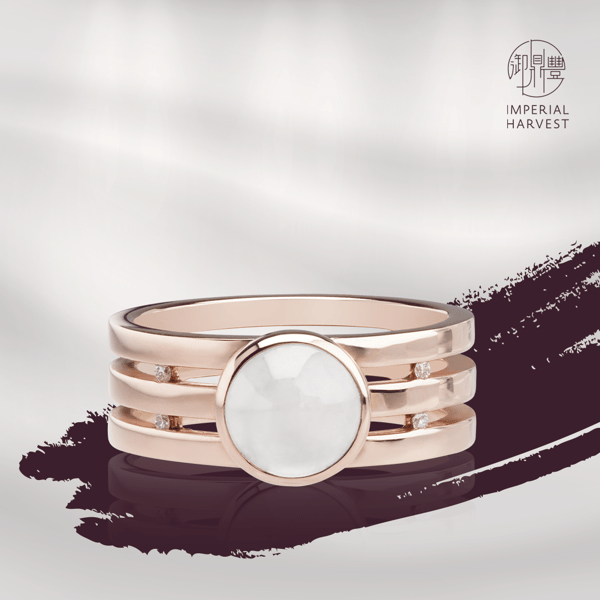
(Singapore Design Patent No.30202109013S)
16102020 rites and rituals Lav

Design notes:

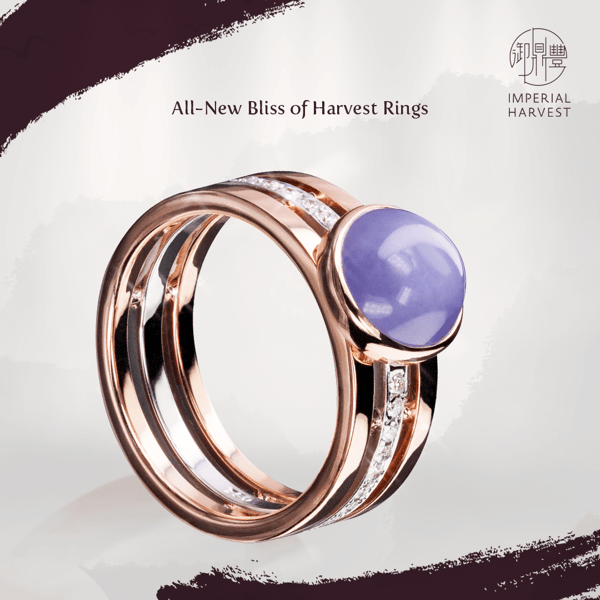
  • An elegant ring defined by a glamorous diamond-studded inner band that catches the eye and the imagination
  • Four structural pillars representing the four innermost pillars of the Hall of Prayer

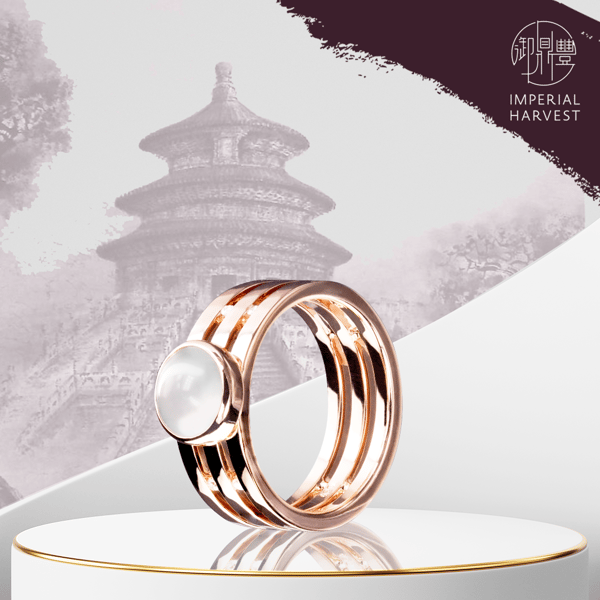
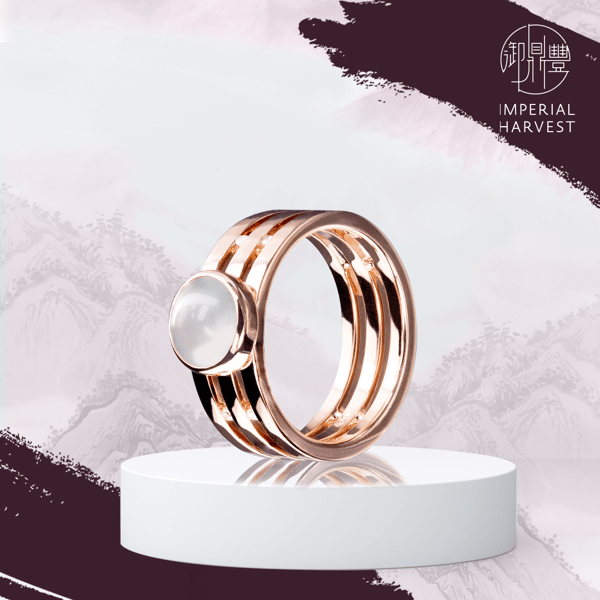
Ref: BOH6003

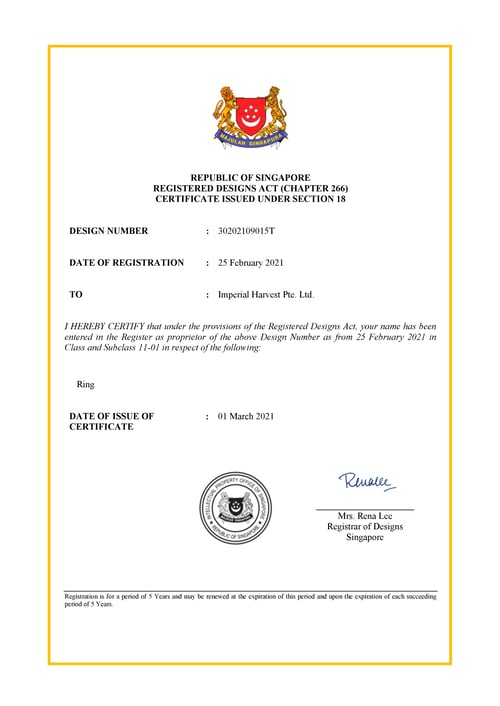
(Singapore Design Patent No.30202109015T)
16102020 rites and rituals white

Design notes:

  • Hand-burnished mirror finish
  • Eight round brilliant cut diamonds forming four structural pillars representing the four innermost pillars of the Hall of Prayer

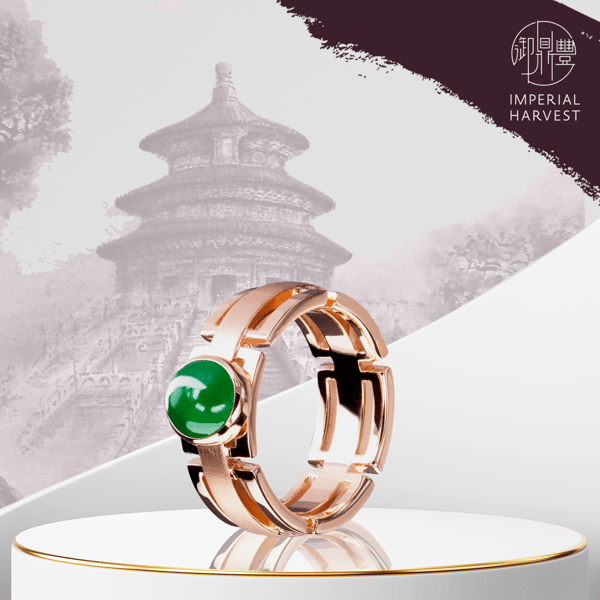
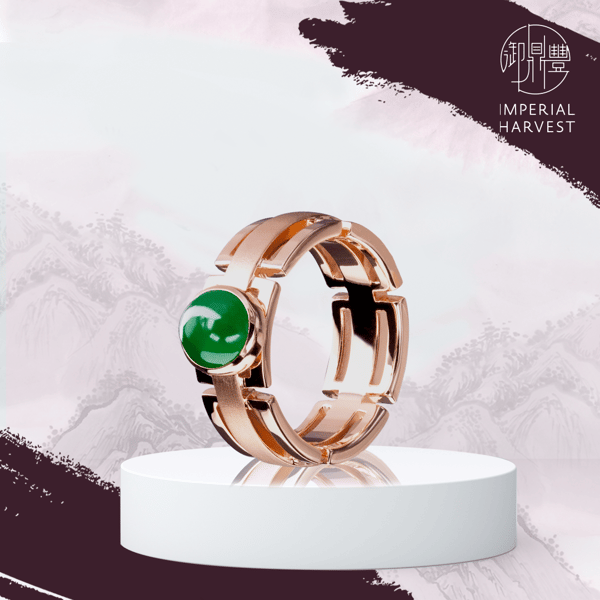
Ref: BOH6004

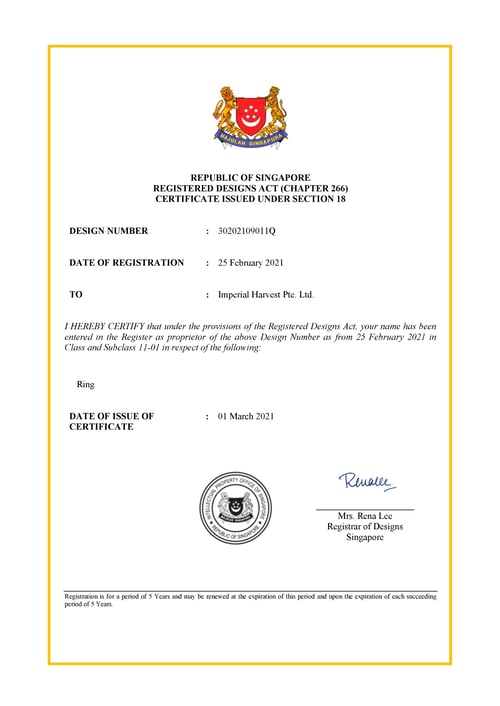
(Singapore Design Patent No.30202109011Q)
16102020 rites and rituals Green

Design notes:

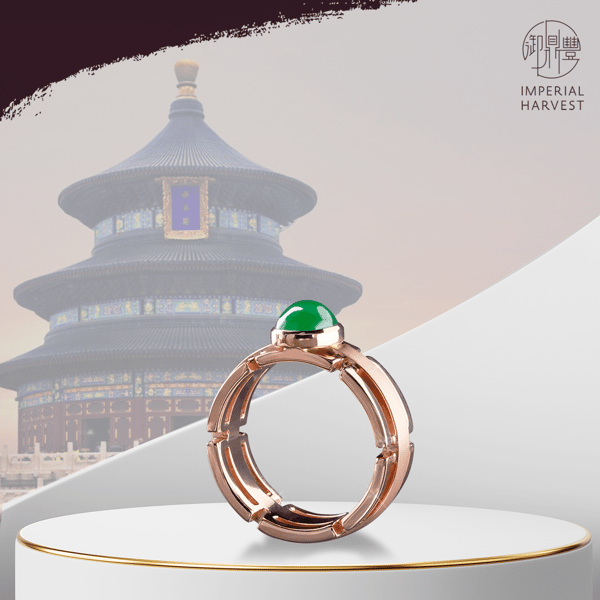
  • Yin-Yang matte and mirror finish providing a tasteful contrast
  • A distinctive geometric design that echoes the perfectly circular Hall of Prayer standing in a square yard, representing Heaven and Earth

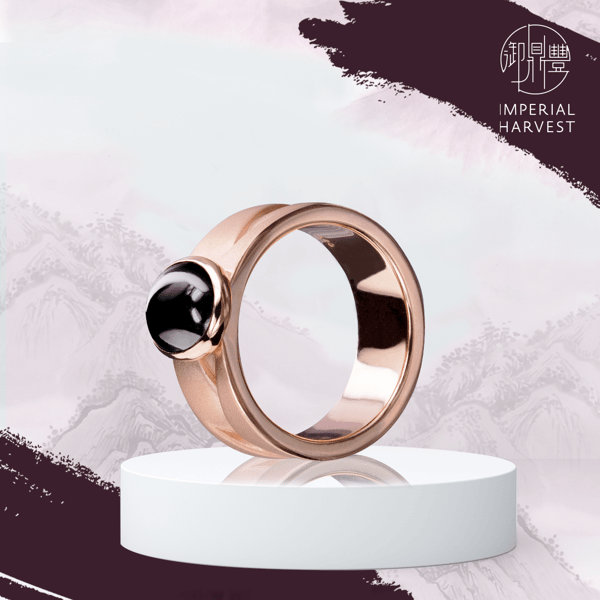
Ref: BOH6005

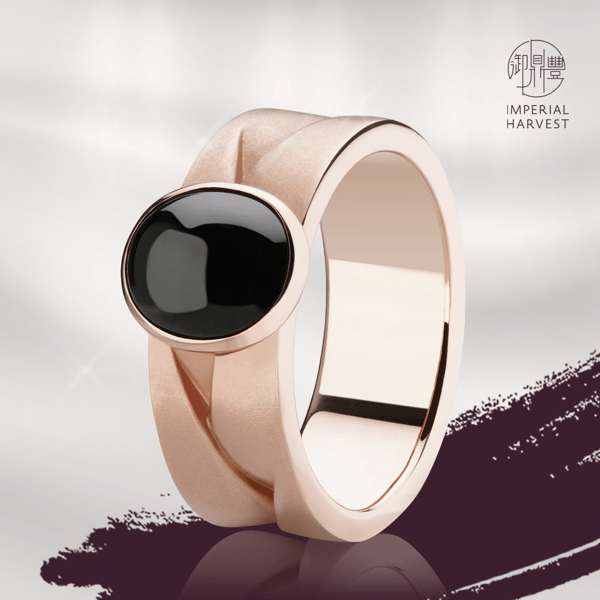
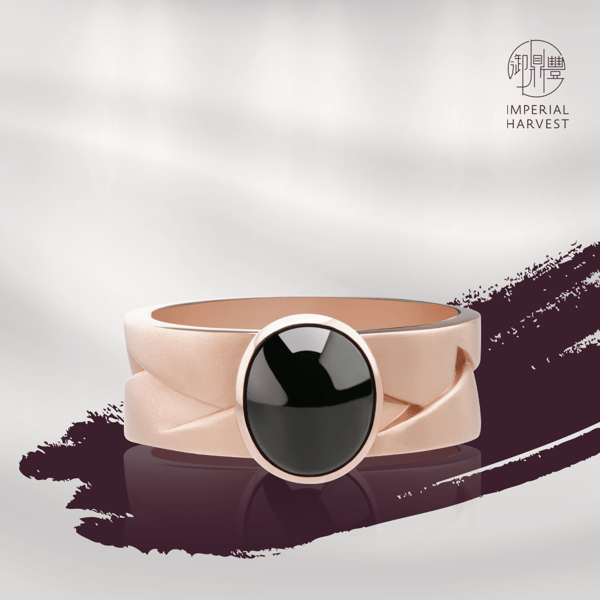
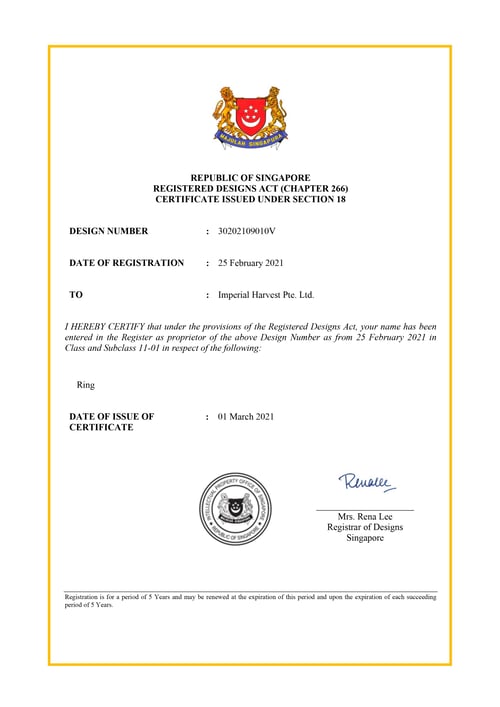
(Singapore Design Patent No.30202109010V)
16102020 rites and rituals black

Design notes:

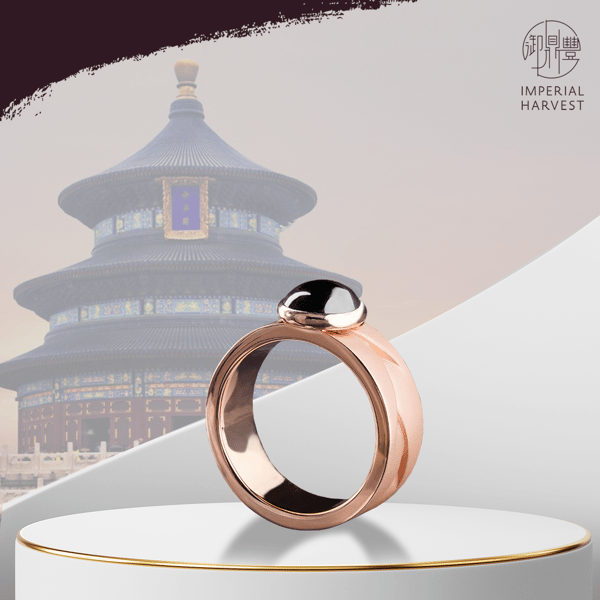
  • Matte finish
  • Minimalist and abstract tri-band design that is robust, discerning, and conveys a restrained sense of power

Book a complimentary consultation to learn how you can benefit from Imperial Feng Shui. For questions and enquiries please contact our advisors at +65 91221826.

Book A Bazi Consultation

Our galleries are located at 402 Orchard Road, Delfi Orchard #02-07 & #02-08, Singapore 238876.

Opening Hours: Mon-Fri, 12pm-8pm, Sat: 10am-6pm, Closed on Sundays

The Symbolism of Double Ninth

Posted by Imperial Harvest on 15 October 2020

Estimated Reading Time: 3 mins 

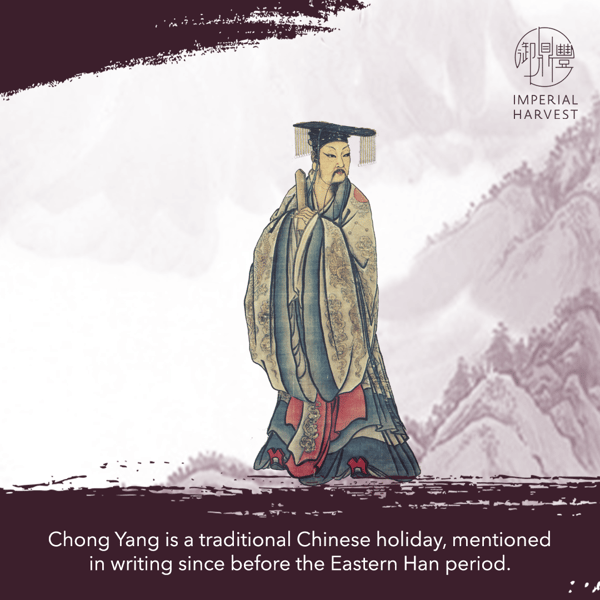
The Double Ninth Festival (Chong Yang), observed on the ninth day of the ninth month in the Chinese calendar, is a traditional Chinese holiday, mentioned in writing since before the Eastern Han period.

15102020 double 9 Chong Yang Festival

According to the Book of Changes, the number six is considered as yin while nine is yang. The ninth day of the ninth lunar month in the Chinese calendar features two nines, so the day is given the Chinese name "Chong Yang" (Chong means double in Chinese). In the old days, the day was considered auspicious and was widely observed.

In this article, we explore the legend of the Double Ninth Festival and it’s symbolism in Imperial Feng Shui and Chinese culture.

Legend of the Double Ninth Festival

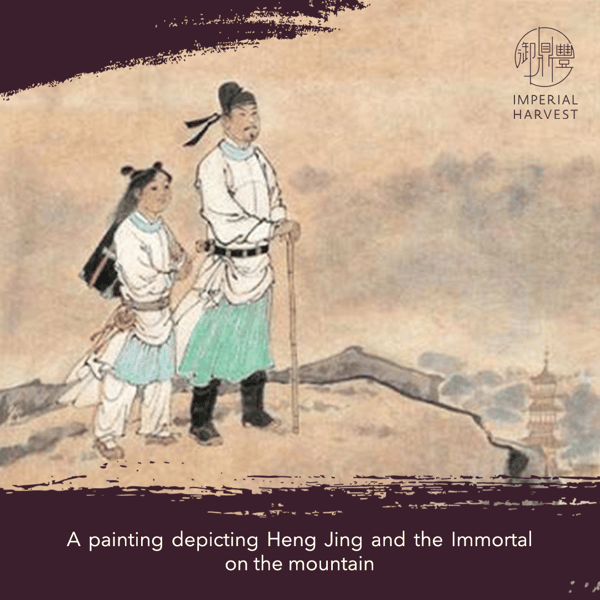
During the Eastern Han Dynasty (25-220), the people by the Ruhe River were annually attacked by the plague on the 9th day of the 9th Lunar Month because of a monster living in the river. Many people were killed, including the parents of Heng Jing.

The young man left his hometown to search for a way to kill the monster. He toured around the country and eventually met an immortal living on a mountain. The immortal accepted him and taught him swordsmanship and how to kill the monster with a magic sword. 

15102020 double 9 Heng Jing


Heng Jing returned to his hometown, right before the morning of the ninth day. Heng Jing led the people to the top of a nearby mountain to avoid the plague, and each person was given a piece of cornel leaf to prevent the monster from coming close. They were also asked to drink some chrysanthemum wine to prevent them from acquiring the plague.

Unable to find anyone in the villages, the monster dashed to the foot of the mountain, but stopped in fear when it smelled the aroma of the cornel leaves and chrysanthemum wine in the air.

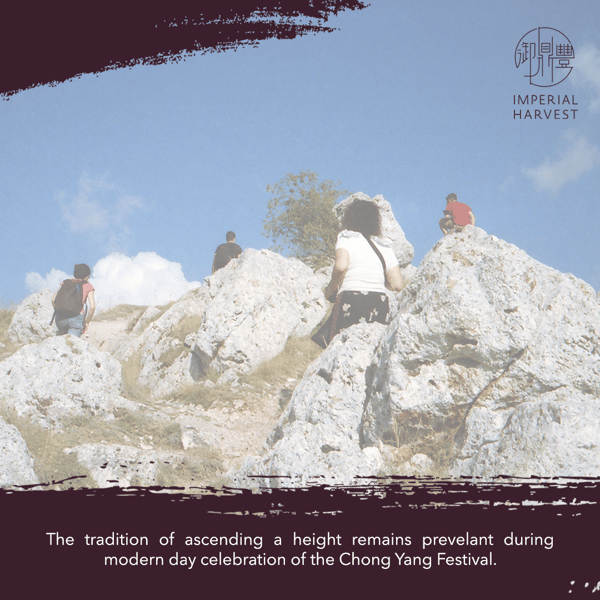
Heng Jing appeared and fought the monster, eventually killing it with his magic sword. Though the people were never attacked by the monster again, the tradition of ascending a height continues until today.

15102020 double 9 Ascending mountain

Origins of the term “Supreme Yang”

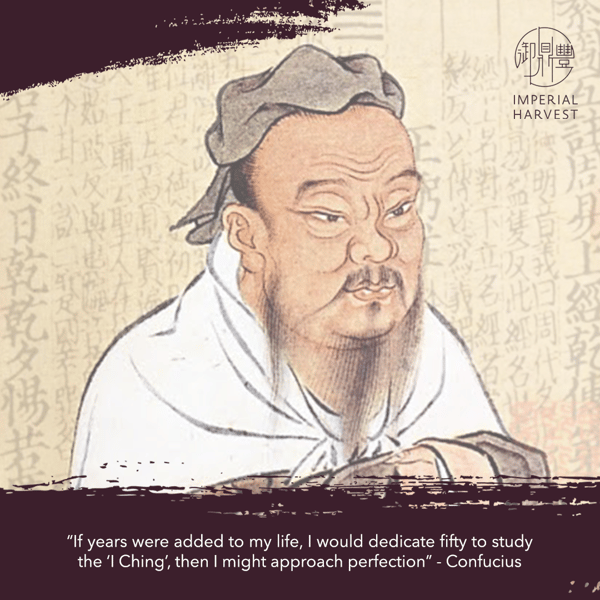
The I Ching ‘Book of Changes’ was foremost among the five ancient classics of China. Kongfuzi (Confucius) is reputed to have said “If years were added to my life, I would dedicate fifty to study the ‘I Ching’, then I might approach perfection”.

15102020 double 9 confucius

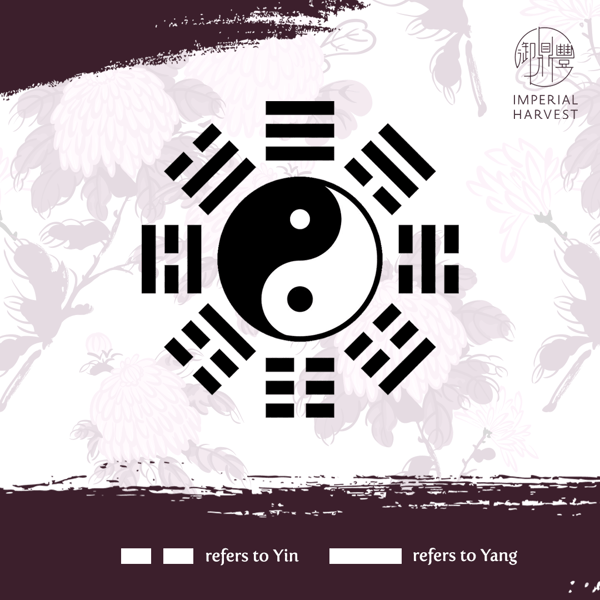
Every time the I Ching is to be expressed, it would consist of Yin and Yang symbols, with yin represented by a broken line, and yang represented by a complete line.

Yin (The symbol is a broken line) represents femininity, weakness, capacity, woman, the earth, even numbers and the receiver of energy. 

15102020 double 9 Yin Yang

Yang (The symbol is a solid line) represents masculinity, strength, development, man, the heaven, odd numbers and the donor of energy.

As odd numbers represent Yang, the donor of energy, it makes the number 9 the supreme donor of energy, or “Supreme Yang”.

The Symbolism of Double Ninth in Chinese culture

The number nine has always been respected by the Chinese, for it has tonal resonance with "long-lasting" and how it represents completeness and the “Supreme Yang”. The number nine is historically associated with the Chinese dragon, a symbol of authority and imperial power. 

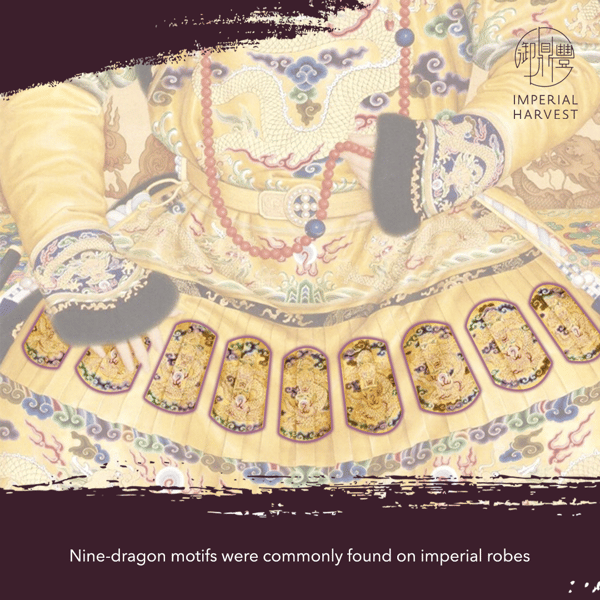
The number is also associated with Chinese Emperors who used it in many aspects of their administration, right from dividing the empire into 9 continents, having nine dragons embroidered on their imperial robes to having a nine-rank system for officials and more. 

15102020 double 9 Qian Long and 9

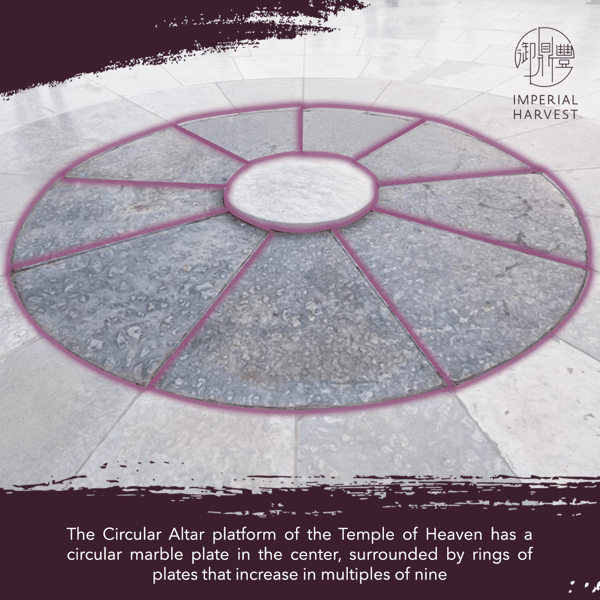
The Circular Altar platform (Earthly Mount) of the Temple of Heaven (the home of Imperial Feng Shui) has a circular marble plate in the center, surrounded by a ring of nine plates, then by a ring of 18 plates, and so on, for a total of nine rings, with the outermost having 81 plates, further exemplifying the significance of the number 9. 

15102020 double 9 Circle Altars

Double Ninth Festival

In the past, ascending mountains was the most important ritual during the Double Ninth Festival. The rationale of ascending mountains is related to the Chinese saying of rising further with each step (步步高升). It carries an auspicious meaning of climbing upwards towards success in life and attain longevity ‘Gao Shou (高寿)’.

The Double Ninth Festival is one of the most auspicious periods of the year to acquire your Imperial Harvest treasures. 

Click here to read more about the Significance of Chong Yang Festival 


Book a complimentary consultation to learn how you can benefit from Imperial Feng Shui. For questions and enquiries please contact our advisors at +65 91221826.

Book A Bazi Consultation

Our galleries are located at 402 Orchard Road, Delfi Orchard #02-07 & #02-08, Singapore 238876.

Opening Hours: Mon-Fri, 12pm-8pm, Sat: 10am-6pm, Closed on Sundays

The Temple of Heaven - The Two Altars

Posted by Imperial Harvest on 09 October 2020

Estimated Reading Time: 4mins 

Millions of visitors flock to the Temple of Heaven in Beijing every year, drawn by its mystery, mystique and magnificence. Larger than the Forbidden City, the vast Temple of Heaven is still the largest building in Beijing, and known as the home of Imperial Feng Shui.

The Temple of Heaven has two altars - the Circular Mound Altar and the Hall of Prayer.

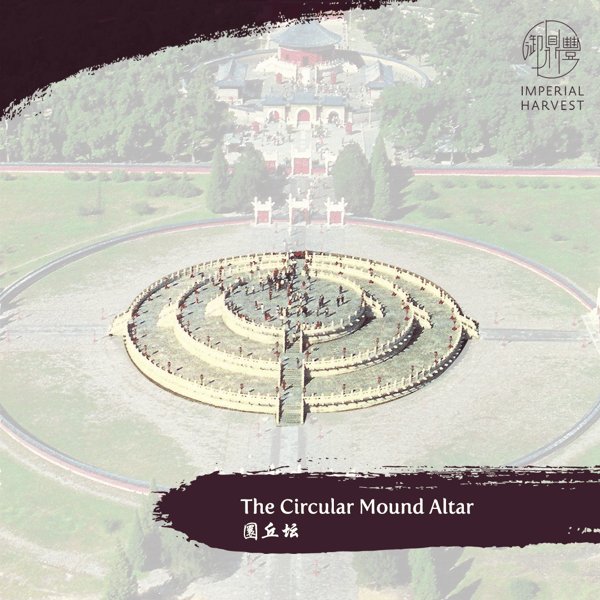
The Circular Mound Altar (圜丘坛)

It was at the Circular Mound Altar that the emperors of the Ming and Qing dynasties would offer sacrifices to thank Heaven and pray for the future of their empire.

Circular Mound Altar 圜丘坛

As you first enter through the southern gate, the Zhaoheng Gate, you are greeted by a white marble road leading directly to the Circular Mound Altar.

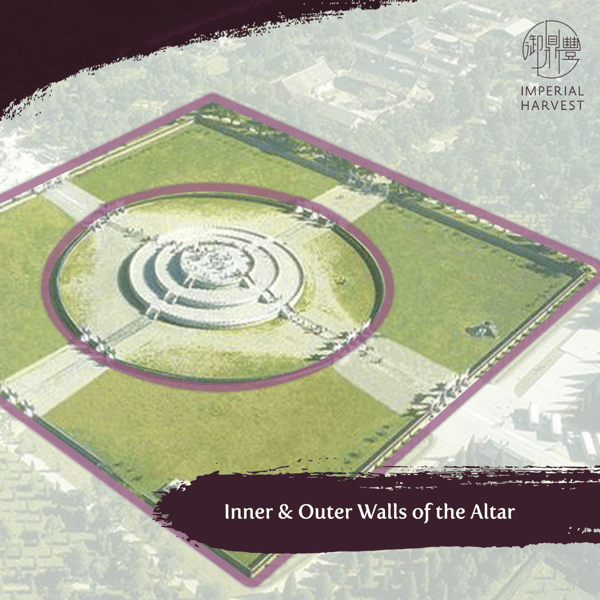
But to reach the Altar, you first have to pass through the outer and inner walls. The outer wall forms a square, representing Earth, and the inner wall forms a circle, representing Heaven.

Inner and Outer Walls of The Altar

At the foot of the Altar, you are struck by its majesty and lavishness. It stands five meters high, and built on three concentric platforms. Each platform is surrounded by marble balustrades decorated with intricately carved dragons.

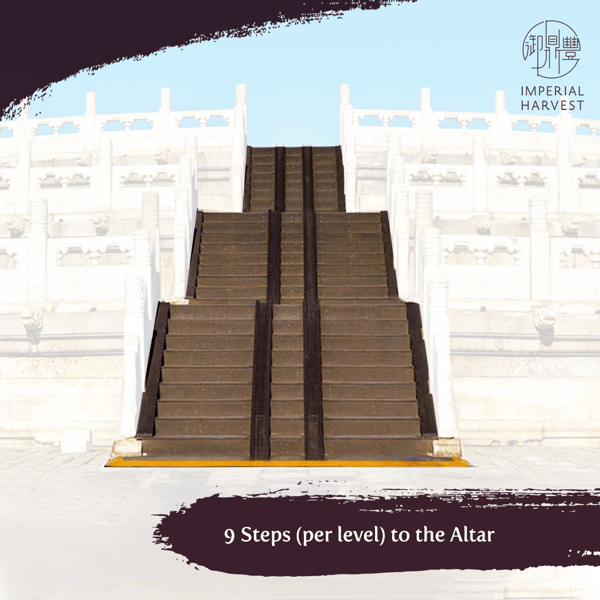
The Circular Mound Altar was built in accordance with the ancient Rites of Zhou (周禮), and Imperial Feng Shui principles can be found throughout the building. Odd numbers were considered heavenly. And the highest single-digit odd number, 9, represented eternity and imperial authority. As such, the number of balusters, steps, and slabs are all found in multiples of 9.

9 Steps to the Altar

As you ascend the Altar, you will climb 9 steps for each level. The top level is paved with fan-shaped stones forming concentric circles. The innermost ring is formed by 9 stones, followed by 18, 27 and so on. And this extends to the lower levels. In total, there are 9 rings of stones on each level.

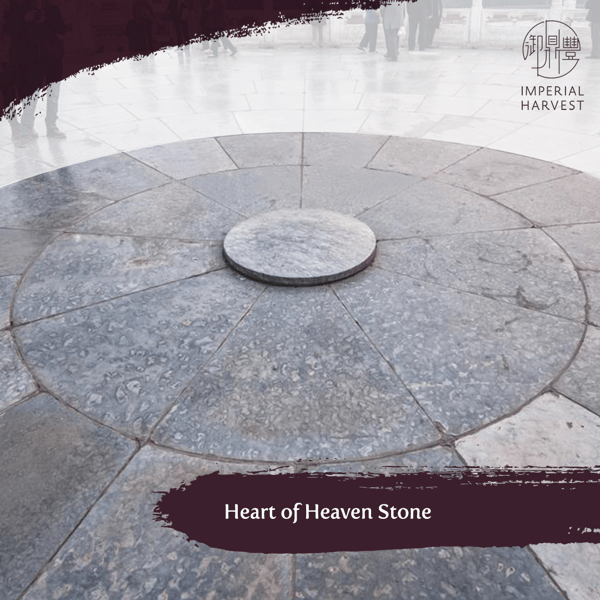
Heart of Heaven Stone

Right in the middle of the altar is the Heart of Heaven or Supreme Yang. This is a smooth stone that protrudes slightly from the middle of the altar. During sacred rituals, the Emperor would stand on the stone, and the circular construction of the altar would help their words echo all the way to Heaven.

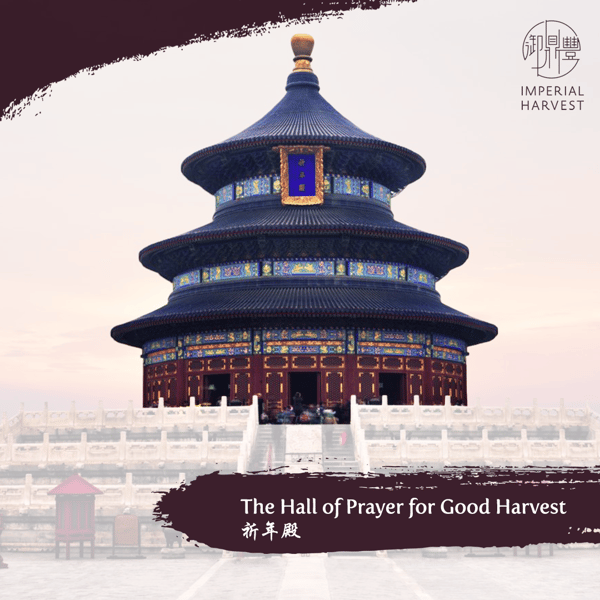
The Hall of Prayer for Good Harvest (祈年殿)

The Hall of Prayer for Good Harvest (祈年殿)

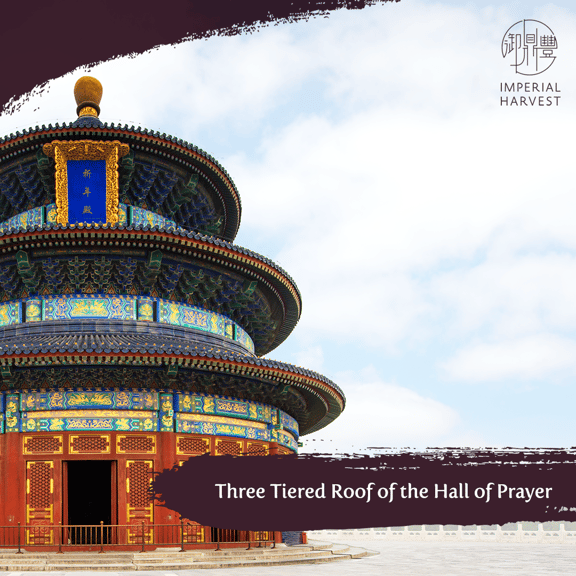
The main building within the Temple of Heaven is the circular, three-tiered Hall of Prayer for Good Harvests. It is a grand, impressive, circular building with a visually harmonious three-tiered roof representing the cosmic trinity of Heaven, Earth and Human luck. The idea of a round Heaven and square Earth is also represented here, with the round building standing in a square yard.

It was here during the winter solstice that the emperors of the Ming and Qing dynasties worshipped Heaven and prayed for good harvests.

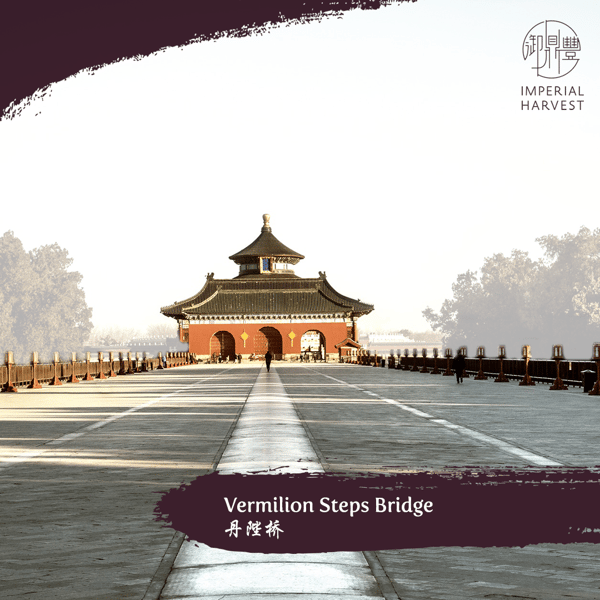
Vermillion Steps Bridge 丹陛桥

The Hall of Prayer lies directly north of the Circular Mound Altar, connected by the majestic Vermilion Steps Bridge (丹陛桥), which happens to be the oldest bridge in Beijing. It is an arched stone walkway, elevated 4 meters high, 30 meters wide and 360 meters long. The Vermilion Steps Bridge forms the main axis of the Temple of Heaven, with the middle stone-paved path considered the “sacred road” for the exclusive use of the Emperor.

Three Tiered Roof of the Hall of Prayer

The three-tiered roof of the Hall of Prayer used to be painted blue, yellow and green to represent Heaven, the Emperor, and the People respectively. But these were all painted a beautiful rich blue during the reign of Emperor Qian Long to symbolise the sky.

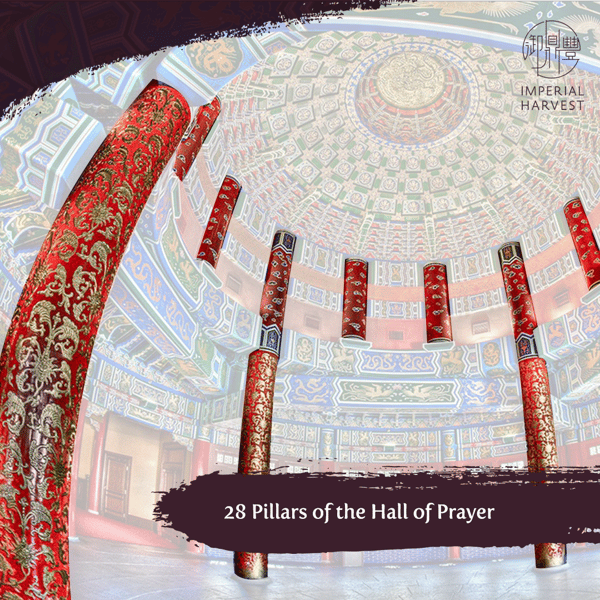
Pillars of the Hall of Prayer

The entire building was meticulously constructed without the use of any nails and is supported by 28 large pillars. There are 4 inner dragon pillars representing the seasons, 12 middle pillars representing the months, and 12 outer pillars representing the traditional Chinese hours. They hold up a stunning caisson ceiling, the centrepiece of which is a striking relief of a dragon and phoenix, representing the emperor and empress.

Our homage to the Hall of Prayer

To commemorate 600 years since the building of the renowned Temple of Heaven in Beijing, Imperial Harvest is proud to present the new generation of our Bliss of Harvest ring collection showcasing our highest level of skill and craftsmanship.

The Bliss of Harvest ring is arguably our most iconic collection, paying homage to the famous Hall of Prayer for Good Harvests in the Temple of Heaven. It exemplifies the historic links between Imperial Harvest and our imperial Feng Shui traditions.

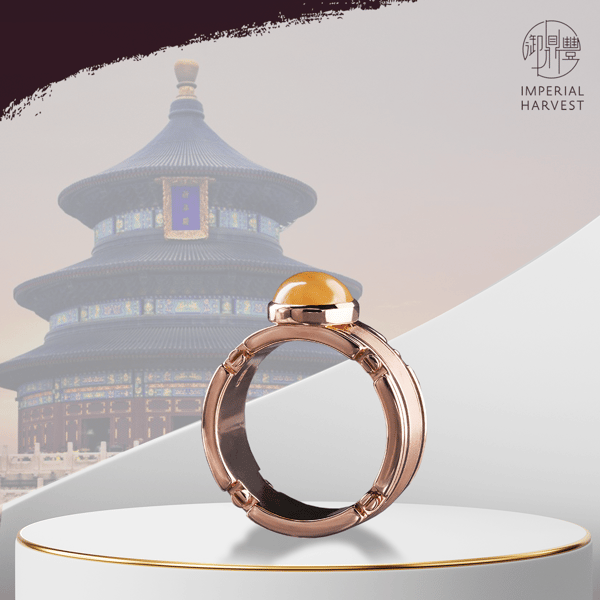
Ref: BOH6001

(Singapore Design Patent No.30202109016U)

BOH6001

Design notes:

  • Yin-Yang matte and mirror finish providing a tasteful contrast
  • Accented by four handcrafted screws representing the four innermost pillars of the Hall of Prayer

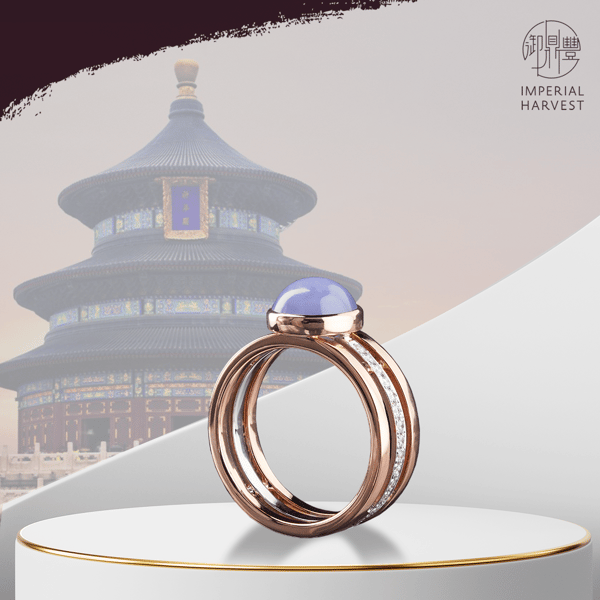
Ref: BOH6002

(Singapore Design Patent No.30202109013S)

BOH 6002

Design notes:

  • An elegant ring defined by a glamorous diamond-studded inner band that catches the eye and the imagination
  • Four structural pillars representing the four innermost pillars of the Hall of Prayer

Ref: BOH6003

(Singapore Design Patent No.30202109015T)

BOH 6003

Design notes:

  • Hand-burnished mirror finish
  • Eight round brilliant cut diamonds forming four structural pillars representing the four innermost pillars of the Hall of Prayer

Ref: BOH6004

(Singapore Design Patent No.30202109011Q)

BOH 6004

Design notes:

  • Yin-Yang matte and mirror finish providing a tasteful contrast
  • A distinctive geometric design that echoes the perfectly circular Hall of Prayer standing in a square yard, representing Heaven and Earth

Ref: BOH6005

(Singapore Design Patent No.30202109010V)

BOH 6005

Design notes:

  • Matte finish
  • Minimalist and abstract tri-band design that is robust, discerning, and conveys a restrained sense of power

Book a complimentary consultation to learn how you can benefit from Imperial Feng Shui. For questions and enquiries please contact our advisors at +65 91221826.

Book A Bazi Consultation

Our galleries are located at 402 Orchard Road, Delfi Orchard #02-07 & #02-08, Singapore 238876.

Opening Hours: Mon-Fri, 12pm-8pm, Sat: 10am-6pm, Closed on Sundays

The Temple of Heaven - The Home Of Imperial Feng Shui

Posted by Imperial Harvest on 02 October 2020

Reading Time: 3min

Millions of visitors flock to the Temple of Heaven in Beijing every year, drawn by its mystery, mystique and magnificence. Larger than the Forbidden City, the vast Temple of Heaven is still the largest building in Beijing, and known as the home of Imperial Feng Shui.

In this article, we celebrate the 600th anniversary of the Temple of Heaven with the release of the All-New Bliss of Harvest Jadeite Rings.

Early beginnings at Taishan

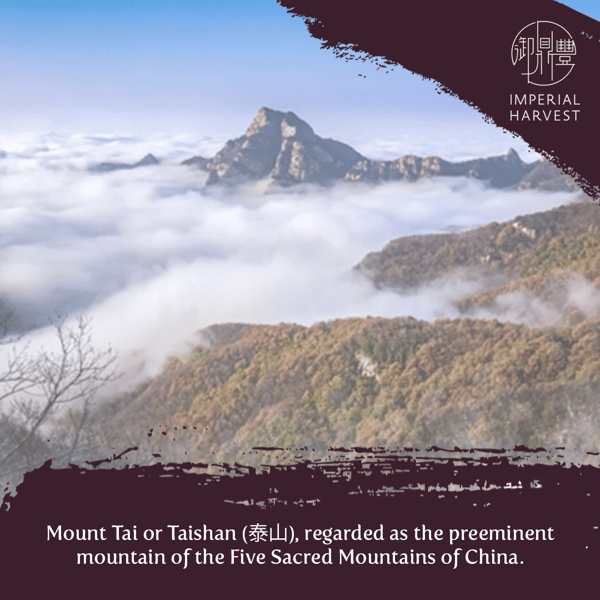
Our story begins at Mount Tai or Taishan (泰山), regarded as the preeminent mountain of the Five Sacred Mountains of China.

02102020 BOH blog Mount Tai

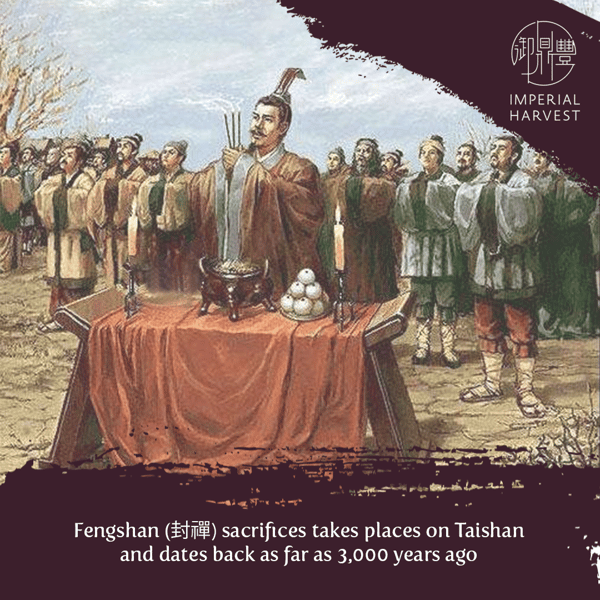
As early as the Shang dynasty more than 3,000 years ago, successive emperors have visited the mountain to pray for peace and prosperity. In those days, Taishan was the only altar for the worship of Heaven and Earth made through costly and elaborate sacrificial rituals on the summit and foot of the mountain respectively. These became known collectively as the Fengshan (封禪) sacrifices.

02102020 BOH blog Feng Shan

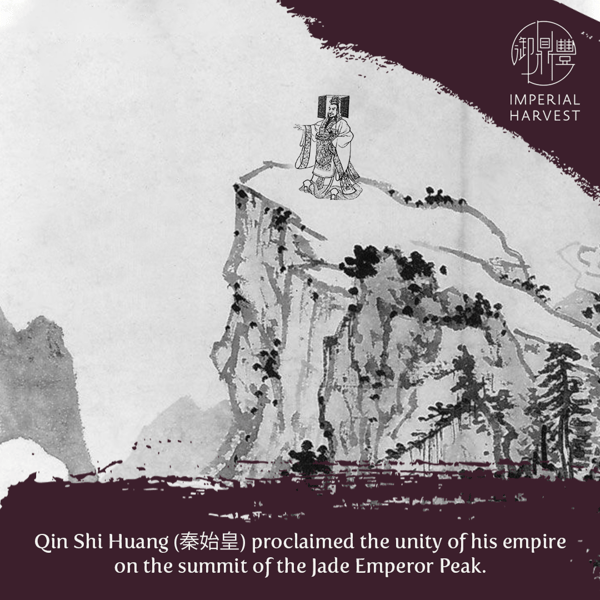
Such was the spiritual and cultural importance of Taishan that many emperors chose to be enthroned here or to mark important occasions. For example, Qin Shi Huang (秦始皇), the first Emperor of China, proclaimed the unity of his empire in a sacred ceremony on the summit, the Jade Emperor Peak.

02102020 BOH blog Yellow Emperor on Mountain

A new spiritual home in Beijing

When the Yongle (meaning “perpetual happiness”) Emperor of the Ming Dynasty established Beijing as his capital and power base, an entire city had to be constructed over 13 years by hundreds of thousands of workers. Included in the ambitious plans were the Forbidden City (the centre of Imperial power) and the Temple of Heaven (天坛 - the centre of spiritual power).

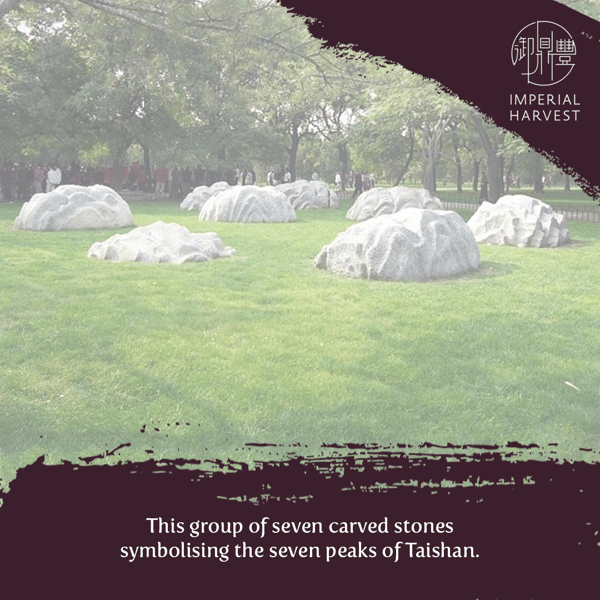
Even as Taishan continued to be regarded as the birthplace of Heaven-Earth worship, it was symbolically transported to the Temple of Heaven and set within the East Heaven Gate as the Seven Star Stone. This was a group of seven carved stones symbolising the seven peaks of Taishan.

02102020 BOH blog 7 carved stones

The embodiment of Imperial Feng Shui

Given the sacred importance of the Temple of Heaven (天坛), it was meticulously planned, designed, and constructed according to rigorous Imperial Feng Shui principles. By drawing on divine power, the sovereign power of the Emperor can be protected and magnified.

In accordance with the Confucian Records of Rites, the Temple of Heaven was constructed in the southern suburb of the capital based on principles of Yin and Yang, Heavenly stems and Earthly Branches. This was further supported by Zhouyi (the Book of Changes - the ancient manual for divination) which also prescribed a southern location to benefit from the Yang force of the universe.

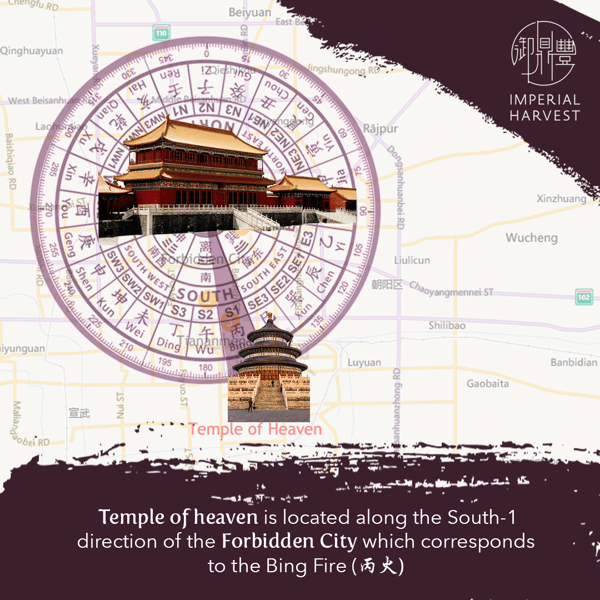
The southern suburb of Beijing was considered the location of Yang. Using the 24 mountain compass, the South-1 direction corresponds to the Bing Fire (丙火) of the ten Heavenly Stems where all elements of Yang concentrate, making it the optimal spot for the construction of Temple of Heaven.

02102020 BOH blog North south axis

This is why the Temple of Heaven is situated just east of the famous central North-South axis of Beijing, along which are Tiananmen, the Forbidden City, the Drum Tower, and the Bell Tower.

The idea of a circle representing Heaven and a square representing Earth is represented throughout the Temple of Heaven. For example, the northern wall forms a semicircle, and the other three walls enclose a square. Major buildings have perfectly circular ground plans, and are situated in square yards.

Our homage to the Hall of Prayer

To commemorate 600 years since the building of the renowned Temple of Heaven in Beijing, Imperial Harvest is proud to present the new generation of our Bliss of Harvest ring collection showcasing our highest level of skill and craftsmanship.

The Bliss of Harvest ring is arguably our most iconic collection, paying homage to the famous Hall of Prayer for Good Harvests in the Temple of Heaven. It exemplifies the historic links between Imperial Harvest and our imperial Feng Shui traditions.

Ref: BOH6001

(Singapore Design Patent No.30202109016U)

02102020 BOH blog BOH Yellow

Design notes:

  • Yin-Yang matte and mirror finish providing a tasteful contrast
  • Accented by four handcrafted screws representing the four innermost pillars of the Hall of Prayer

Ref: BOH6002

(Singapore Design Patent No.30202109013S)

02102020 BOH blog BOH Lav

Design notes:

  • An elegant ring defined by a glamorous diamond-studded inner band that catches the eye and the imagination
  • Four structural pillars representing the four innermost pillars of the Hall of Prayer

Ref: BOH6003

(Singapore Design Patent No.30202109015T)

02102020 BOH blog BOH White

Design notes:

  • Hand-burnished mirror finish
  • Eight round brilliant cut diamonds forming four structural pillars representing the four innermost pillars of the Hall of Prayer

Ref: BOH6004

(Singapore Design Patent No.30202109011Q)

02102020 BOH blog BOH Green

Design notes:

  • Yin-Yang matte and mirror finish providing a tasteful contrast
  • A distinctive geometric design that echoes the perfectly circular Hall of Prayer standing in a square yard, representing Heaven and Earth

Ref: BOH6005

(Singapore Design Patent No.30202109010V)

02102020 BOH blog BOH black

Design notes:

  • Matte finish
  • Minimalist and abstract tri-band design that is robust, discerning, and conveys a restrained sense of power

Book a complimentary consultation to learn how you can benefit from Imperial Feng Shui. For questions and enquiries please contact our advisors at +65 91221826.

Book A Bazi Consultation

Our galleries are located at 402 Orchard Road, Delfi Orchard #02-07 & #02-08, Singapore 238876.

Opening Hours: Mon-Fri, 12pm-8pm, Sat: 10am-6pm, Closed on Sundays
Significance of Chong Yang Festival

Posted by Imperial Harvest on 29 September 2020

Estimated Reading Time: 3 mins 

Chong Yang Festival, also known as the Double Ninth Festival, is observed on the ninth day of the ninth month in the lunar calendar, which falls on 25th October in 2020.

The festival originated from the I-Ching (易經) - the Book of Changes, an ancient Chinese divination text and among the oldest of the Chinese classics.

According to the I-Ching, "nine" is a supreme Yang number. Therefore, the ninth day of the ninth month means "double nine" or "double yang". Since "Chong" means double in Chinese, it is also known as “Chongyang”.

On this auspicious day, Chinese Emperors celebrated the year of harvest and prayed for a bountiful year ahead.

In this article, we highlight the importance of the Chong Yang Festival, the significance it had for the Chinese emperors, and the Imperial Harvest collections to usher in massive blessings during this auspicious occasion. 

Emperor Qian Long and Chong Yang Festival

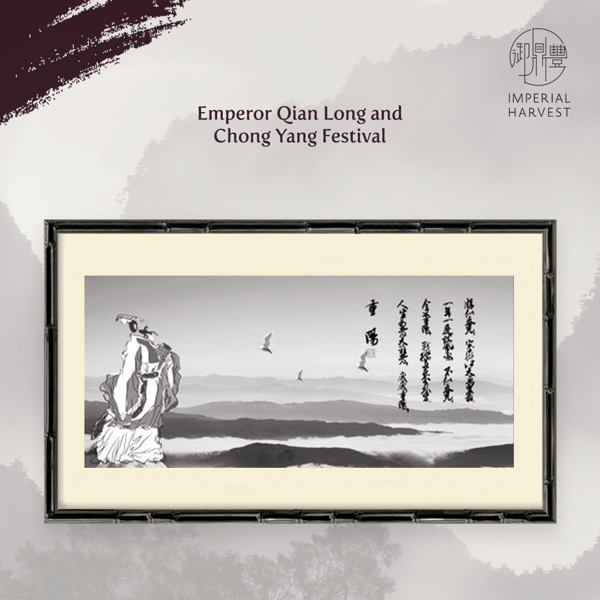
significance of chong yang-Emperor Qian Long and Chong Yang Festival

Emperor Qian Long is known as one of the most cultured non-Chinese rulers in Chinese history, with great intellectual and artistic accomplishments as well as a passion for Imperial Feng Shui. 

Every Chong Yang Festival, Emperor Qian Long would travel from the Forbidden City to Mount Tai (the highest peak in the area) where he would offer his prayers to the Heavens and earth in a rite known as Feng Shan (封禪).

Feng Shan can only be conducted by the Son of Heaven, in which the emperor would pay tributes to heaven (on the summit) and earth (at the foot of the mountain) by climbing a mountain of auspicious element, where the distance between Heaven and Earth so that their prayers can be answered readily. 

During the Chong Yang Festival, it is one of the most auspicious times to acquire your Imperial Harvest-grade jadeites, expand your direct wealth capacity and to activate the auspicious mountain star in your homes.

Imperial Harvest Eight Zodiac Guardians

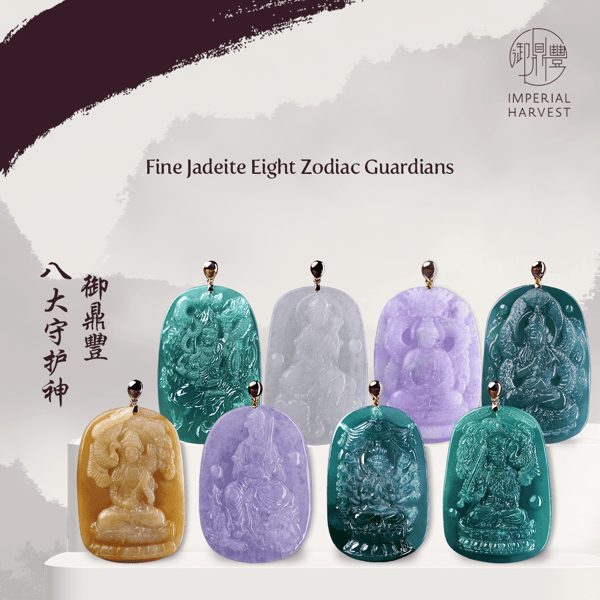
significance-of-chongyang-zodiac-guardian

The 12 Chinese Zodiac signs are associated with eight zodiac guardians. Each guardian serves as the protector for people born in that particular animal year.

These zodiac guardians have innate affinity with individuals born within their associated Chinese Zodiacs, blessing them with auspicious luck and empowering them to achieve breakthrough results in their career, business, investment, health and relationships.  

Read more about the Zodiac Guardian Collection

Imperial Jadeite Beads

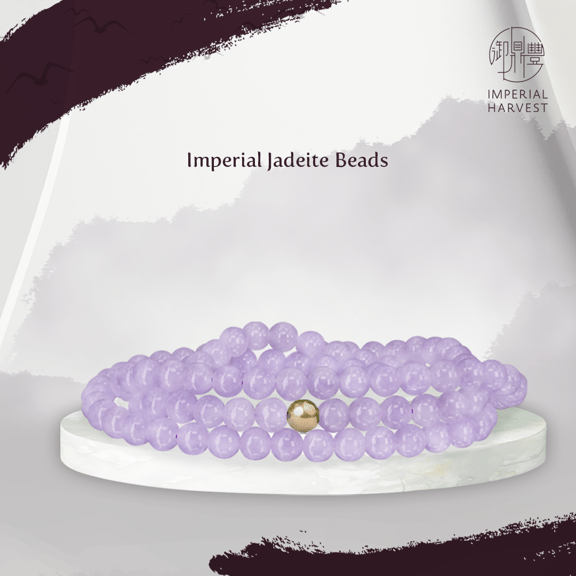
09102020 jadeite correction blog beads

Throughout history, many Chinese Emperors and Empresses are often depicted wearing Imperial Jadeite beads necklaces and bracelets in various Chinese paintings.

As a gemstone connoisseur, Master David understands that the intricate beauty of jadeite is best presented in their simplest forms, the Imperial jadeite beads are the epitome of this guiding principle.

Read more about the Imperial Jadeite Beads

All-New Bliss of Harvest Rings

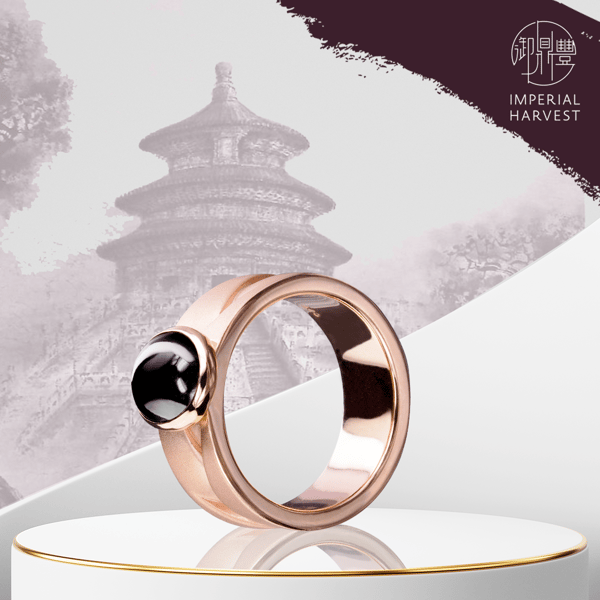
significance of chongyang-BOH ring

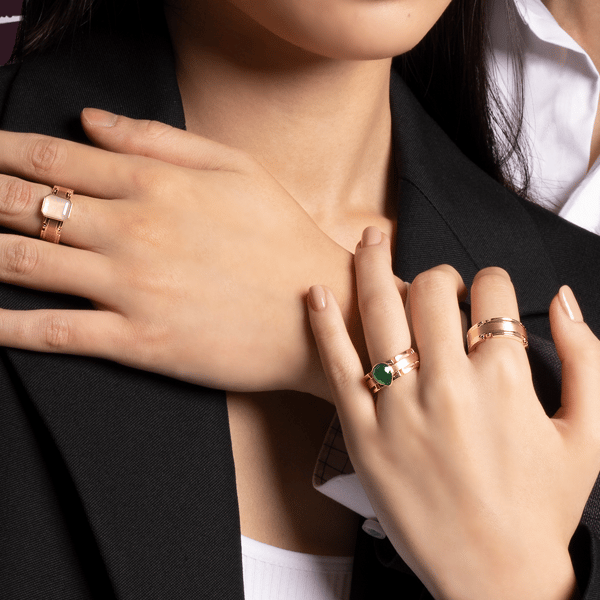
To commemorate 600 years since the building of the renowned Temple of Heaven in Beijing, Imperial Harvest is proud to present the new generation of our Bliss of Harvest ring collection showcasing our highest level of skill and craftsmanship.

The Bliss of Harvest ring is arguably our most iconic collection, paying homage to the famous Hall of Prayer for Good Harvests in the Temple of Heaven. It exemplifies the historic links between Imperial Harvest and our imperial Feng Shui traditions.

Read more about the Bliss of Harvest Collection

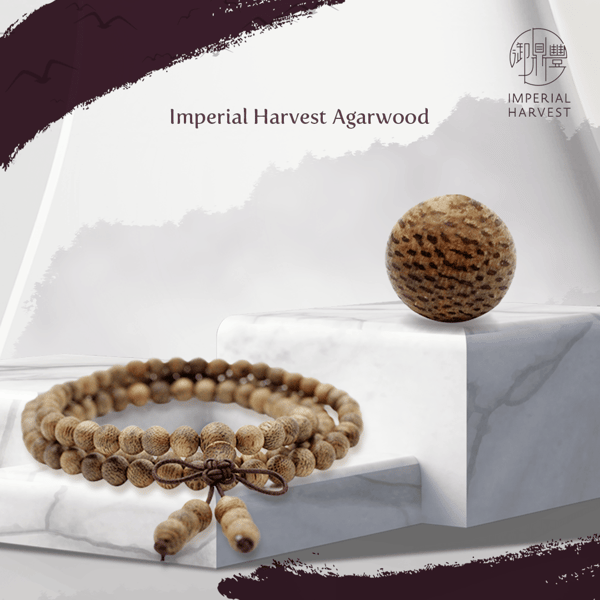
Imperial Harvest Agarwood 

significance of chongyang-agarwood

Agarwood expands one’s direct wealth capacity, referring to the income potential we derive from our career, business, sales and other regular sources of income.

During the Chong Yang Festival, Chinese emperors prayed to the heavens using their Imperial Harvest-grade Agarwood. The Chinese emperors would roll each bead as they prayed. This sacred ceremony was conducted at the peak of Mount Tai where the distance between Heaven and Earth is the closest. 

Read more about Imperial Harvest Agarwood Collection

Qian Long Jadeite Mountain

significance of chong yang-Jadeite Mountain (1)

The sacred prayers for blessings (Feng Shan) are usually conducted at the top of Mount Tai, where the distance between Heaven and Earth is the closest. The sacred ceremony at the top of the mountain to ensure that their prayers were heard. 

However as Chinese emperors aged, they would no longer have the physical vitality to ascend mountains to conduct their annual tributes. 

For that reason, Emperor Qian Long’s team of Imperial Feng Shui Masters devised an intelligent and elegantly powerful solution to solve this challenge - the Qian Long Jadeite Mountain.

Read more about the Qian Long Jadeite Mountains


Book a complimentary consultation to learn how you can benefit from Imperial Feng Shui. For questions and enquiries please contact our advisors at +65 91221826.

Book A Bazi Consultation

Our galleries are located at 402 Orchard Road, Delfi Orchard #02-07 & #02-08, Singapore 238876.

Opening Hours: Mon-Fri, 12pm-8pm, Sat: 10am-6pm, Closed on Sundays

All New Bliss of Harvest Jadeite Ring Collection

Posted by Imperial Harvest on 24 September 2020

Estimated Reading Time: 5mins

600 YEARS OF THE TEMPLE OF HEAVEN

To commemorate 600 years since the building of the renowned Temple of Heaven in Beijing, Imperial Harvest is proud to present the new generation of our Bliss of Harvest ring collection showcasing our highest level of skill and craftsmanship.

The Bliss of Harvest ring is arguably our most iconic collection, paying homage to the famous Hall of Prayer for Good Harvests in the Temple of Heaven. It exemplifies the historic links between Imperial Harvest and our imperial Feng Shui traditions.

Our new designs continue to set the highest standards for Imperial Feng Shui jewellery design, and is testament to Master David Goh’s bold and inspired vision.

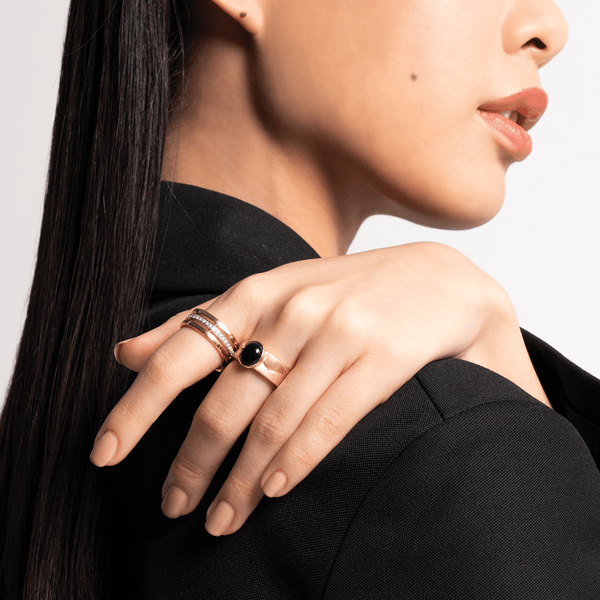
Our lustrous 18K solid rose gold rings are created from a proprietary blend of pure gold, copper and silver - representing heaven, earth, and human elements.

The beautiful hue intensifies with age, and evokes the vibrant red found throughout the imperial temple, a colour deeply synonymous with prosperity and auspiciousness.

23112020 new boh blog images 6pm one 2

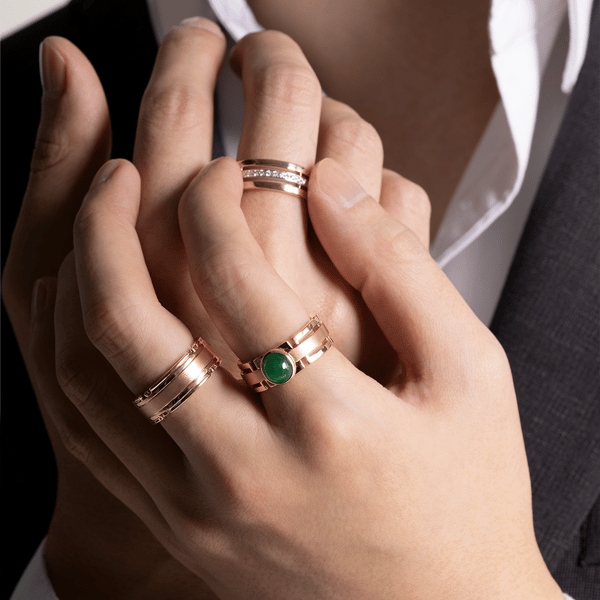
The Bliss of Harvest ring is embellished with the finest jadeite cabochon, perfectly round and glistening, resembling the gilded orb which crowns the Hall of Prayer. It takes hours of finely-honed craftsmanship to harvest the cabochon from a jadeite boulder, shaping it to perfection, and hand-polishing the gem to bring out the jadeite’s natural depth of colour.

The intricate design gives the impression of three separate bands wrapped gently around the finger, comforting and caressing the owner.

Elegant in form, and robust in construction, our tri-band rings take inspiration from the Hall of Prayer. Like the Bliss of Harvest ring, its roof is formed of three graceful circular tiers that build on each other, rising to a crescendo, and merging into one magnificent creation.

The Temple of Heaven (天坛)

BOH-main-imagetemple of heaven


The Temple of Heaven in Beijing is a vast imperial temple complex completed in 1420 under the reign of Emperor Yongle during the Ming Dynasty. It is not only a great architectural masterpiece, but was also the most important imperial temple for centuries, symbolising the profound relationship between heaven and earth.

The Hall of Prayer for Good Harvest (祈年殿)

The main building within the temple complex is the circular, three-tiered Hall of Prayer for Good Harvests to the north. It is a grand, impressive, circular building with a visually harmonious three-tiered roof representing the cosmic trinity of Heaven, Earth and Human luck. The entire building is supported by 28 large pillars and was meticulously constructed without the use of any nails.

It was here during the winter solstice that the emperors of the Ming and Qing dynasties worshipped the God of Heaven and prayed for prosperity - every year, for hundreds of years.

The Five Rings of the Collection

Ref: BOH6001

(Singapore Design Patent No.30202109016U)

Blog_1206_Bliss of Harvest Rings_Earth

Blog_1206_Bliss of Harvest Rings_Earth_2

23112020 boh blog new images BOHBlog_201123_yellow

Design notes:

  • Yin-Yang matte and mirror finish providing a tasteful contrast
  • Accented by four handcrafted screws representing the four innermost pillars of the Hall of Prayer

BOH-6001-30202109016U Ring-page-001

Ref: BOH6002

(Singapore Design Patent No.30202109013S)

Blog_1206_Bliss of Harvest Rings_Fire

Blog_1206_Bliss of Harvest Rings_Fire_2

23112020 boh blog new images BOHBlog_201123_lav

Design notes:

  • An elegant ring defined by a glamorous diamond-studded inner band that catches the eye and the imagination
  • Four structural pillars representing the four innermost pillars of the Hall of Prayer

BOH-6002-30202109013S Ring-page-001

Ref: BOH6003

(Singapore Design Patent No.30202109015T)

Blog_1206_Bliss of Harvest Rings_Metal

Blog_1206_Bliss of Harvest Rings_Metal_2

23112020 boh blog new images BOHBlog_201123_white

Design notes:

  • Hand-burnished mirror finish
  • Eight round brilliant cut diamonds forming four structural pillars representing the four innermost pillars of the Hall of Prayer

BOH-6003-30202109015T Ring-page-001

Ref: BOH6004

(Singapore Design Patent No. 30202109011Q)

Blog_1206_Bliss of Harvest Rings_Wood

Blog_1206_Bliss of Harvest Rings_Wood_2

23112020 boh blog new images BOHBlog_201123_green

Design notes:

  • Yin-Yang matte and mirror finish providing a tasteful contrast
  • A distinctive geometric design that echoes the perfectly circular Hall of Prayer standing in a square yard, representing Heaven and Earth

BOH-6004-30202109011Q Ring-page-001

Ref: BOH6005

(Singapore Design Patent No.30202109010V)

Blog_1206_Bliss of Harvest Rings_Water

Blog_1206_Bliss of Harvest Rings_Water_2

23112020 boh blog new images BOHBlog_201123_black

Design notes:

  • Matte finish
  • Minimalist and abstract tri-band design that is robust, discerning, and conveys a restrained sense of power

BOH6005-SG-Design Patent-30202109010V


Recommended Articles: 

Book a complimentary consultation to learn how you can benefit from Imperial Feng Shui. For questions and enquiries please contact our advisors at +65 91221826.

Book A Bazi Consultation

Our galleries are located at 402 Orchard Road, Delfi Orchard #02-07 & #02-08, Singapore 238876.

Opening Hours: Mon-Fri, 12pm-8pm, Sat: 10am-6pm, Closed on Sundays

The Legendary Designs of the Imperial White Ink Stone - Part 3

Posted by Imperial Harvest on 24 September 2020

Estimated Reading Time: 3 mins

The Imperial White Ink Stone is one of the most important Imperial Feng Shui treasures in our home collection. Since the Qing dynasty, the Imperial White Ink stone has been the preferred choice of Imperial Feng Shui treasure used to empower Chinese Emperors with grand benefactor support, authority and supreme wealth.

legendary_artist_inkstone_installation_1

legendary_artist_inkstone_installation_2

For home and business owners, the Imperial White Ink Stone also has the powerful ability to enhance the auspicious energy of one sector while countering three inauspicious sectors when it is installed in your home or commercial property. 

Aside from its impressive Imperial Feng Shui prowess, the Imperial White Ink Stone demonstrates the legacy of Imperial Harvest’s design excellence and superior craftsmanship. The design inspiration of each Imperial White Ink Stone can be traced to the works of a legendary Chinese artist.

Rivers of Treasures - Qi Bai Shi (齊白石)

legendary_artist_inkstone_part3

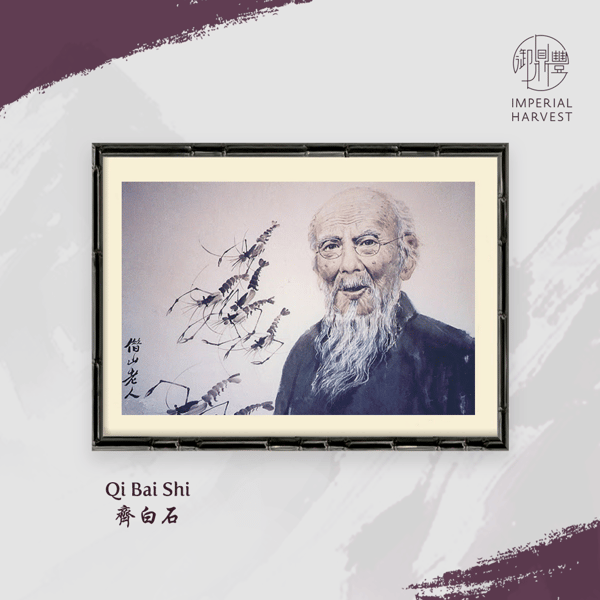
Qi Bai Shi was one of the most renowned and celebrated Chinese artists in modern history, his impressive list of accolades include “Outstanding Artist of the Chinese People”, “World Peace Prize” awarded by the World Peace Council and was selected as representative of the Chinese people at the National People’s Congress.

legendary_Artist_inkstone_3_drawing

Despite his humble beginnings, his works now number amongst the most expensive ever sold at auction.

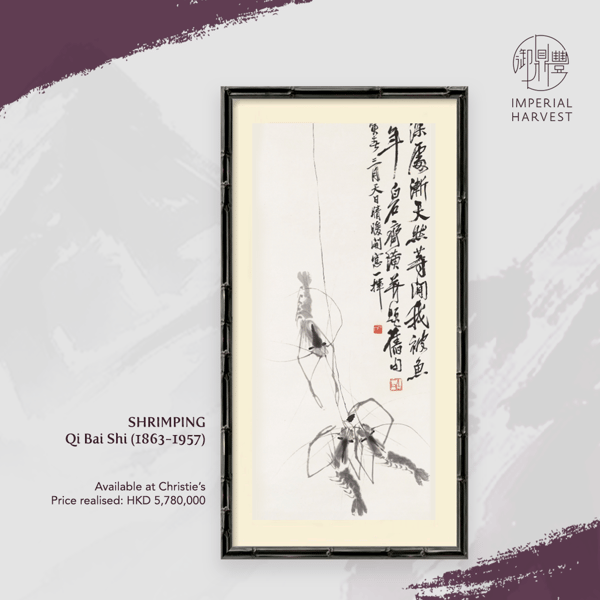
The subjects of his paintings include almost everything, his favourite subject to paint however, was shrimp, a challenging feat for many artists. Using swift, definite and spontaneous brush strokes, Qi Bai Shi was able to vividly capture the liveliness of shrimps in his paintings.

legendary_artist_inkstone_3_drawing_2

Today, his iconic ink wash shrimp paintings are synonymous with the artist himself, whenever art connoisseurs see an ink wash painting of shrimps, they are mostly likely to utter the name Qi Bai Shi.

Since his passing in 1957, the market for Qi Bai Shi’s paintings has made headlines in the art market, both for China and the world. In 2016, his works held the second position by value (third by number of lots sold) by auction. At the end of 2017, the art world was rocked by the news that one of his collections catapulted him into the '$100 Million Club' by selling for $140.8 million (931.5 million yuan) at the Poly Auctions in Beijing, China.

Imperial White Ink Stone - River of Treasures

Legendary_river_of_treasure_0628

The River of Treasures is the result of Master David’s careful observations on the nuances of Qi Bai Shi’s unique artistic styles. 

The shrimp is a symbol of longevity and good fortunes and is associated with joy and happiness in Chinese culture. To convey this, Master David employed the techniques of “xie yi” (写意) with lively brush strokes and a playful tone. 

legendary_design_river_Inkstone_closeup

Master David applied varying depths of brushstrokes and the combination of “gong bi” and “xie yi” techniques. Each stroke produced variations of tonality to replicate the life-like features of the shrimp, which formed the basis for the beautiful shadows of black and gray hues found in Qi Bai Shi’s Shrimp paintings.


Your expert consultants are on hand to help you find the perfect Imperial Harvest treasure, book a complimentary consultation today or contact us at +65 91221826.

Book A Bazi Consultation

Our galleries are located at 402 Orchard Road, Delfi Orchard #02-07 & #02-08, Singapore 238876.

Opening Hours: Mon-Fri, 12pm-8pm, Sat: 10am-6pm, Closed on Sundays

The Legendary Designs of the Imperial White Ink Stone - Part 2

Posted by Imperial Harvest on 18 September 2020

Estimated Reading Time: 3mins

As one of the world’s oldest civilizations, China boasts a rich history of fine art. Over the course of over 3,000 years, the country has crafted a vibrant culture made up of countless art forms that paints a picture of China’s fascinating evolution.

From a very early period, art forms like calligraphy, poetry, sculpture and paintwork were considered the supreme visual art form, which were highly valued by the high-rankings and educated during imperial dynasty rule. 

The intricate designs of the Imperial White ink stones draw references from the works of some of the most admired Chinese artists. Inspired by the clean and precise painting style of one the most important artists of contemporary China, Master David created the Royal Panda collection to pay tribute to the widely acclaimed, Wu Zuoren. 

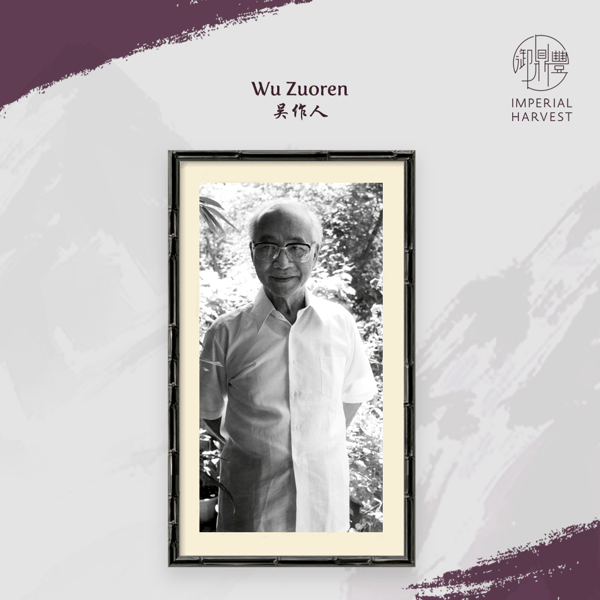
Wu Zuoren (吴作人)

Born on November 3, 1908 in Suzhou, China, he studied painting under renowned artist Xu Beihong (徐悲鸿) at Shanghai University of the Arts. 

18092020 WIS blog Potrait

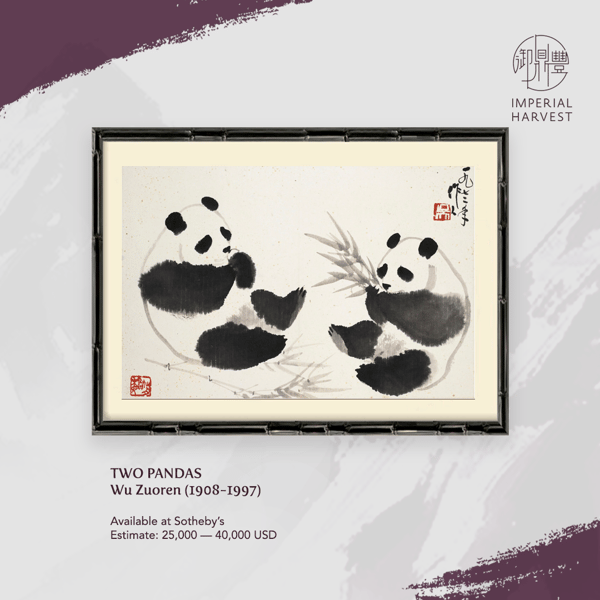
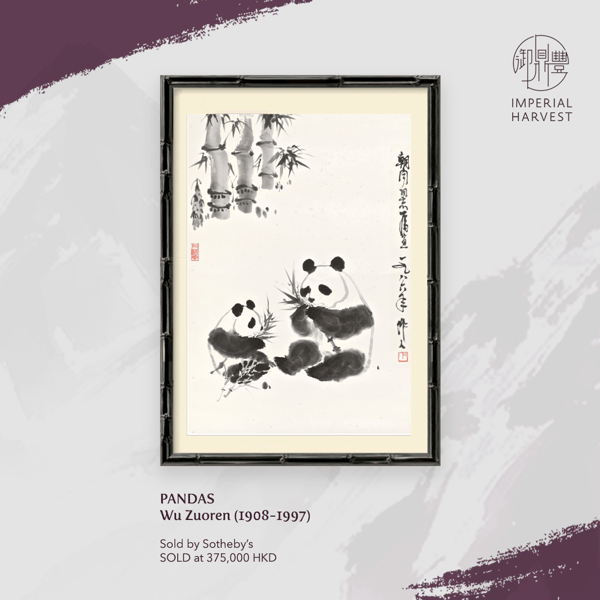
Wu Zuoren is renowned for his illustrations of scenery and nature, his work are fine examples of combining the art of traditional Chinese painting with that of Western painting. Simplicity, clear expression and vigour mark the works of this widely acclaimed artist. 

18092020 WIS blog Two Pandas

18092020 WIS blog Pandas Painting

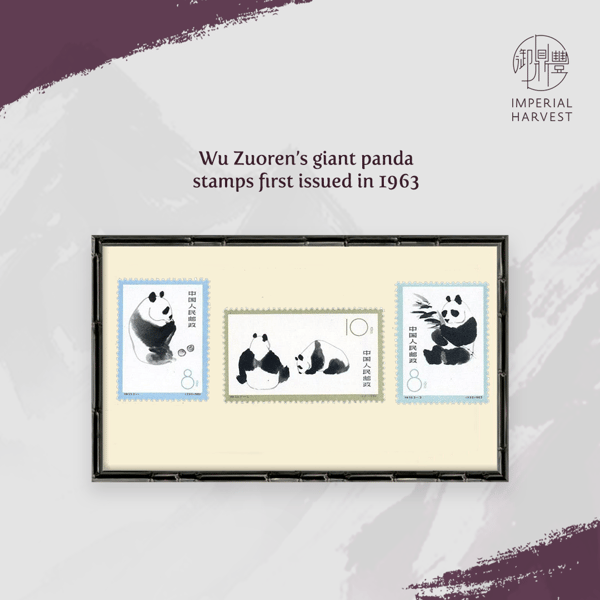
In 1963, Wu Zuoren set out to change the face of China when he was presented with the opportunity to design postage stamps for the People’s Republic of China. Already well known for his ink wash paintings of giant pandas in their natural habitat and other animals such as yaks and camels, Wu Zuoren’s giant panda stamps first issued in 1963 formally established the giant panda as the emblem of the new China. 

18092020 WIS blog Stamps

Today, he is remembered as one of the few Chinese artists to achieve acclaim, both for his Chinese ink works and for his role in modernising the new face for the People’s Republic of China.

Imperial White Ink Stone - Royal Panda Collection

In Imperial Feng Shui, the Panda is the emblem of abundance, prosperity and vitality, while bamboo symbolises consistent growth and progression. 

Mixing modern techniques and the use of minimal pointillism to produce a vivid effect, Master David immortalised one of China’s most admired emblems, the giant panda, by depicting them on the Emperor grade white inkstone. Once again resulting in the seamless amalgamation of Imperial Feng Shui and Chinese art. 

The overall palette of black, white, and dark green represents Master David’s profound roots in Imperial Feng Shui, Eastern art and calligraphy. 

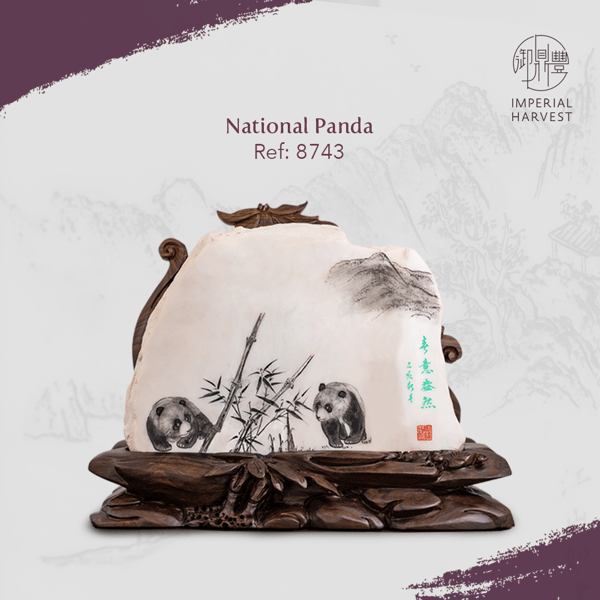
18092020 WIS blog National Panda

Pandas are the emblem of abundance, prosperity and vitality. For this collection, Master David depicted Pandas in their most natural setting, among the bamboo grove during spring, the season of new beginnings and opportunities.

The harmony between the lean and thick brushworks all over the Imperial White Ink Stone represents Master David’s appreciation of the balance created by the difference in thickness of brushstrokes. 

However, the traditional subject of pandas in tranquil bamboo forest in Eastern art, is infused with modernity and exoticism by the multi-faceted Imperial Feng Shui master under his unlimited use of bold intertwined horizontal and vertical brushstrokes and the depth of the Imperial White Ink Stone through the contrast of light and dark colors. 

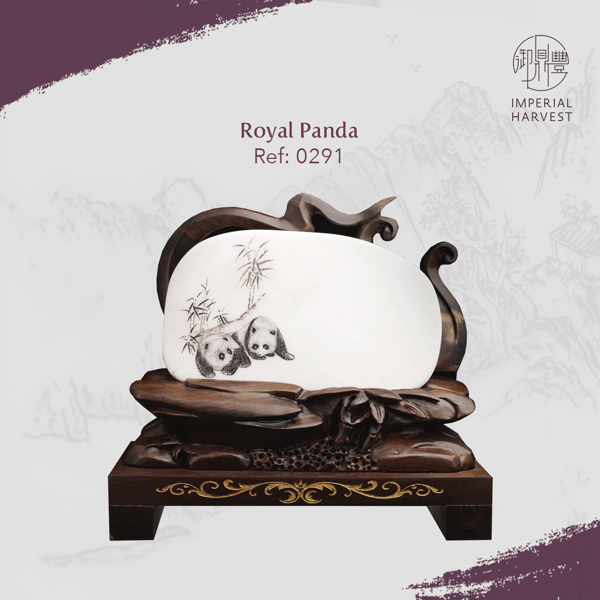
18092020 WIS blog Royal Panda

In striking detail, the contrasting black and white markings showcases Master David’s sophisticated design and approach on negative spaces.

While retaining the colors of Eastern traditional ink painting, Master David infused Imperial Feng Shui principles, heralding a new era of Imperial Feng Shui art that inspires prosperity and success.


Your expert consultants are on hand to help you find the perfect Imperial Harvest treasure, book a complimentary consultation today or contact us at +65 91221826

Book A Bazi Consultation

Our galleries are located at 402 Orchard Road, Delfi Orchard #02-07 & #02-08, Singapore 238876.

Opening Hours: Mon-Fri, 12pm-8pm, Sat: 10am-6pm, Closed on Sundays


5 Imperial Feng Shui Tips When Buying A House

Posted by Imperial Harvest on 17 September 2020

Estimated Reading Time: 3mins

Whether you are a new home owner or an existing one, selecting a property with good Feng Shui is one of the most important decisions you will make. Living in a property with good Feng Shui enables us to achieve peak performance in our career, business and relationships. While the opposite can result in undesirable consequences that may affect your physical,mental and even financial well-being.

As Singapore’s leading Imperial Feng Shui master, Master David has been the trusted Feng Shui advisor to many successful clients who are at the forefront of their respective fields. 

In this article, we will share Master David’s Imperial Feng Shui checklist to select an auspicious property with good Feng Shui. 

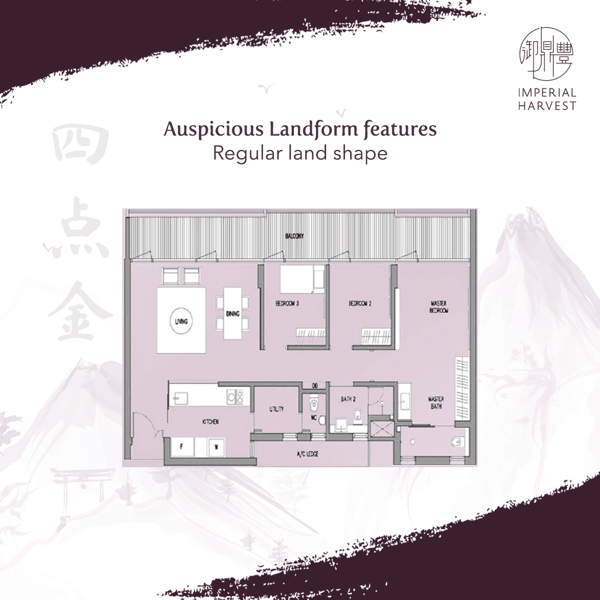
1. Regular Land Shape (四点金)

The first step in identifying an auspicious property is to look at the floorplan of the land or house. Based on principles of Imperial landform, the ideal shape of a piece of land or floor plan is either a square or rectangle. The term “Four Point of Gold” (四点金) was coined to describe the ideal piece of land with regular shape.

16092020 HFS blog Tip 1

In ancient China, homes are usually built to adhere to a square layout. This is because the ‘wholeness’ of a house promotes the flow of Qi within, enhancing the wealth and luck of its occupants.

Unfortunately, modern architectural innovations and space constraints in cities often result in missing sectors that can negatively affect the occupants.

Click here to read about the Implications of Missing Sectors

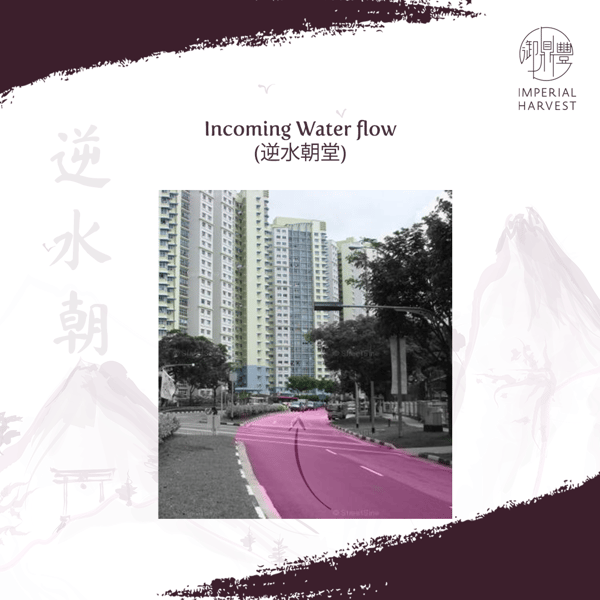
2. Incoming Water flow (逆水朝堂)

The second step in selecting an auspicious property is understanding the water flow within the location. As quoted from the Imperial Feng Shui classics “Mountain governs benefactors, while water governs wealth (山管人丁,水管财).” 

The study of Imperial landform places important emphasis on the position of the mountain and the water with respect to the residence. 

Based on the study of Imperial Landform, the direction of the road (virtual water) and rivers (physical water) should ideally be flowing towards your house. 

16092020 HFS blog Tip 2

This auspicious feature is known as incoming water flow 逆水朝堂.  

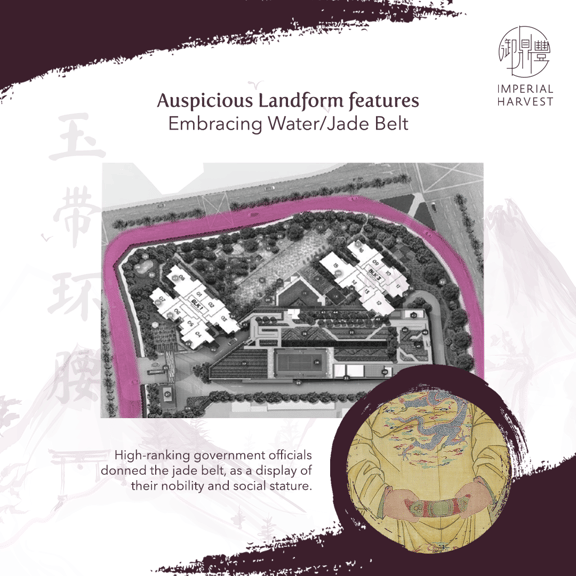
3. Embracing Water/Jade Belt (玉带环腰)

The third step in selecting an auspicious property is identifying the road surrounding the house. In ancient China, high-ranking government officials donned the jade belt, as a display of their nobility and social stature.

16092020 newest blog Tip 3

The term “Jade Belt” refers to a feature where the road surrounds the building, much like how the jade belt embraces the waist of the wealthy.

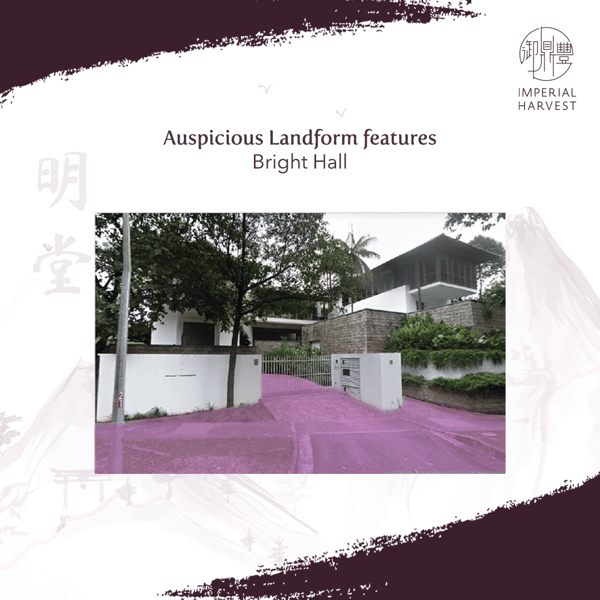
4. Bright Hall (名堂)

With the above two criteria, the fourth feature to look out for is known as ‘Bright Hall’, which refers to the open space in front of the house.

One of the golden verses in the classics of Imperial Landform states that “宅前无余地,子孙稀”. It suggests a correlation between the amount of space in front of a house and the number of descendants and offspring.

16092020 HFS blog Tip 4

With a spacious bright hall in front of your residence, it will usher in wealth and prosperity for generations to come.

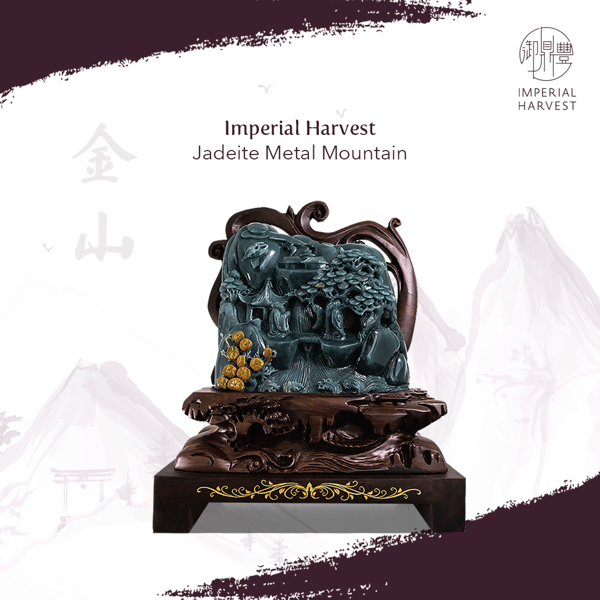
5. Metal Mountain (金山)

The final step in selecting an auspicious house is identifying the Mountain landform. This is one of the most powerful Imperial landform features. 

16092020 HFS blog Tip 5

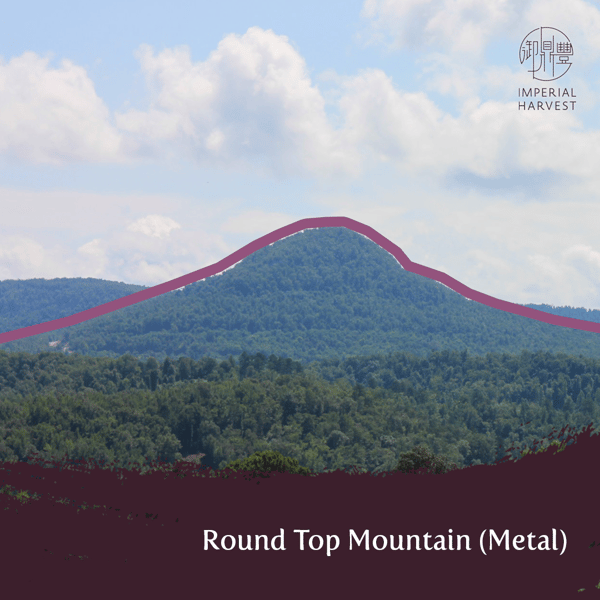
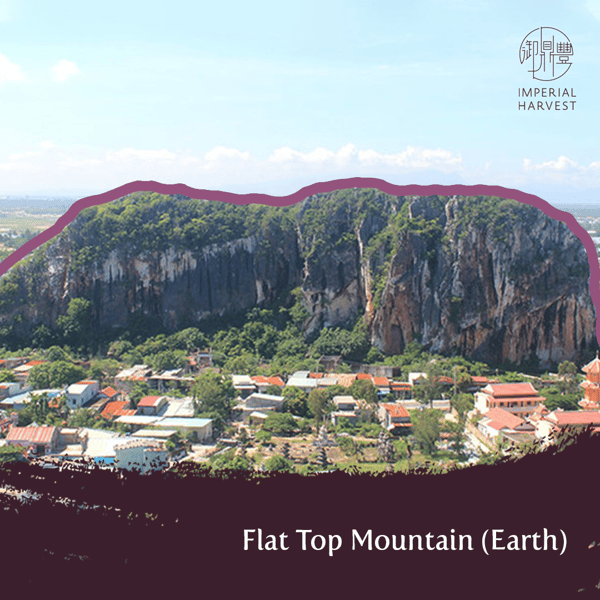
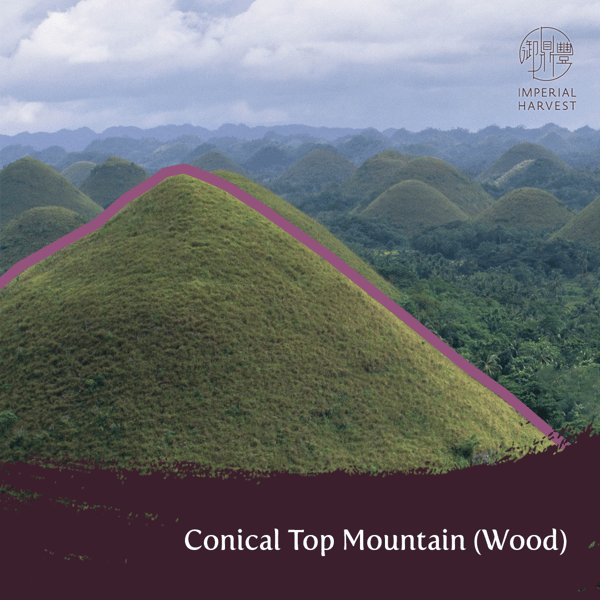
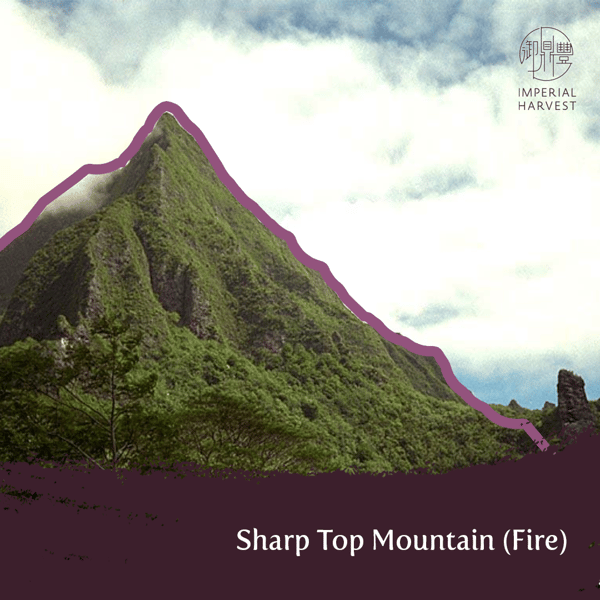
According to the study Imperial Landform, there are five elemental mountains, namely: Metal, Earth, Wood, Fire and Water. 

Metal mountain refers to a mountain with a round top. It is deemed as one of the most powerful wealth creation mountain features that can bring a tremendous amount of wealth and benefactor support.

16092020 blog round mountain

Earth mountain refers to a mountain with a flat top. It has similar features as metal mountain because in the study of five elements, earth produces metal. 

16092020 blog earth mountain

Wood mountain refers to a mountain with a conical top. In Chinese, it is known as 贪狼星 (Greedy Wolf Star). It is ideal for raising children with high scholastic achievements.

16092020 blog Mountain Shapes
Fire mountain refers to a mountain with a sharp top. It produces misfortunes and major illnesses for the occupants. In urban environments, fire mountain refers to buildings with sharp and pointed tips.

16092020 blog fire mountain
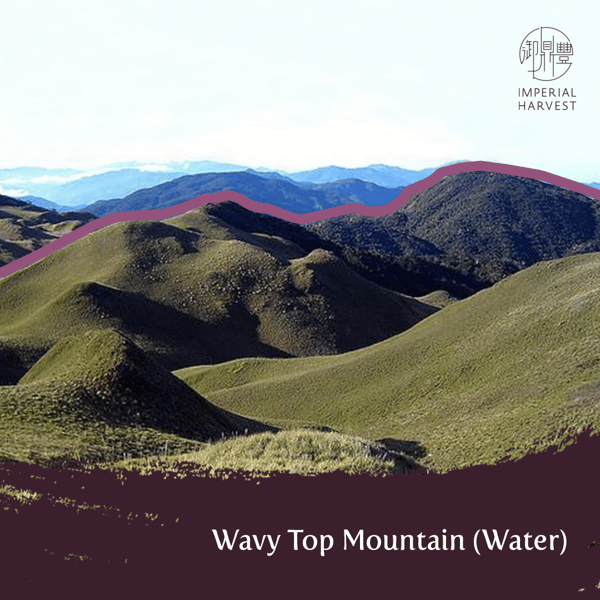
Water mountain refers to a mountain with a wavy top. It produces promiscuity and family disharmony.

16092020 blog water mountain

In ancient China, the rich and powerful are buried at the auspicious Feng Shui positions near Metal Mountain, Earth Mountain or Wood Mountain. However, it was often not practical to have the Chinese palace situated near mountains, which innovated the Imperial Feng Shui treasure known as the Qian Long Jadeite Mountain. 

Read more about Qian Long Jadeite Mountain

While it is also impossible to be surrounded by such auspicious landform features as we live in an urban city such as Singapore, Master David’s utmost dedication to his clients is reflected in the launch of Imperial Harvest Qian Long Jadeite Mountain. The Qian Long Jadeite Mountain is the result of 4 years of intensive research and development to ensure our clients enjoy the same quality of Imperial Feng Shui treasures that Emperor Qian Long once used.


Want to learn more about your home Feng Shui? Book a consultation today. 

Book Home Feng Shui Audit

Our galleries are located at 402 Orchard Road, Delfi Orchard #02-07 & #02-08, Singapore 238876.

Opening Hours: Mon-Fri, 12pm-8pm, Sat: 10am-6pm, Closed on Sundays

RECENT POSTS